Category: Announcements

[rev_slider alias=”tsadra-blog”]

Announcements

  • 2017 Translation & Transmission Conference Registration Open

    2017 Translation & Transmission Conference Registration Open

    2017 Translation & Transmission Conference Registration Open

    Join us at the University of Colorado, Boulder, May 31 – June 3, 2017
    Attendees and speakers must all register online. REGISTER HERE  Space is limited so please sign up as soon as possible.

    More than 200 translators, practitioners, scholars, and specialists in Tibetan language will be meeting together for workshops and discussion sessions throughout the weekend. You can see the full list of speakers and presenters here.


    2017 Translation & Transmission Conference Program Overview

    WEDNESDAY, May  31, 2017

    4:30 PM  Registration & Welcome Reception at the UMC, Boulder Campus
    6:00 PM  Welcome Banquet at the Glenn Miller Ballroom, UMC, Boulder Campus

    THURSDAY, June 1, 2017
    Speeches

    Keynote Lecture by Susan Bassnett – 9:00 AM  

    Panel

    Plenary Session 1: Translators & Intention – 11:00 AM 
    Panelists: Janet Gyatso, Anne Klein, Wulstan Fletcher, and Karl Brunnholzl

    1.  Translation Theories Made Practical
    2.  Exploring Approaches to Tibetan Translation 1: Responses to issues from the keynote
    3.  Exploring Approaches to Tibetan Translation 2: Responses to panel discussions
    4.  The Translator’s Intention
    5.  Translation: Text Creation, Augmentation, and Creativity
    Panel

    Plenary Session 2: Approaches to Translation & Transmission – 4:45 PM 
    Panelists: Luis Gomes, Susan Bassnett, and David Bellos

    FRIDAY, June 2, 2017
    Speeches

    Keynote Lecture by Jan Nattier – 9:00 AM  

    Panel

    Plenary Session 3: Translating: What and How? – 11:00 AM  
    Panelists: Kurtis Schaeffer, Thupten Jinpa, Elizabeth Napper, and Sangye Khandro

    Translator’s Craft Session 1 – 2:30 PM
    1. Master Class on Kavya in Tibet following from a workshop on Tseten Zhabdrung’s commentary on poetics that was hosted at the Latse Library with Gendun Rabsel, Nicole Willock, Andy Quintman, and Kurtis Schaeffer.
    2. Languages of Contemplative Experience: Translating the Worlds of Dzogchen & Mahamudra with Anne Klein, Ken McLeod, and David Germano.
    3. Unique Registers and Specialized Terminology: Sanskrit and the Tibetan Language in Translation with Christian Wedemeyer and Art Engle.
    4. Working with Old Tibetan Sources with Jake Dalton and Brandon Dotson.
    5. Public Session: Approaches to Transmission in the West: A Discussion with Contemporary Shedra Students and Robert Miller (Lozang Zopa).
    Translator’s Craft Session 2 – 4:45 PM
    1. Working with the Medium of the English Language with Wulstan Fletcher and Thupten Jinpa.
    2. Accuracy and Inspiration: Translating Mahamudra Texts with Elizabeth Callahan and Klaus-Dieter Mathes.
    3. Oddities and Curiosities in Tibetan Translation with David Jackson and Dan Martin.
    4. Using Technology Skillfully (Resources for Translators) with Kurt Keutzer, Paul Hackett, Gerry Wiener, and Nathan Hill.
    5. Public Session: Approaches to Transmission in the West: New Voices & Old Traditions with Elizabeth Mattis-Namgyel, Ari Goldfield, Sarah Plazas, and Gyurme Avertin.
    Special Event!

    Dinner & Evening Event at Naropa University – 7:00 PM  
    with Thupten Jinpa & Donald Lopez

    SATURDAY, June 3, 2017
    Speeches

    Keynote Lecture by José Cabezón – 9:00 AM

    Panel

    Plenary Session 4: The Editorial Process Throughout Creation and Completions Stages – 11:00 AM  
    Panelists: John Canti, Tom Yarnall, David Kittelstrom, and Emily Bower

    Discussion Sessions – 2:30 PM

    1. Large Scale, Multilingual (Skt/Tib) Projects: Philological, Technical, and Team Challenges and Solutions
    2. Editing for Practitioners: Presenting Liturgies, Commentaries, and Songs of Realization
    3. Editing and Disseminating Buddhist Materials
    4. Editing and Publishing Translations
    5. Transmission and Translation

    Panel

    Plenary Session 5: Translations in Transmission – 4:45 PM  
    Panelists: Karma Lekshe Tsomo, Sarah Harding, Peter O’Hearn, and Ringu Tulku

    Closing Sessions

    6:30 PM  Closing Session & Award Announcements
    7:00 PM Closing Dinner

    Hosted by Tsadra Foundation
    Co-sponsored by:

    Naropa University
    The American Institute of Buddhist Studies
    Columbia University Center for Buddhist Studies
    Tibet House US
    Tibet Himalaya Initiative at CU Boulder
    Shambhala Publications
    The Khyentse Foundation

    with the support of:

    Rangjung Yeshe Institute, Maitripa College, Wisdom Publications,
    and the University of Colorado, Boulder Religious Studies Department
  • 2017 Translation & Transmission Conference Announced!

    2017 Translation & Transmission Conference Announced!

    Save the Date! June 1-4, 2017

    2017 Translation and Transmission Conference

    At the University of Colorado, Boulder

    The Foundation, in consultation with all the partners, sponsors, conference steering committee members, and speakers from the 2014 Translation & Transmission Conference is proud to announce the second conference in the Translation & Transmission Series, which will take place June 1-4, 2017 in Boulder, Colorado. In light of the universal support and positive feedback we received for the previous conference, we feel that it is important to continue the conversation and community building that the 2014 conference facilitated.

    The purpose of this conference series is to provide an international forum for sustained dialogue and the sharing of ideas and experiences, as well as for collective reflection on the larger cultural and societal dimensions of the transmission of Tibetan Buddhism to the contemporary sphere. This conference is not a showcase for any single project or institution but an opportunity for all to gather in an open and collegial spirit.

    In the spring of 2017 the conference will convene in the heart of Boulder, Colorado, at the Glenn Miller Ballroom, University Memorial Center, June 1st through 4th, 2017.

    Keynote Speakers:

    Day 1: Susan Bassnett (Warwick)

    Day 2: Jan Nattier (Washington)

    Day 3: José Cabezón (UCSB)

    Panelists:
    Translators – Day 1
    1. Janet Gyatso (Harvard)
    2. Anne Klein (Rice University, Dawn Mountain)
    3. Wulstan Fletcher (Padmakara, Tsadra)
    4. Karl Brunnholzl (Nitartha Institute, Nalandabodhi)
    Translating – Day 2
    1. Kurtis Schaeffer (University of Virginia)
    2. Thupten Jinpa (Institute of Tibetan Classics)
    3. Elizabeth Napper (Tibetan Nuns Project)
    Translations – Day 3
    1. John Canti (84000, Padmakara)
    2. Tom Yarnall (AIBS, Columbia, Tibet House US)
    3. David Kittelstrom (Wisdom Publications)
    4. Sarah Harding (Tsadra, Naropa University)

    Workshop presenters are still to be invited but will include more than 32 other translators and specialists in Tibetan language.

    The program schedule is still being planned and announcements will be made as soon as possible. Please sign up to receive the conference newsletter if you plan to attend or would like more information about the conference.

    Registration will open online in Summer 2016.

    If you or your organization wishes to donate to the conference effort or become a sponsor of the conference, please contact Marcus@tsadra.org

    The Conference Steering Committee

    John Canti (Padmakara Translation Group & 84000)

    Wulstan Fletcher (Padmakara Translation Group & Tsadra Foundation)

    Holly Gayley (University of Colorado, Boulder)

    Sarah Harding (Naropa University & Tsadra Foundation)

    Thupten Jinpa (Institute of Tibetan Classics)

    Anne Klein (Rice University & Dawn Mountain)

    Marcus Perman (Tsadra Foundation)

    Andrew Quintman (Yale University)

    Kurtis Schaeffer (University of Virginia)

    Tom Yarnall (Columbia University & AIBS)

    Hosted by Tsadra Foundation
    Co-sponsored by

    The American Institute of Buddhist Studies,

    Columbia University Center for Buddhist Studies, and Tibet House US

    Tibet Himalaya Initiative at CU Boulder and Shambhala Publications

  • Long-time Tsadra Fellows Receive Khyentse Foundation Fellowship Award

    Long-time Tsadra Fellows Receive Khyentse Foundation Fellowship Award

    Tsadra Foundation would like to congratulate two of its long-time Fellows on having been selected to receive the 2016 Khyentse Foundation Fellowship Award. Wulstan Fletcher and John Canti, who are also founding members of the Padmakara Translation Group, have been selected for this honor in recognition of their “service to the Buddhadharma.”

    Wulstan, John, and the Padmakara Translation Group are well known for their translation work in both English and French. From the essential Words of My Perfect Teacher, to the advanced philosophical Adornment of the Middle Way, they have provided thousands of seekers and students with access to key Tibetan Buddhist teachings. We congratulate them on their many accomplishments!


    One of the objectives of Tsadra Foundation has been to bring recognition and appreciation to senior translators and practitioners of Tibetan Buddhism, and to the role they are playing in making these extraordinary teachings available to a wider western audience. Wulstan, John, and other members of Padmakara have been supported by Tsadra Foundation for over 15 years in order that they be able to dedicate themselves fully to their practice and translation of the Dharma. The result of such focused dedication is evident in the outstanding quality and accuracy, recognized by all, of the Padmakara Translation Group’s publications. Currently Wulstan is continuing his translation activities supported by Tsadra Foundation while John is now dedicating most of his time to the 84,000 translation project.

    We rejoice in the recent increase of support for translators and their work as more organizations recognize the importance of their roles in the transmission of Buddhism in the West. We hope, that other organizations and groups will likewise honor and financially support the work of all of these individuals, be they independent or a part of organized translation groups, from academia or from the Buddhist practice community.

    Here is a short list of some of Padmakara’s work accomplished as Tsadra Foundation Fellows:

      1. A Garland of Views: A Guide to View, Meditation, and Result in the Nine Vehicles by Padmasambhava and Jamgon Mipham.
      2. Treasury of Precious Qualities, Book 1, Jigme Lingpa, commentary by Longchen Yeshe Dorje,   Kangyur Rinpoche
      3. Treasury of Precious Qualities, Book 2 Vajrayana and the Great Perfection, Jigme Lingpa, commentary by Longchen Yeshe Dorje, Kangyur Rinpoche 
      4. Counsels from My Heart, Dudjom Rinpoche
      5. Introduction to the Middle Way, Chandrakirti, commentary by Jamgön Mipham
      6. The Adornment of the Middle Way, Shantarakshita, commentary by Jamgön Mipham
      7. Nectar of Manjushri’s Speech: A Detailed Commentary on Shantideva’s “Way of the Bodhisattva,” Kunzang Pelden

    For more information on Tsadra Foundation and its Translation and Publication Programs, please visit our website:    https://www.tsadra.org

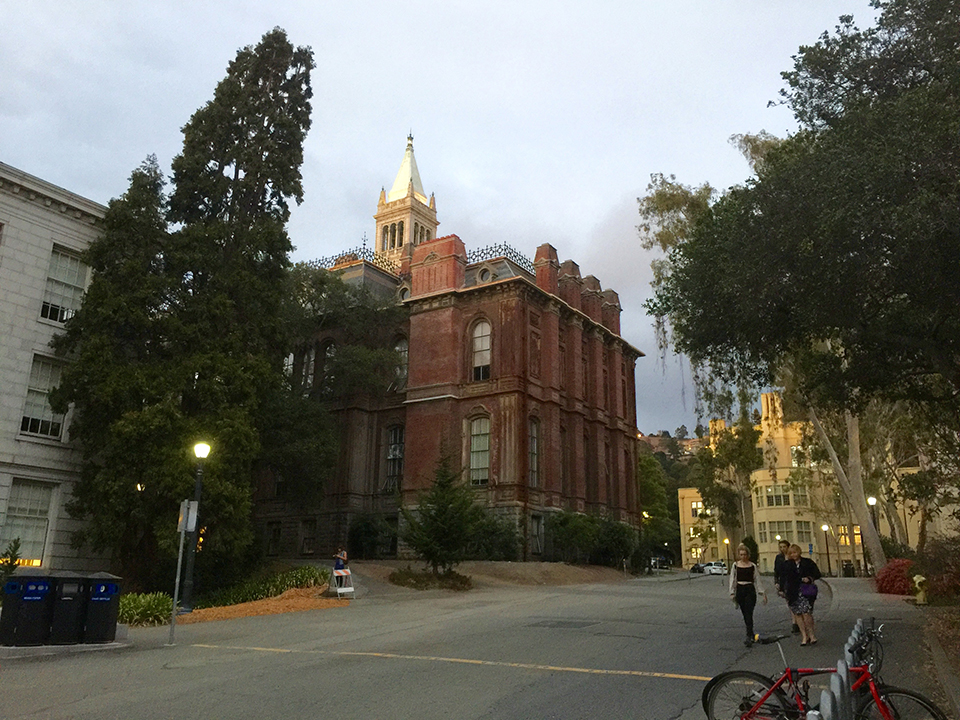
  • Berkeley Workshop: Religion and the Literary in Tibet

    Berkeley Workshop: Religion and the Literary in Tibet

    Religion and the Literary in Tibet
    Supported by a generous grant from the Tsadra Foundation

    Co-sponsored by the Center for Buddhist Studies and the Institute of East Asian Studies at UC Berkeley

    October 17-18, 2015 at the University of California, Berkeley

    In 2015 Tsadra Foundation supported the work of the AAR group Religion and the Literary in Tibet by funding a workshop at the University of California, Berkeley, organized by Jacob Dalton, Kurtis Schaeffer, Andy Quintman and Janet Gyatso. This workshop was the culmination of a five-year series of meetings held with leading scholar-translators in the field. A published volume of essays is expected in 2018, containing the blue prints for more nuanced literary understandings of Tibetan writings.

    Schedule

    Saturday morning

    9:00-10:30- Respondent Paula Varsano (Classical Chinese Literature)

    9:00-9:45: Janet Gyatso

    Tripping Down Stairs: On the Way to Enlightenment in the Lifestory of Milarepa

    9:45-10:30: Sarah Jacoby

    Autobiographical Ventriloquy in a Tibetan Woman’s Life Narrative

    10:30-10:45: Coffee Break

    10:45-12:15 – Respondent Andrew Jones (Modern Chinese Literature)

    10:45-11:30: Brandon Dotson

    Readings Like the Dead Horse Listens: Textualized Funeral Rituals as Literature

    11:30-12:15: Jann Ronis

    Epistolary Earrings for the Royals of Degé

    12:15-1:30: Catered lunch

    Saturday afternoon

    1:30 – 3:00 – Respondent Harsha Ram (Russian Literature)

    1:30-2:15: Jake Dalton

    The Rise of Evocative Language in Early Tantric Buddhist Ritual Manuals

    2:15-3:00: Jonathan Gold

    Clear Words and Subtle Meaning: Sakya Pandita’s Approach to Prayer (bstod pa)

    3:00-4:30 – Respondent Mack Horton (Premodern Japanese Literature)

    3:00-3:45: Nancy Lin

    Filling Vases and Stringing Garlands: Condensing Buddhist Stories in Tibet

    3:45-4:30: Holly Gayley

    Tibetan Epistolary Revelations: Performative Speech in the Correspondence of a Buddhist Visionary Couple

    4:30-4:45: Coffee Break

    4:45-6:15 – No respondent—open discussion

    4:45-5:30: Kurtis Schaeffer

    Two Different Approaches to the Life of the Buddha in Tibet 1: Nanam Tsünpa

    5:30-6:15: Andrew Quintman

    Two Different Approaches to the Life of the Buddha in Tibet 2: Tāranātha

    7:00 Dinner at Arabica
    Sunday morning

    9:00 -11:15 – Respondent Alan Tansman (Modern Japanese Literature)

    9:00-9:45: Ben Bogin

    Nyangrel’s Narrative Spontaneity: A Key to the Copper Palace

    9:45-10:30: Carl Yamamoto

    Lama Zhang: Self-Shaming Requested by Gurub Réwaki

    10:30-11:15: Nicole Willock and Gendun Rabsal

    Tibetan Literary Tradition: “The Avadāna of Silver Flowers” by Tséten Zhabdrung Jikmé Rigpai Lödro

    11:15-11:30: Coffee Break

    11:30-12:30: Roundup Session

    Participant Observers:
    • Roger Jackson, Carleton College
    • Lara Braitstein, McGill University
    • Frances Garrett, University of Toronto
    • Marcus Perman, Tsadra Foundation
  • Jim Blumenthal (1967-2014)

    Jim Blumenthal (1967-2014)

    Professor Jim Blumenthal, a wonderful example of a kind human being who skillfully blended practice and scholarship of Tibetan Buddhism, passed away last week. Sadly, Jim was to be present at the recent Translation & Transmission Conference, but was unable to make it due to his declining health. There is a memorial website you can contribute to here: MuchLoved

    Maitripa College, which he helped to create, also has a page in honor of Jim: http://maitripa.org/resources-jim/

    Bodhisattva’s Breakfast Corner: Remembering Jim Blumenthal

    Maitripa College will be hosting A Celebration of Life for Jim on October 26th at 1:30 pm at the World Forestry Center in Portland. Open to all.

    H-Buddhism Obituary: 

    Dear Colleagues,

    It is with a heavy heart that I write to inform you that our friend and colleague James Blumenthal passed away in the early hours of Wednesday, October 8th, 2014, after a courageous battle with cancer over the course of the past year.

    Jim was known by his students and his colleagues as a generous, kind, and gentle person. Students at Oregon State University flocked to his courses on the history and philosophy of Buddhism, often forming relationships with him that would last well beyond their academic career at the University. He was a key figure in the development of both Asian Studies and Religious Studies at Oregon State, the latter of which has re-emerged as an academic major program in the School of History, Philosophy, and Religion. He was also a founding faculty member and prized teacher at Maitripa College, a Buddhist College in Portland, Oregon, which is dedicated to transforming higher education through following the model of Indian and Tibetan monastic Universities.

    Jim’s academic career in the study of religion began at the University of San Diego, where he received an Honors B.A. in Religious Studies. His graduate training was at the University of Wisconsin, where he studied with Geshe Lhundup Sopa, earning both an M.A. and a Ph.D. while focusing on the work of the Indian teacher Śāntarakṣita. He later published analytical and translation works on Indian Mahāyāna based upon and extending this research, including The Ornament of The Middle Way: A Study of the Madhyamaka Thought of Śāntarakṣita (2004) and Sixty Stanzas of Reasoning (2004). He had recently completed, with Geshe Lhundup Sopa, a translation of the Lamrim Chenmo, Chapter 4, and was pursuing the publication of a translation of Śāntarakṣita’s Madhyamakālaṃkāravṛtti. In addition to his work on Indian and Tibetan Madhyamaka philosophy, he also published and taught extensively on Engaged Buddhism in Theravāda and Tibetan Buddhist contexts. Jim greatly enjoyed philosophical debate and was able to subtly engage and often disarm his opponents while still finding a way to make sure everyone had a good laugh in the process.

    Jim will be especially missed for the quiet, calm, and joyful presence that he brought to our academic community.

    Stuart Ray Sarbacker
    Oregon State University

    See more from OSU here: Buddhist Scholar James Blumenthal Dies at 47

    Jim’s Madhyamākalaṃkāra (དབུ་མ་རྒྱན་), or The Ornament of the Middle Way.

  • Daniel E. Perdue Passes On

    Daniel E. Perdue Passes On

    Graduate of the Indo-Tibetan Studies program at the University of Virginia, Doctor Daniel E. Perdue, author of Debate in Tibetan Buddhism (published by Snow Lion in 1992), passed away on November 18th, 2013. Obituaries can be found at H-Net, The Roanoke Times, and Richmond Times Dispatch.

  • Tsadra Website Launched

    Tsadra Website Launched

    www.tsadra.org
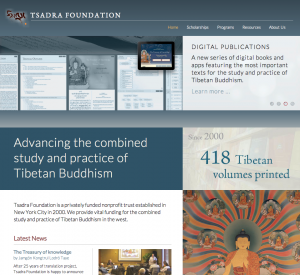
    The Tsadra Foundation website has been completely redesigned and updated with information about all our areas of activity.

    Contemplation:
    Publication:
    Translation:
    Higher Education:
    Scholarships:
    Home Page:
  • 13th IATS Seminar in Ulaanbaatar, Mongolia

    13th IATS Seminar in Ulaanbaatar, Mongolia

    by Sarah Harding

    This year the seminar of the International Association for Tibetan Studies was held in Mongolia, co-sponsored by the Mongolian Academy of Sciences, in association with the National University of Mongolia. It was a fitting place for international scholars of Tibetan studies to convene, given the long, ancient history with Tibet and the resurgence of Buddhist activities in the last twenty years. The University is in central Ulaanbaatar–a booming city with nonstop construction during the few summer months when this is possible. It is only a block from the parliament building with its commanding statue of Chinggis Khan, the great warrior venerated everywhere as the ancestor and symbol of the Mongols.

    On the other side of the parliament square is the psychedelic home of the Tyrannosaurus dinosaur found in the Gobi, a close second as a symbol of national pride ever since the smuggled skeleton that had sold for over a million dollars was demanded back by the Mongolians and duly returned by the U.S.

    It is tempting to just write about fascinating Mongolia, but the subject here is, of course, the conference. After a late night arrival, the next morning we faced the crushing registration process, took advantage of bus tours to Ganden monastery or the Bogd Kahn palace museum, and later attended the opening plenary session, where many of the greatest scholars in the field could be seen in deep jet-lag sleep. I was honored to join them there.

    Over the next six days there were panels and sessions averaging at least ten per time-slot, making choices so hard as to be almost random. I am still stricken with regret over the ones I missed. And all of us missed the scores of Tibetan nationals who were denied exit visas at the last minute, leaving some panels with skeleton crews. Still, there were some six hundred participants and plenty of stimulation. Here is a mere mention of a few sessions that I didn’t miss: There was an interesting panel on kingship with a wide range of papers. I remember subjects such as Kingship Ideology in Sino-Tibetan Diplomacy, The Dalai Lama as the Cakravartin Rāja Manifested by the Bodhisattva Avalokiteśvara, and an interesting discussion by Nathan Hill on the sku-bla rite in Imperial Tibetan religion. To quote from his conclusion: “The evidence of the sku-bla across Old Tibetan literature indicates that the sku-bla is the spiritual counterpart of the Tibetan emperor and has been his companion ever since both resided in the heavens, specifically the realm of Dmu; vassals of the Tibetan Empire (not the imperial government itself) propitiate the sku-bla in ritual observance.” New to me.

    A panel called “The Secular in Tibet and Mongolia” had been convened by Colorado locals Holly Gayley of CU (and my travelling companion) and Nicole Willock of DU. Janet Gyatso expertly set the stage by establishing the parameters of secularism and used her current research on Tibetan Medicine (translating the rgyud bzhi) as an example. Holly, Nicole, Tsering Shakya and others followed with excellent papers, bringing us right up to the present time with Holly’s discussion of Buddhist advice to the laity in contemporary Tibet and Emmi Okada’s discussion of the Dalai Lama’s Ethics for a New Millennium. Of all the panels and sessions I attended, this one had the hottest discussion afterwards that left us invigorated.

    Another popular and packed panel was called “Hermes in Tibet,” with an entertaining-as-ever presentation by Robert Thurman, as well as John Campbell, Christian Wedemeyer (and sadly not David Gray), all focusing on the Guhyasamāja tantra, capped off by a fascinating paper by Yael Bentor on “Interpreting the body mandala.” It occurred to me that delving into the deep levels of tantra, we are really just scratching the surface, smart as we are.

    I found the panel on Nyingma very refreshing, as it was held in a beautiful room with old wood stadium seating, the only time I wasn’t packed into a hot stuffy classroom. There were other good things too. Naropa alum Joel Gruber, now at UCSB, did a great job as convener, especially when a paper on the rNying ma rGyud ‘bum drew some rapid-fire retorts on incredibly important points that I can’t remember. Joel’s own paper on mahāyoga commentaries attributed to Vimalamitra was adorned with beautiful graphs, which that auditorium could actually project on a big screen. I realize that to be a researcher in the field one needs to be expert at math and graphic (literally) art, something Joel certainly didn’t get from me at Naropa.

    I wanted to stay in that cool room all day, but felt compelled to abandon the Nyingma for Mahāmudrā in another tiny stuffy room. Such is my karma. Or is it collective? Anyway, the māhamudrā discussions were both familiar and interesting. Klaus-Dieter Mathes headed up a group from Vienna, where many papers focused on specific recurring thematic terms, such as lhan cig skyes pa, bsres ba, gshis, and gdangs. Roger Jackson finished from the outside, as it were, with the fascinating question “Did Tshog kha pa teach mahāmudrā?” and reiterated the many objections to Kagyu mahāmudrā put forth by Gelukpas and Sakyas over the centuries. I love this stuff: ending up both confirmed and disturbed!

    Finally I had to miss all kinds of good things in order to be at my own presentation. The loosely grouped catchall session entitled “Tibetan Buddhist Women” consisted of presentations on contemporary living situations and nunneries for women practitioners. Again, unfortunately, the scholars from Tibet were absent, as was even the discussant. We heard from Bhutanese Ani Rinzin on the flourishing state of Pema Choling Nunnery, a place close to my heart that was started by Gangteng Tulku in Bhutan. Karma Lekshe Tsomo delivered a rousing speech on the history and current state of bhiksuni ordination, deftly using the very arguments employed by Tibetan clerics who oppose it to negate them in true madhyamaka style. Then it was my turn to follow up those current and relevant issues with the highly irrelevant and unresolvable question of whether or not Machik Lapdrön really taught gcod some time back in the 11th century. Lucky for me I was in the right place, as the Tibetan scholars who are also apparently interested in ancient dusty pecha poured in. I presented the scant evidence from the early texts that I have translated from the gDams ngag mdzod for Tsadra Foundation. Of course I talked too much and there was no time for discussion, but I later heard some feedback that I had successfully made the case. And at least I could introduce my preference for the Single Mother of Color with my single-photo power point:

    So that, in brief, is my experience of the conference. It was a good conference, and only partially eclipsed by the good fun that followed. Holly and I joined Nicole and her resident friend Robin for a few days of adventure out on the steppe and to Chenggis Khan’s ancient capital of Karakaroum (with “k” pronounced as “h” it sounds more like a sneeze). After that, Holly and I and another Naropa alum, Lilly Atlihan, went for a longer horse ride in the countryside west of Ulaanbaatar. Here are some of my photos of the open, or narrow, road:

  • Translating Buddhist Luminaries: A Conference on Ecumenism and Tibetan Translation

    Translating Buddhist Luminaries: A Conference on Ecumenism and Tibetan Translation

    The Tsadra Foundation and Center for Asian Studies at the University of Colorado, Boulder are collaborating on a conference, “Translating Buddhist Luminaries: A Conference on Ecumenism and Tibetan Translation,” scheduled for April 18-20, 2013 on the CU Boulder campus.

    Buddhist luminaries, clustered in eastern Tibet in the nineteenth-century, composed numerous short texts of advice that are lively in their use of language and poignant in their pith instructions. This conference explores a range of such texts of advice, which are animated in their use of language and convey a strong sense of the Tibetan author’s voice, tone and style. Through the conference, we hope to stimulate a discussion about the ways in which we can approach authorial voice and literary style in the translation of Tibetan texts.

    The conference includes a distinguished panel that is free and open to the public:

    Ecumenism in Tibet: Panel with Ringu Tulku & Visiting Scholars
    7pm on Thursday, April 18th
    British Studies Room on 5th floor of Norlin Library at CU Boulder

    In nineteenth-century Tibet, a circle of Buddhist luminaries worked tirelessly to collect a compile a wide range of teachings in order to preserve their distinctive practice traditions. These collections and the ecumenical impulse they represent have been important to preserving Tibet’s unique tantric heritage in the diaspora. What was the approach to ecumenism among these luminaries? How has their approach and legacy impacted Tibetan Buddhism as it has grown and taken root beyond the Tibetan plateau? How should we understand the ongoing significance of their work?

    Ringu Tulku is a leading experts on ecumenism in Tibet. Holder of an Acharya degree and author of The Ri-me Philosophy of Jamgon Kongtrul the Great, Ringu Tulku is an avid translator and author as well as the founder of Bodhicharya International and abbot of Rigul Monastery.

    Panelists:

    Sarah Harding, Naropa University
    Michael Sheehy, Tibetan Buddhist Resource Center
    Douglas Duckworth, East Tennessee State University

    Moderator:

    Holly Gayley, University of Colorado at Boulder

    In conjunction with the conference, Tsadra is hosting an Open House at the new location of their Research Center in Boulder at 2930 Island Drive, Boulder, CO.  Driving directions: Take 28th street north to Kalmia. Take a right on Kalmia and your first left onto Island Drive. It will be the stucco and red stone house on the right side. Please try to carpool. This is a residential neighborhood, and it would be nice to have fewer cars parked on the street.

    This conference is co-sponsored by the Tsadra Foundation and the Center for Asian Studies with additional support from the Center for Humanities & the Arts and the Department of Religious Studies at the University of Colorado, Boulder.