Category: Announcements

[rev_slider alias=”tsadra-blog”]

Announcements

  • EVENTS: The Bodhicitta Conference in May, 2026

    EVENTS: The Bodhicitta Conference in May, 2026

    The Bodhicitta Conference:
    Theory and Practice of Wisdom and Compassion in Tibetan Buddhist Traditions

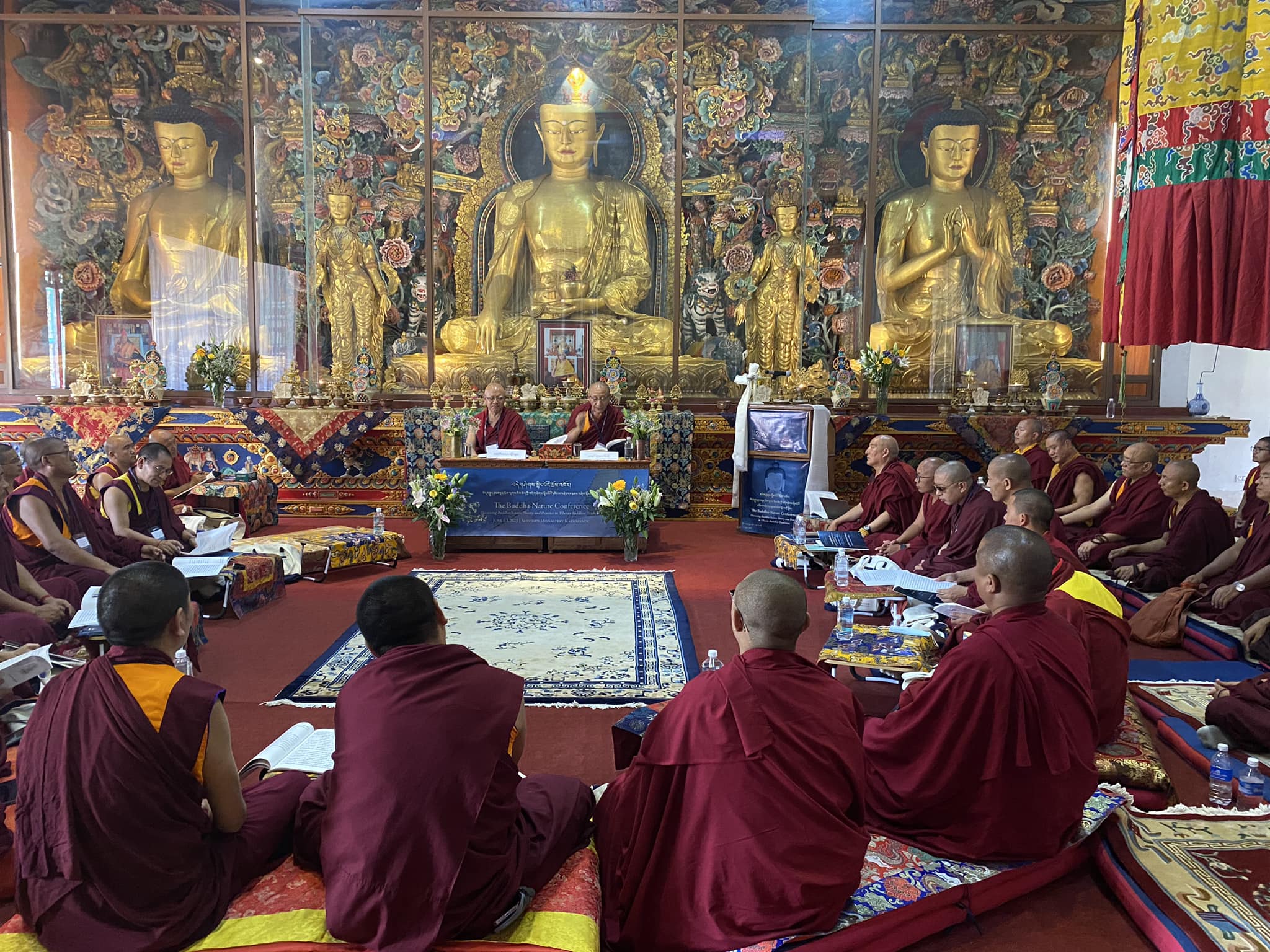
    Bodhicitta is considered the central point of the Buddha’s thought, the quintessence of the Dharma, and the main practice of the Sangha. It is the topic of numerous sūtras, tantras, and treatises. In order to spread the message of bodhicitta or wisdom and compassion as a way of life, Tsadra Foundation is building a web resource containing teachings and texts on bodhicitta from all Indo-Tibetan Buddhist traditions. Over two years ago, the Tsadra Foundation launched a web resource on buddha nature and convened a conference on the theory and practice of buddha nature. The conference was attended by the expert representatives of the major Tibetan Buddhist traditions and turned out to be highly successful and beneficial. Tsadra is now planning a conference on bodhicitta, which will bring together scholars and masters from different Tibetan Buddhist traditions as well as international figures to discuss the various philosophical interpretations and positions, textual traditions and commentaries, practical instructions and transmissions, and historical and modern tools and their applications pertaining to the relative and ultimate bodhicitta. The four-day non-sectarian conference will be attended by a few hundred monks from different monasteries in and around Kathmandu. We hope to broadcast the proceedings on Zoom and Facebook and also make recordings available to a wider audience, and thereby help spread the message of bodhicitta across the world.

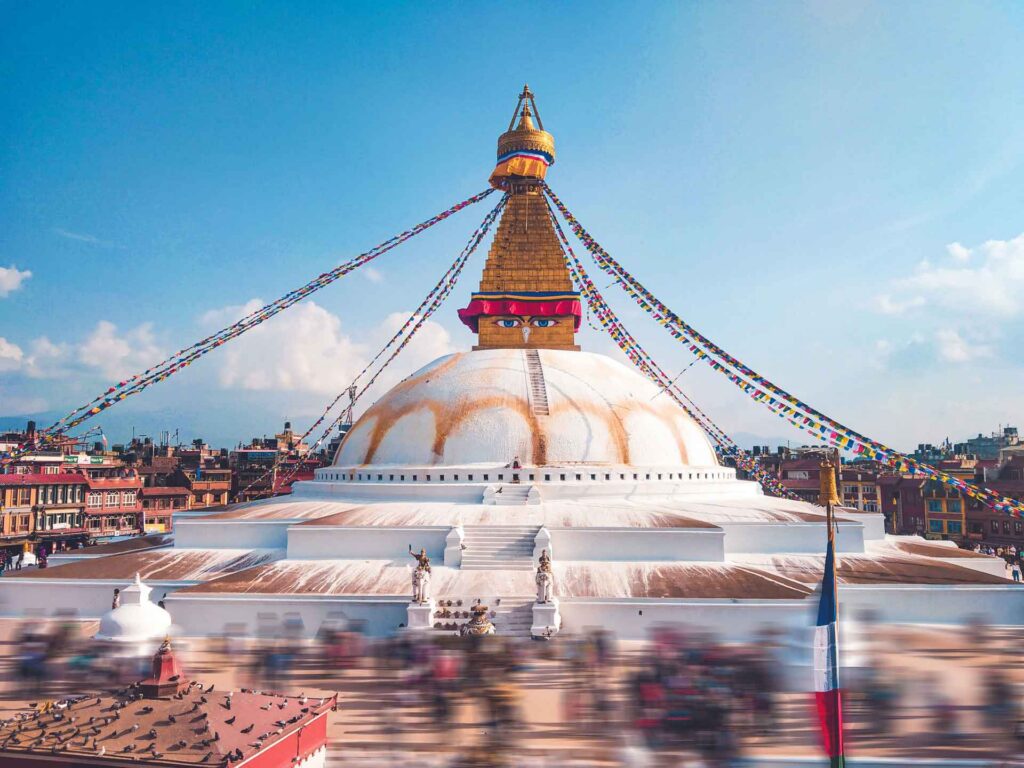
    Where: Main Temple, Shechen Monastery, Bouddhanath, Kathmandu
    When: 13-16 May 2026 (26-30 of the 3rd Tibetan Month.)
    Organizer: Tsadra Foundation and Shechen Monastery, Kathmandu.
    Enquiry about the programme: Karma Phuntsho: [email protected] Whatsapp +0097517350028)
    Enquiry about travel, accommodation, etc.: Gwen Witt Dorring [email protected], whatsapp+977 984-1658823

  • Events: 17th IATS Seminar 2026

    Events: 17th IATS Seminar 2026

    The conference was moved online and was hosted by the IATS organization.

    • Past Event
    • Location: Online
    • Date: August 23-29, 2026

    For more information, visit https://www.iats.info/17th-iats-seminar-2026/

  • Awarding Douglas Duckworth the Distinguished Research Grant

    Awarding Douglas Duckworth the Distinguished Research Grant

    Join us Live on Zoom and Facebook!

    Event: Awarding Douglas Duckworth the Distinguished Research Grant in Tibetan Buddhist Studies

    March 23, 2021: 3 PM Eastern Time

    Professor Douglas Duckworth has received a distinguished research grant for his achievements in the field. Join with other scholars and translators in the field who will celebrate and discuss Shantideva’s classic text The Way of the Bodhisattva (Bodhicaryāvatāra) and its Tibetan Commentaries.


    Join us for a roundtable discussion on one of the most important works of Buddhist literature that has now become one of the most popular western Buddhist books in translation, The Way of the Bodhisattva.

    With Doulgas Duckworth, José Cabezón, Jonathan Gold, and Wulstan Fletcher.

    3 PM Eastern Time, 12 Pacific, Tuesday, March 23rd. 

    You can join anytime here on Facebook Live, or REGISTER FOR ZOOM ACCESS HERE.

    Douglas Duckworth will present his ongoing work on Künzang Sönam’s commentary on The Way of the Bodhisattva and then we will have a roundtable discussion and responses from José Cabezón, Jonathan Gold, and Wulstan Fletcher.

    Awarding the Tsadra Foundation Distinguished Research Grant in Tibetan Buddhist Studies

    Recommended Reading:

    Readings of Śāntideva’s Guide to Bodhisattva Practice. Edited by Jonathan Gold and Douglas Duckworth. Columbia University Press, 2019.

    Śāntideva’s eighth-century work, the Guide to Bodhisattva Practice (Bodhicaryāvatāra), is known for its eminently practical instructions and its psychologically vivid articulations of the Mahāyāna path. It is a powerful, succinct poem into which are woven diverse Buddhist traditions of moral transformation, meditative cultivation, and philosophical insight. Since its composition, it has seen continuous use as a ritual, contemplative, and philosophical manual, making it one of the crucial texts of the Buddhist ethical and philosophical tradition.

    This book serves as a companion to this Indian Buddhist classic. The fifteen essays contained here illuminate the Guide’s many philosophical, literary, ritual, and ethical dimensions. Distinguished scholars discuss the historical significance of the text as an innovative piece of Indian literature, illuminate the important roles it played in shaping Buddhism in Tibet, and bring to light its contemporary significance for philosophy and psychology. Whether experienced or first-time students of Buddhist literature, readers will find compelling new approaches to this resonant masterpiece. (Source)


    The Way of the Bodhisattva. Translated by Wulstan Fletcher and Helena Blankleder of the Padmakara Translation Group. Boulder: Shambhala Publications, 2006.

    Often recommended as the best and most readable version of the text in English, Padmakara’s Way of the Bodhisattva is a joy to read and can also be listened to and studied with materials online from Shambhala Publications.


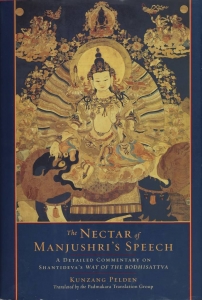
    The Nectar of Manjushri’s Speech: A Detailed Commentary on Shantideva’s Way of the Bodhisattva by Kunzang Peldan. In this commentary, Kunzang Pelden has compiled the pith instructions of his teacher Patrul Rinpoche, the celebrated author of The Words of My Perfect Teacher.

    Follow us on Facebook for more regular updates

  • Job Posting: Cataloger/Research Librarian for Tsadra Foundation

    Job Posting: Cataloger/Research Librarian for Tsadra Foundation

    Research Librarian in the field of Tibetan Buddhist Studies at Tsadra Foundation

    Announcement! We are hiring in January 2025!

    Full-time, 3-year position (2025-2027), in Boulder, Colorado

    Position Overview

    We are seeking a junior researcher in the field of Tibetan Buddhist Studies to join our specialized Tibetan Buddhist research library team in Boulder, Colorado. This role focuses on cataloging and data curation, making it ideal for early career professionals with expertise in Tibetan Buddhist texts and translation. 

    Key Responsibilities 

    The Research Librarian will be tasked with enhancing our specialized Tibetan Buddhist library collection through:

    • Updating and maintaining catalog information for Tibetan works, translations, and Buddhist studies scholarship
    • Curating digital content and managing various file formats
    • Working towards the creation of a Tibetan Buddhist studies dataset useful for training LLMs
    • Collaborating with the library team, including the executive director, director of research, and library technicians
    • Processing and organizing physical books and digital texts
    • Managing datasets and spreadsheets
    • Conducting OCR work on texts
    • Performing book scanning as needed

    Required Qualifications

    • Detail Oriented 
    • Proficiency in Tibetan and English languages
    • Knowledge of Tibetan Buddhist texts and literature
    • Familiarity with cataloging and data curation
    • Familiarity with working on digital Tibetan texts
    • Strong organizational and detail-oriented skills
    • Ability to work independently and as part of a team
    • MA, MLS, or PhD in a relevant field, or commensurate experience (BA with extensive experience in the field), is required.

    Preferred Qualifications

    • Familiarity with translator needs and workflows
    • Understanding of Tibetan literary genre classifications
    • Experience with library cataloging and/or experience with wiki websites 
    • Experience with web-based AI tools and/or translation tools 
    • Knowledge of digital text management and OCR technologies

    Compensation & Benefits

    • Salary: $60,000 annually
    • Health Insurance
    • 401(k) plan
    • Professional development opportunities within Tibetan studies and library sciences

    Location

    This position is based at our library in Boulder, Colorado, and requires in-person work. However, particularly qualified candidates may apply and explain how they could work remotely and this may be taken into consideration. 

    How to Apply

    Qualified candidates are encouraged to submit their applications to Tsadra Foundation by emailing [email protected]. Please include a resume, cover letter, and any relevant work samples or references as PDFs. Please don’t send Word documents or other file types. If you have any questions, please contact Marcus Perman [email protected] 

    Tsadra Foundation is committed to advancing the study and practice of Tibetan Buddhism. We encourage qualified candidates who share our mission to apply. 

  • Announcement: 2021 Dissertation Grant Awards

    Announcement: 2021 Dissertation Grant Awards

    Tsadra Foundation
    Dissertation Fellowship for
    Tibetan Buddhist Studies

    Announcement!

    We are happy to announce the recipients of our new grant for graduate students engaged in Tibetan Buddhist Studies at North American universities.

    The recipients of the 2021 fellowship are:

    Annie Heckman (University of Toronto)

    Khenpo Yeshi (University of California, Berkeley)

    Miguel Sawaya (University of Virginia)    

    This fellowship program provides one-year grants of $35,000 to graduate students at North American universities in order to support them in their pursuit of dissertation research focused specifically on Tibetan Buddhism. Dissertation research must include significant textual work on Tibetan Buddhist primary sources and include translation into English. 

    The purpose of the grant is not only to encourage more research in the area of Tibetan Buddhism but also to encourage the sharing of academic research with the larger world. Within one year of finishing the grant term, recipients will be required to submit an essay aimed at sharing their dissertation research with a nonacademic audience, with the purpose of advancing Buddhist literacy in North America and connecting educated readers with the research of academics on topics in Tibetan Buddhist studies. 

    The academic committee, composed of professors at major universities across North America who are leaders in the field, reviewed many detailed applications, deliberated and debated, and finally voted on these candidates from a shortlist of truly amazing scholars.

    We wish to congratulate all of the applicants on their wonderful projects and look forward to seeing the fruits of their labors.

    Learn More About the 2021 Dissertation Fellowship Recipients

    Annie Heckman (University of Toronto)

    Annie Heckman is a doctoral candidate in the University of Toronto’s Department for the Study of Religion and Book History and Print Culture collaborative program. Born in Chicago, Heckman studied in the arts (BFA University of Illinois at Chicago, 2002; MFA New York University, 2006), teaching at DePaul University before turning to Tibetan language and literature (University of Chicago Graham School, 2013–14; MA University of Toronto 2016). She contributes to Bird of Paradise Press in Virginia and reviews Dunhuang manuscripts at McMaster University, where she was an Ontario Visiting Graduate Student (2017– 2019). Her dissertation focuses on a Tibetan digest of narratives for nuns’ rules in the Mūlasarvāstivāda-vinaya.

    Dissertation Topic: “Reassembling Discipline: A Study of Butön’s Compendium of Narratives for Nuns”


    Khenpo Yeshi (University of California, Berkeley)

    Khenpo Yeshi was born in 1969 in Nakchu, Tibet, and walked across the Himalayas to India as a refugee at the age of 20. There, he pursued studies at several monasteries of the Geluk, Kagyu, and Nyingma schools. After completing a three-year retreat, he taught both monks and westerners at Rangjung Yeshe Institute in Kathmandu, Nepal. In 2001, he moved to the United States and received a B.A. (2012) and an M.A. (2017) from UC Berkeley and is now a doctoral candidate. His research focuses on Tibetan Buddhism and the early development of the Great Perfection (rdzogs chen) Heart Essence (snying thig) tradition.

    Dissertation Topic: “Seeing without Looking: The Eleven Topics and the Formation of Tibet’s Heart Essence”


    Miguel Fares Sawaya (University of Virginia)

    Miguel Sawaya holds a BA in Jazz Performance from UCLA and an MA in Indo-Tibetan Buddhism with Tibetan Language from Naropa University. After completing the year-long Translator Training Program at Rangjung Yeshe Institute, Kathmandu University’s Centre for Buddhist Studies, he worked there for six years as a Tibetan language instructor and interpreter for Buddhist philosophy courses taught by monastic instructors. He translates for the 84000 project under the auspices of the Dharmachakra Translation Committee, interprets for several Tibetan Buddhist teachers in a variety of contexts, and is currently pursuing doctoral studies in Buddhism at the University of Virginia.

    Dissertation Topic: Tsele Natsok Rangrol’s contemplative practice material

  • Dissertation Grants Available

    Dissertation Grants Available

    Tsadra Foundation Dissertation Fellowship for Tibetan Buddhist Studies

    Description and Purpose

    We are happy to announce a new grant for graduate students engaged in Tibetan Buddhist Studies at North American universities. Apply by September 1st for the 2021 fellowship.  

    This fellowship program provides two, one-year grants to graduate students at North American universities in order to support them in their pursuit of dissertation research focused specifically on Tibetan Buddhism. Dissertation research must include significant textual work on Tibetan Buddhist primary sources and include translation into English. Two non-renewable grants of $35,000 are available each year beginning in 2021.  

    The purpose of the grant is not only to encourage more research in the area of Tibetan Buddhism but also to encourage the sharing of academic research with the larger world. Within one year of finishing the grant term, recipients will be required to submit an essay to the Foundation aimed at sharing their dissertation research with a nonacademic audience, with the purpose of advancing Buddhist literacy in North America and connecting educated readers with the research of academics on topics in Tibetan Buddhist studies. This essay may be published in a magazine or online publication by the recipient, or if no suitable venue is available, it will be published online on the Tsadra Foundation website. Recipients with exceptional research that is ready to be presented at academic venues may also apply for an additional small stipend to travel and present at conferences, meetings, or workshops. 

    Eligibility

    Graduate students in doctoral programs in North America who are engaged in the study of Tibetan Buddhist texts, practices, and related topics. 

    A student is eligible to receive a fellowship if he or she: 

    Is a graduate student in good standing at an institution of higher education in North America who, when the fellowship begins, is admitted to candidacy in a doctoral program at that institution–applicants need not be currently ABD, but must have achieved candidacy by the time the grant period begins;

    Possesses adequate skills in the language(s) necessary to carry out the dissertation project (i.e., Tibetan and possibly also Sanskrit, Chinese, Pali, or Mongolian.)

    Duration of the Grant:

    12 Months. The fellowship may not be renewed. 

    Terms and ConditionsA fellow shall:

    Send a written report after six months and a final report to Tsadra Foundation detailing their progress;

    Devote full time to research or writing on the approved dissertation topic;

    Remain a student in good standing at his or her institution; and

    Maintain satisfactory progress in the conduct of his or her research.

    Grant recipients will also be expected to present their dissertation research in public at least once, as part of a workshop, conference, or event organized or supported by Tsadra Foundation. Additional funds will be made available for this, as needed. 

    Finally, as described above, recipients will be required to submit an essay aimed at sharing their dissertation work with a nonacademic audience. This essay may be published in a magazine or online publication by the recipient, or if no suitable venue is available, it will be published on the Tsadra Foundation website. 

    Applicant Information

    Current Grant Applications for summer/fall 2021:

    Application deadline: September 1st, 2020 – Notices will be sent by February 1st, 2021. 

    To receive this grant, applicants must complete requirements for candidacy in their PhD program by August 31st, 2021, or the start of their grant period, whichever is earlier. 

    The application review committee is composed of scholars in the field of Tibetan Buddhist studies with positions at major universities in North America. 

    Application Instructions

    Interested persons should email the following items to the committee ([email protected]): 

    • A cover letter of no more than 1000 words explaining their dissertation research and the state of their dissertation work
    • Academic writing sample 
    • Curriculum vitae
    • One letter of reference 

    No funding may be used for overhead at university institutions and programs. This grant may be held concurrently with other fellowships and grants and any academic appointments. There is no additional financial support for dependents.

    Tsadra Foundation is in no way obligated to award any of the candidates who apply for this grant and a decision will be made by the members of the search committee after a thorough review of the submitted documents.

    Selection Criteria

    • Significance of the topic and its potential contribution to Tibetan Buddhist studies
    • Potential for advancing the objective of public Buddhist literacy
    • Feasibility and clarity of work plan and likelihood of completing dissertation
    • Academic track record
    • Writing Quality

    Application Contact

    Email your complete application to [email protected]

    This email will be viewable by the entire academic committee that will choose the grant recipients. If you have a simple question, please direct it to:  

    Marcus Perman
    Executive Director
    Tsadra Foundation
    [email protected] 

  • CALL FOR APPLICATIONS: Tsadra Foundation Grant for the Advancement of Buddhist Literacy

    CALL FOR APPLICATIONS: Tsadra Foundation Grant for the Advancement of Buddhist Literacy

    Dear Colleagues,

    Tsadra Foundation is calling for applications for a grant to write essays on the history, philosophy, and practices associated with buddha-nature teachings and tathāgatagarbha theory in Tibet. Grants may be for up to two years, with a flexible time frame of grant activity and effort. For example, a person already holding a half-time position in the field may apply for the grant. A person with an academic position may write full-time during the summer and spread the grant over the course of two academic years. Candidates will have an MA, Ph.D., be ABD, or have significant publications and experience with Tibetan Buddhism. The grant will be for no less than $35,000 for part-time and no more than $100,000 per year for full-time, commensurate with experience and qualifications of the applicant.

    Grant recipients will become the writer-in-digital-residence for Tsadra Foundation’s buddha-nature project and will publish well-researched essays and help to curate the project website. The specific essay topics and number of contributions will be decided upon in collaboration with the Foundation; final project deliverables will be clarified in writing prior to the start of the grant.

    This grant is designed to support Tsadra Foundation’s Buddhist literacy projects that connect the larger public with academic research and advance understanding of specific aspects of Tibetan Buddhist traditions. Proposed writing projects will involve developing content that connects readers to detailed textual and historical data associated with Buddhist ideas, as well as to the living tradition of Tibetan Buddhism. This writing will be addressed to an audience of educated readers of Buddhist materials and Buddhist practitioners. Candidates will be expected to have an interest and at least some experience interacting with different types of communities such as western dharma practitioners, Buddhist studies students in the academy, undergraduate readers, and/or traditionally trained Tibetan Buddhists. Grant recipients will be provided with an editorial team and access to Tsadra Foundation’s library and digital resources. Grant recipients may engage in the project from anywhere in the world.

    Candidates will apply with a writing sample that they feel best represents their skills. More than one writing sample is welcome, such as an academic publication and a popular publication, but no more than three samples will be reviewed.

    Interested persons should email the following items to Marcus Perman, [email protected]:

    • A cover letter explaining their interest in the grant and proposing at least one specific writing project or research idea to be discussed with the Tsadra team. 
    • Writing sample(s)
    • Curriculum vitae
    • One letter of reference 

    Applications will be accepted until May 31st, 2020. The tenure of the grant will be flexible and discussed with the recipient, but can be from no later than September 30th, 2020 until no later than September 30th, 2022. No funding may be used for overhead at university institutions and programs. This grant may be held concurrently with other fellowships and grants and any academic appointments. There is no additional financial support for dependents. Tsadra Foundation is in no way obligated to appoint any of the candidates who apply for this grant. A decision will be made by the members of the search committee after a thorough review of the submitted documents.

    ABOUT TSADRA FOUNDATION

    Tsadra Foundation is a nonprofit trust established in 2000 in New York City to provide vital funding for the advanced study and practice of Tibetan Buddhism in the west. Over the past 20 years, the Foundation has supported translation and publication of essential Tibetan Buddhist texts (over 112 English and French publications to date), scholarships for long-term retreat practice and advanced Buddhist studies, development of digital resources for translators and advanced study of Tibetan texts, publications from Tibetan Buddhist publishers in India, Tibet, and Nepal, and hosting conferences and workshops for translators of Tibetan texts in the west. To learn more about the Foundation’s activities before applying, visit tsadra.org and conferences.tsadra.org. Feel free to inquire about access to the buddha-nature project website anytime.

    All the best wishes to everyone around the world in these strange and interesting times,

    Marcus Perman
    Executive Director
    Tsadra Foundation
    New York and Boulder, Colorado, USA

  • Memorial Lecture Fund for Luis Óscar Gómez

    Memorial Lecture Fund for Luis Óscar Gómez

    Respected and cherished scholar of Buddhist Studies, Indology, and Philology and creator of the Buddhist Studies program at University of Michigan passed away on September 3, 2017.

    In June 2017, knowing that he had just a few months to live, he decided to give his final lecture at the Translation & Transmission Conference. The lecture was delivered in the plenary session, Approaches to Translation and Transmission, which also included the esteemed scholars Susan Bassnett, David Bellos, and Jonathan Gold. Professor Gómez pondered translation as a multi-layered social communication act which considers philological analysis, the significance of meaning, and the needs of both audience and publishers. He reminded us that “Words seldom mean one thing–they are naturally elastic,” and the beauty and practicality of translation rely on the plasticity of meaning and interpretation. Watch Professor Gómez’s final lecture here.

    Read the obituary composed by Donald Lopez, Jr. on the Translation & Transmission Conference website.

    To honor his memory, the University of Michigan is seeking to raise an endowment to establish the Luis Gómez Memorial Lecture Fund, which would support an annual lecture in Luis’s honor, bringing a major scholar of Buddhism to campus. Generous donations from students of Luis and from Buddhist organizations from around the world have helped raise more than half of the fundraising goal. To help reach the goal, please consider making a donation here.

    Publications and Contributions of Note

  • Rinchen Terdzo Project Completed

    Rinchen Terdzo Project Completed

    The Complete Rinchen Terdzö Published by Shechen Monastery!

    Thanks to the hard work of many people over the course of many years (and perhaps lifetimes), the most complete edition of the Rinchen Terdzö Chenmo (རིན་ཆེན་གཏེར་མཛོད་ཆེན་མོ་) in seventy-one volumes is finished and printed.

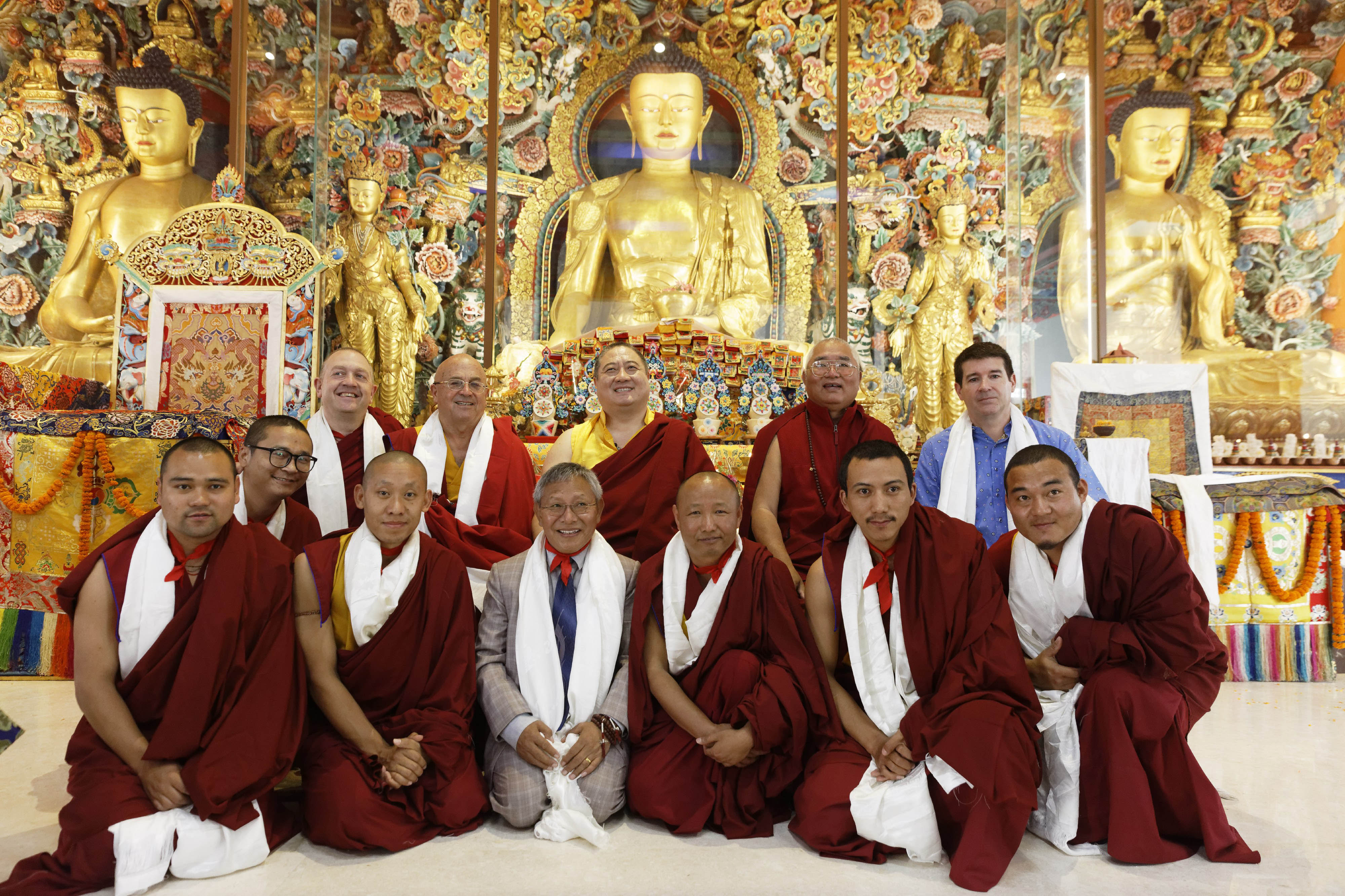
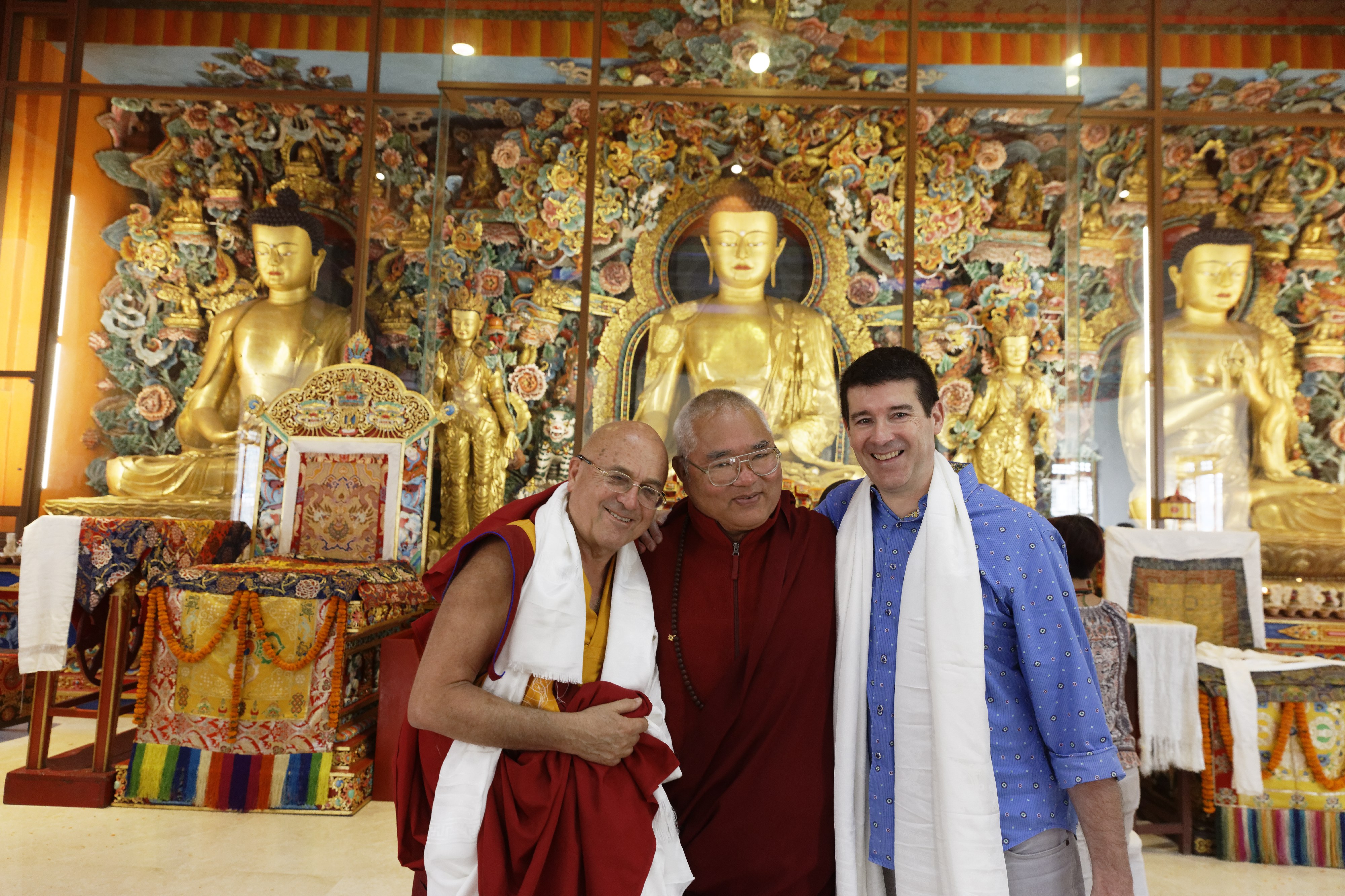
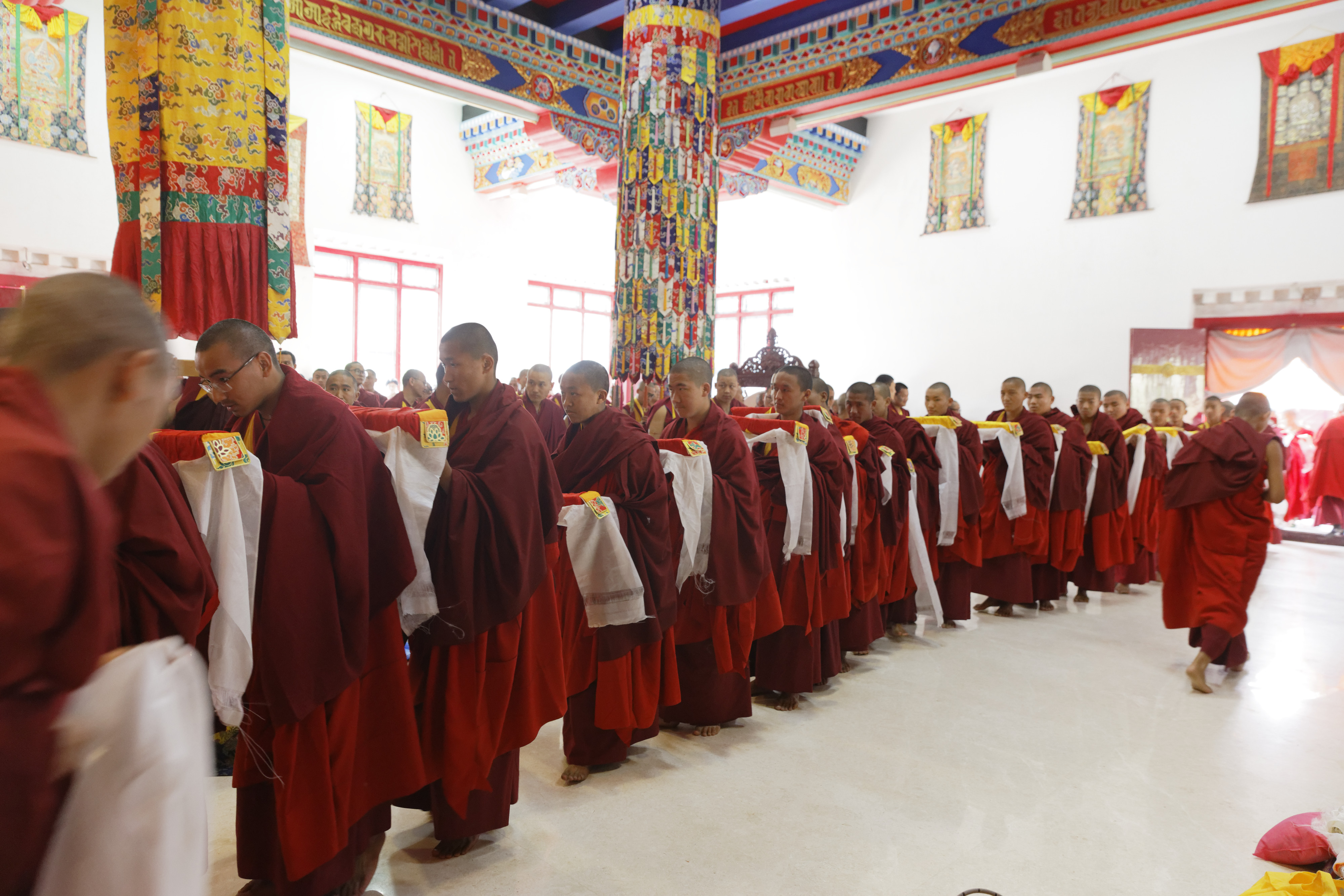
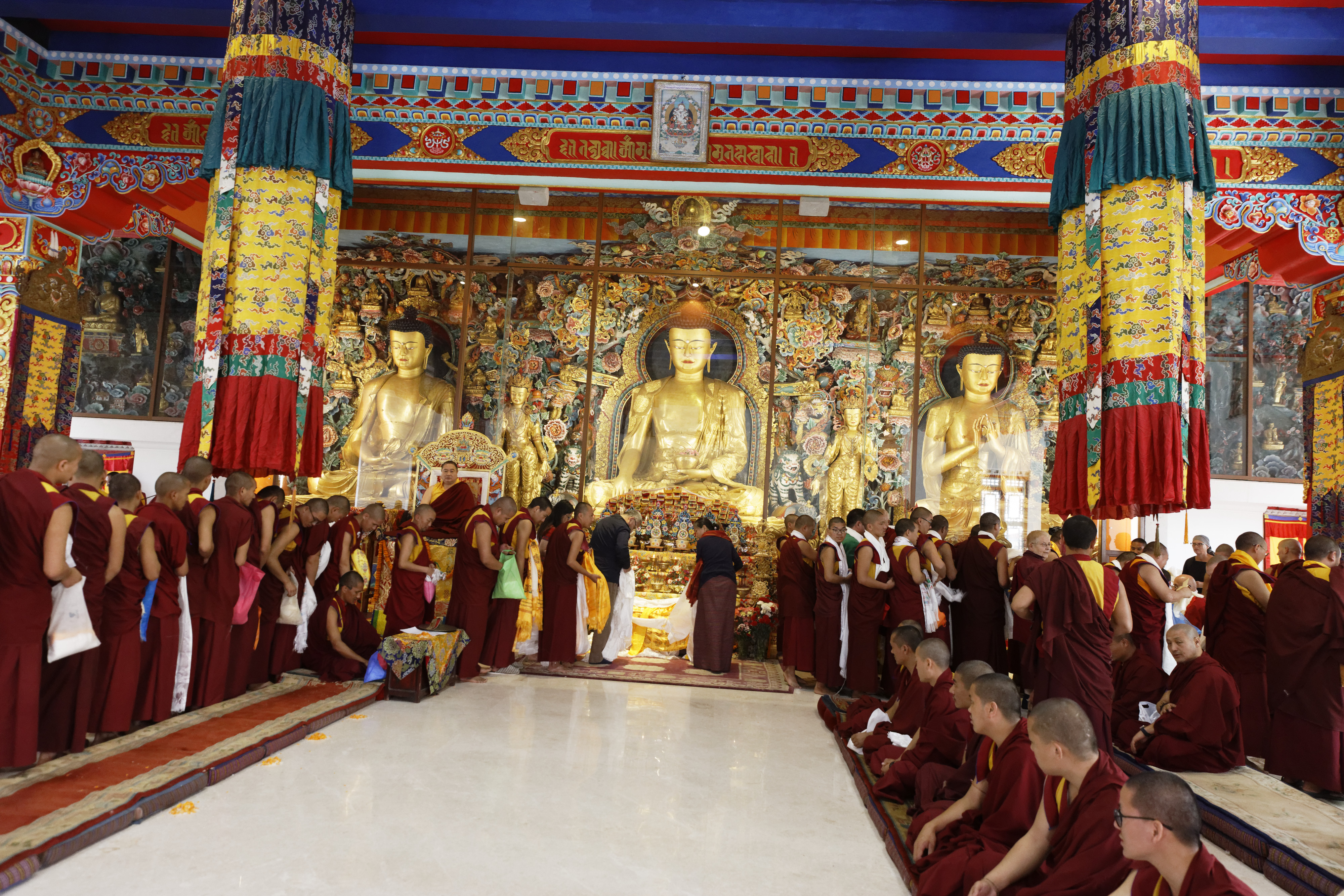
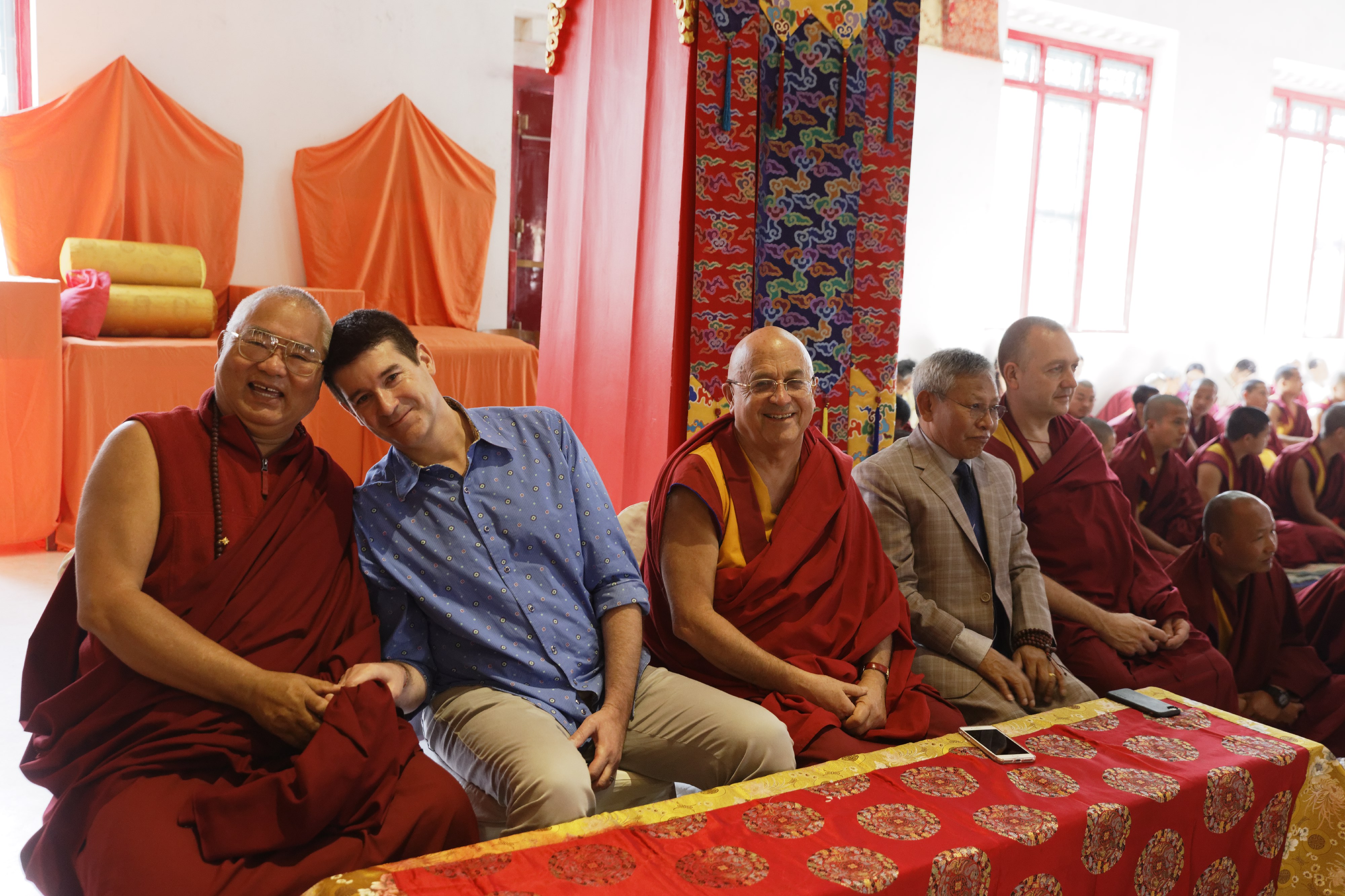
    Shechen Monastery held a celebration on March 29, 2018, to commemorate the conclusion of this important project. Kyabje Shechen Rabjam Rinpoche and Shechen Monastery honored Dakpo Tulku Rinpoche and his team–Matthieu Ricard, along with Sean Price and Eric Colombel of Tsadra Foundation–who all put a concerted effort into the project’s completion which was more than thirteen years in the making.

    Matthieu Ricard, Dakpo Tulku, and Eric Colombel of Tsadra Foundation.

    Limited printed copies of the collection are available from Shechen Monastery. To access the entirety of the texts digitally, search through the collection, or learn more about it, see the online catalog here: Rinchen Terdzö Chenmo: The Great Treasury of Rediscovered Teachings.

    The Rinchen Terdzö website presents a searchable catalog of all texts in the Rinchen Terdzö Chenmo and includes full unicode Tibetan texts with metadata. Currently, (2018) volumes 1-64 and 68 have been updated and we will finish work on the final volumes of the Shechen edition this year.

    The Rinchen Terdzö Chenmo is the largest of the Five Treasuries that Jamgon Kongtrul the Great (‘jam mgon kong sprul blo gros mtha’ yas, 1813-1899) compiled throughout his life. This extraordinary collection is comprised of the main Rediscovered Treasures (gter ma) of Tibetan Buddhism and the texts necessary to bestow the related empowerments and explanations to practice them.

    Jamyang Khyentse Wangpo traveled for thirteen years throughout Central and Eastern Tibet in order to collect the texts and receive the transmissions for the many lineages that had become almost extinct and held by only a few people. The actual redaction and editing of the Rinchen Terdzö was accomplished by Jamgön Kongtrul at the monastery-hermitage of Dzongsho Deshek Dupa, a secluded mountain retreat located between Dzongsar and Kathok, where Khyentse Wangpo had revealed a set of termas related to the Eight Herukas (grub pa bka’ brgyad).

    Wooden-blocks were then carved at Palpung Monastery creating a sixty-volume edition. From this edition, another set of wooden-blocks was carved at Tsurphu Monastery with three additional volumes. These three included the ‘dod ‘jo’i bum bzang, which was compiled by Minling Terchen Gyurme Dorje (1646-1714) and is considered to be the “seed” of the Rinchen Terdzö, the autobiography of Jamgön Kongtrul, and the root text of Chogyur Lingpa’s Lamrim Yeshey Nyingpo with a detailed commentary by Jamgön Kongtrul. (Read more of the introduction by Matthieu Ricard.)

    Visit the Rinchen Terdzö Chenmo: The Great Treasury of Rediscovered Teachings online to learn more about it!