Category: Announcements

[rev_slider alias=”tsadra-blog”]

Announcements

  • 13th IATS Seminar in Ulaanbaatar, Mongolia

    13th IATS Seminar in Ulaanbaatar, Mongolia

    by Sarah Harding

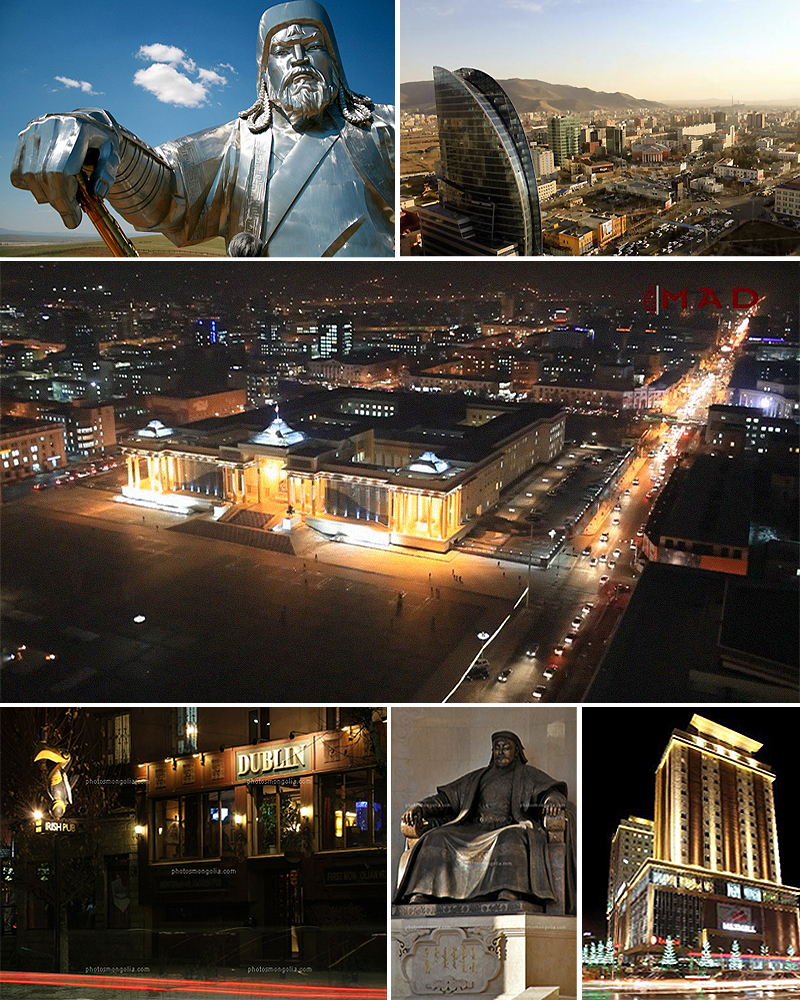
    This year the seminar of the International Association for Tibetan Studies was held in Mongolia, co-sponsored by the Mongolian Academy of Sciences, in association with the National University of Mongolia. It was a fitting place for international scholars of Tibetan studies to convene, given the long, ancient history with Tibet and the resurgence of Buddhist activities in the last twenty years. The University is in central Ulaanbaatar–a booming city with nonstop construction during the few summer months when this is possible. It is only a block from the parliament building with its commanding statue of Chinggis Khan, the great warrior venerated everywhere as the ancestor and symbol of the Mongols.

    On the other side of the parliament square is the psychedelic home of the Tyrannosaurus dinosaur found in the Gobi, a close second as a symbol of national pride ever since the smuggled skeleton that had sold for over a million dollars was demanded back by the Mongolians and duly returned by the U.S.

    It is tempting to just write about fascinating Mongolia, but the subject here is, of course, the conference. After a late night arrival, the next morning we faced the crushing registration process, took advantage of bus tours to Ganden monastery or the Bogd Kahn palace museum, and later attended the opening plenary session, where many of the greatest scholars in the field could be seen in deep jet-lag sleep. I was honored to join them there.

    Over the next six days there were panels and sessions averaging at least ten per time-slot, making choices so hard as to be almost random. I am still stricken with regret over the ones I missed. And all of us missed the scores of Tibetan nationals who were denied exit visas at the last minute, leaving some panels with skeleton crews. Still, there were some six hundred participants and plenty of stimulation. Here is a mere mention of a few sessions that I didn’t miss: There was an interesting panel on kingship with a wide range of papers. I remember subjects such as Kingship Ideology in Sino-Tibetan Diplomacy, The Dalai Lama as the Cakravartin Rāja Manifested by the Bodhisattva Avalokiteśvara, and an interesting discussion by Nathan Hill on the sku-bla rite in Imperial Tibetan religion. To quote from his conclusion: “The evidence of the sku-bla across Old Tibetan literature indicates that the sku-bla is the spiritual counterpart of the Tibetan emperor and has been his companion ever since both resided in the heavens, specifically the realm of Dmu; vassals of the Tibetan Empire (not the imperial government itself) propitiate the sku-bla in ritual observance.” New to me.

    A panel called “The Secular in Tibet and Mongolia” had been convened by Colorado locals Holly Gayley of CU (and my travelling companion) and Nicole Willock of DU. Janet Gyatso expertly set the stage by establishing the parameters of secularism and used her current research on Tibetan Medicine (translating the rgyud bzhi) as an example. Holly, Nicole, Tsering Shakya and others followed with excellent papers, bringing us right up to the present time with Holly’s discussion of Buddhist advice to the laity in contemporary Tibet and Emmi Okada’s discussion of the Dalai Lama’s Ethics for a New Millennium. Of all the panels and sessions I attended, this one had the hottest discussion afterwards that left us invigorated.

    Another popular and packed panel was called “Hermes in Tibet,” with an entertaining-as-ever presentation by Robert Thurman, as well as John Campbell, Christian Wedemeyer (and sadly not David Gray), all focusing on the Guhyasamāja tantra, capped off by a fascinating paper by Yael Bentor on “Interpreting the body mandala.” It occurred to me that delving into the deep levels of tantra, we are really just scratching the surface, smart as we are.

    I found the panel on Nyingma very refreshing, as it was held in a beautiful room with old wood stadium seating, the only time I wasn’t packed into a hot stuffy classroom. There were other good things too. Naropa alum Joel Gruber, now at UCSB, did a great job as convener, especially when a paper on the rNying ma rGyud ‘bum drew some rapid-fire retorts on incredibly important points that I can’t remember. Joel’s own paper on mahāyoga commentaries attributed to Vimalamitra was adorned with beautiful graphs, which that auditorium could actually project on a big screen. I realize that to be a researcher in the field one needs to be expert at math and graphic (literally) art, something Joel certainly didn’t get from me at Naropa.

    I wanted to stay in that cool room all day, but felt compelled to abandon the Nyingma for Mahāmudrā in another tiny stuffy room. Such is my karma. Or is it collective? Anyway, the māhamudrā discussions were both familiar and interesting. Klaus-Dieter Mathes headed up a group from Vienna, where many papers focused on specific recurring thematic terms, such as lhan cig skyes pa, bsres ba, gshis, and gdangs. Roger Jackson finished from the outside, as it were, with the fascinating question “Did Tshog kha pa teach mahāmudrā?” and reiterated the many objections to Kagyu mahāmudrā put forth by Gelukpas and Sakyas over the centuries. I love this stuff: ending up both confirmed and disturbed!

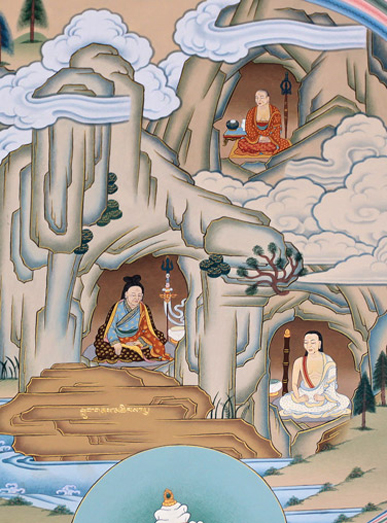
    Finally I had to miss all kinds of good things in order to be at my own presentation. The loosely grouped catchall session entitled “Tibetan Buddhist Women” consisted of presentations on contemporary living situations and nunneries for women practitioners. Again, unfortunately, the scholars from Tibet were absent, as was even the discussant. We heard from Bhutanese Ani Rinzin on the flourishing state of Pema Choling Nunnery, a place close to my heart that was started by Gangteng Tulku in Bhutan. Karma Lekshe Tsomo delivered a rousing speech on the history and current state of bhiksuni ordination, deftly using the very arguments employed by Tibetan clerics who oppose it to negate them in true madhyamaka style. Then it was my turn to follow up those current and relevant issues with the highly irrelevant and unresolvable question of whether or not Machik Lapdrön really taught gcod some time back in the 11th century. Lucky for me I was in the right place, as the Tibetan scholars who are also apparently interested in ancient dusty pecha poured in. I presented the scant evidence from the early texts that I have translated from the gDams ngag mdzod for Tsadra Foundation. Of course I talked too much and there was no time for discussion, but I later heard some feedback that I had successfully made the case. And at least I could introduce my preference for the Single Mother of Color with my single-photo power point:

    So that, in brief, is my experience of the conference. It was a good conference, and only partially eclipsed by the good fun that followed. Holly and I joined Nicole and her resident friend Robin for a few days of adventure out on the steppe and to Chenggis Khan’s ancient capital of Karakaroum (with “k” pronounced as “h” it sounds more like a sneeze). After that, Holly and I and another Naropa alum, Lilly Atlihan, went for a longer horse ride in the countryside west of Ulaanbaatar. Here are some of my photos of the open, or narrow, road:
  • Translating Buddhist Luminaries: A Conference on Ecumenism and Tibetan Translation

    Translating Buddhist Luminaries: A Conference on Ecumenism and Tibetan Translation

    The Tsadra Foundation and Center for Asian Studies at the University of Colorado, Boulder are collaborating on a conference, “Translating Buddhist Luminaries: A Conference on Ecumenism and Tibetan Translation,” scheduled for April 18-20, 2013 on the CU Boulder campus.

    Buddhist luminaries, clustered in eastern Tibet in the nineteenth-century, composed numerous short texts of advice that are lively in their use of language and poignant in their pith instructions. This conference explores a range of such texts of advice, which are animated in their use of language and convey a strong sense of the Tibetan author’s voice, tone and style. Through the conference, we hope to stimulate a discussion about the ways in which we can approach authorial voice and literary style in the translation of Tibetan texts.

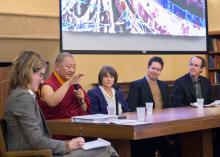
    The conference includes a distinguished panel that is free and open to the public:

    Ecumenism in Tibet: Panel with Ringu Tulku & Visiting Scholars
    7pm on Thursday, April 18th
    British Studies Room on 5th floor of Norlin Library at CU Boulder

    In nineteenth-century Tibet, a circle of Buddhist luminaries worked tirelessly to collect a compile a wide range of teachings in order to preserve their distinctive practice traditions. These collections and the ecumenical impulse they represent have been important to preserving Tibet’s unique tantric heritage in the diaspora. What was the approach to ecumenism among these luminaries? How has their approach and legacy impacted Tibetan Buddhism as it has grown and taken root beyond the Tibetan plateau? How should we understand the ongoing significance of their work?

    Ringu Tulku is a leading experts on ecumenism in Tibet. Holder of an Acharya degree and author of The Ri-me Philosophy of Jamgon Kongtrul the Great, Ringu Tulku is an avid translator and author as well as the founder of Bodhicharya International and abbot of Rigul Monastery.

    Panelists:

    Sarah Harding, Naropa University
    Michael Sheehy, Tibetan Buddhist Resource Center
    Douglas Duckworth, East Tennessee State University

    Moderator:

    Holly Gayley, University of Colorado at Boulder

    In conjunction with the conference, Tsadra is hosting an Open House at the new location of their Research Center in Boulder at 2930 Island Drive, Boulder, CO.  Driving directions: Take 28th street north to Kalmia. Take a right on Kalmia and your first left onto Island Drive. It will be the stucco and red stone house on the right side. Please try to carpool. This is a residential neighborhood, and it would be nice to have fewer cars parked on the street.

    This conference is co-sponsored by the Tsadra Foundation and the Center for Asian Studies with additional support from the Center for Humanities & the Arts and the Department of Religious Studies at the University of Colorado, Boulder.

  • Publication of the Treasury of Knowledge Series Completed

    Publication of the Treasury of Knowledge Series Completed

    Oct 26, 2012

    Dear friends,

    We are delighted to announce that the final volume of the ten-volume Treasury of Knowledge Series has now been published. This brings to completion a project begun by the previous Kyabje Kalu Rinpoche and his students over 25 years ago, and is – to quote Roger Jackson in his article to appear in Buddhadharma – “a signal event in the transmission of Buddhism to the West”.

    We would like to take a moment to acknowledge not only the translators who completed this work, but also the great number of individuals who participated in the early translation efforts in Bodhgaya and Sonada, India, in the early years, the many Rinpoches and Khenpos who offered their encouragement and assistance throughout the translation process, and those who offered sponsorship in first difficult years.

    Tsadra Foundation was established in 2000 and very quickly decided this was a project worthy of its support. Collaborating with Bokar Tulku Rinpoche (who had taken over responsibility for the project from the previous Kalu Rinpoche) and with Snow Lion Publications we were able to provide stable financial and logistical support to move the project ahead.

    Today we see the fruit of all these years of effort, dedication and commitment. We invite you all to take a moment and join us in celebrating this extraordinary accomplishment. Attached below you will find Roger Jackson’s full article that will appear in the Winter 2012 Edition of Buddhadharma: The Buddhist Practitioner’s Quarterly.

    Sincerely,

    Eric Colombel

    and the Directors of Tsadra Foundation

    The Review article by Roger Jackson

    from Buddhadharma: The Buddhist Practitioner’s Quarterly, Winter 2012 edition.

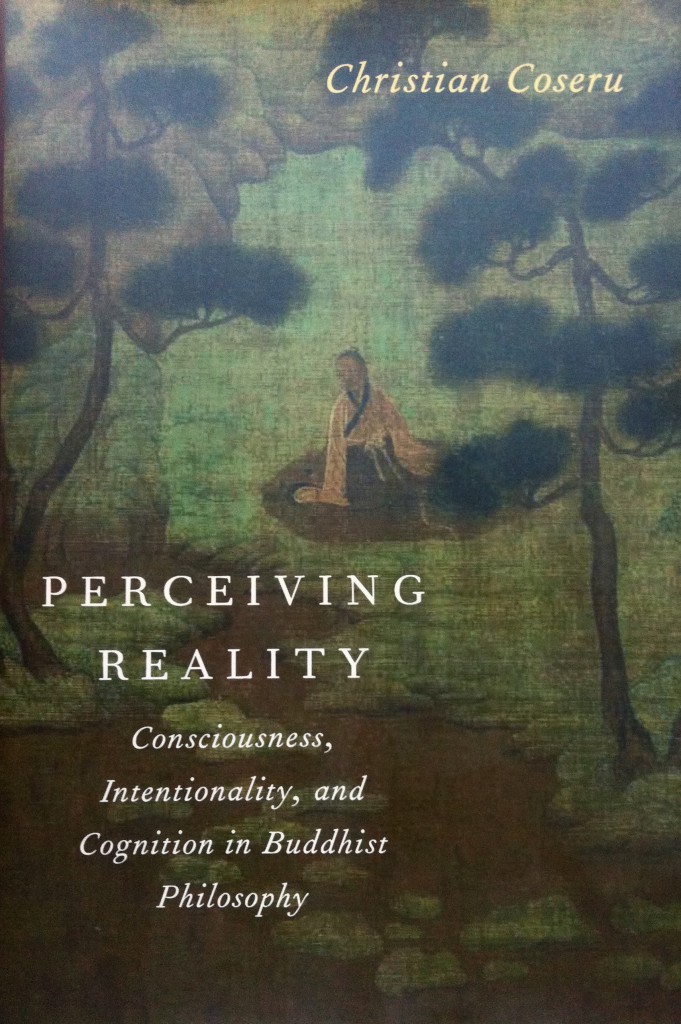
  • Perceiving Reality: A New Book from Chrisitian Coseru

    Perceiving Reality: A New Book from Chrisitian Coseru

    “Perceiving Reality is a masterful study of Buddhist epistemology. It is first and foremost a substantial contribution to the philosophical literature, developing a compelling account of epistemic authority in the context of the phenomenology of perception. It is also an excellent study of Indian Buddhist epistemological inquiry. The philology is impeccable. But it is always in the service of philosophy.

    Philosophers and Buddhologists must pay attention to Coseru’s book.”
    –Jay Garfield

    What turns the continuous flow of experience into perceptually distinct objects? Can our verbal descriptions unambiguously capture what it is like to see, hear, or feel? How might we reason about the testimony that perception alone discloses?

    Christian Coseru proposes a rigorous and highly original way to answer these questions by developing a framework for understanding perception as a mode of apprehension that is intentionally constituted, pragmatically oriented, and causally effective. By engaging with recent discussions in phenomenology and analytic philosophy of mind, but also by drawing on the work of Husserl and Merleau-Ponty, Coseru offers a sustained argument that Buddhist philosophers, in particular those who follow the tradition of inquiry initiated by Dignāga and Dharmakīrti, have much to offer when it comes to explaining why epistemological disputes about the evidential role of perceptual experience cannot satisfactorily be resolved without taking into account the structure of our cognitive awareness. Perceiving Reality examines the function of perception and its relation to attention, language, and discursive thought, and provides new ways of conceptualizing the Buddhist defense of the reflexivity thesis of consciousness–namely, that each cognitive event is to be understood as involving a pre-reflective implicit awareness of its own occurrence.

    Coseru advances an innovative approach to Buddhist philosophy of mind in the form of phenomenological naturalism, and moves beyond comparative approaches to philosophy by emphasizing the continuity of concerns between Buddhist and Western philosophical accounts of the nature of perceptual content and the character of perceptual consciousness.

    Source: Oxford University Press

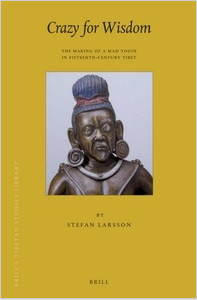
  • New Brill Book: Crazy for Wisdom by Stefan Larsson

    New Brill Book: Crazy for Wisdom by Stefan Larsson

    Dr. Stefan Larsson’s dissertation has been published as volume 30 of Brill’s Tibetan Studies Library.

    Crazy for Wisdom
    The Making of a Mad Yogin in Fifteenth-Century Tibet

    The book looks at the life of a young monk from the 15th-century named Sangyé Gyaltsen who became the famous “Madman of Tsang” and the eventual author of the Life of Milarepa. Read more about this book on Brill’s homepage.

  • International Association of Buddhist Studies Conference To Be Held In Vienna

    International Association of Buddhist Studies Conference To Be Held In Vienna

    The XVIIth Congress of the International Association of Buddhist Studies will be held at the University of Vienna, Austria in August of 2014. More information can be found on the conference website: http://iabs2014.univie.ac.at

  • Dissertation Reviews Dot Org

    Dissertation Reviews Dot Org

    It may be of some interest to know that a new website will be sharing reviews of academic dissertations online: http://dissertationreviews.org/

    Although the dissertations will be from many areas of study, of interest to us is the section on Tibetan and Himalayan Studies. See the review of Dr. Nicole Willock’s dissertation on the sixth Tséten Zhapdrung Jikmé Rikpé Lodrö:  A Tibetan Buddhist Polymath in Modern China.

    Also see Dr. Nancy Lin’s Adapting the Buddha’s Biographies: A Cultural History of the Wish-Fulfilling Vine in Tibet, Seventeenth to Eighteenth Centuries.

  • The Thirteenth Seminar of the International Association for Tibetan Studies

    The Thirteenth Seminar of the International Association for Tibetan Studies

    The Thirteenth Seminar of the International Association for Tibetan Studies will be held in Ulaanbaatar Sunday 21 July to Saturday 27 July, 2013.

    For more information see their new and developing website: http://www.iats.info/

  • Tsadra Contemplative Scholarships Update

    Tsadra Contemplative Scholarships Update

    The Tsadra Foundation Contemplative Scholarships are now entering their third year. Here is some updated information about the scholarship recipients.

    For more information on the scholarships and application procedures see the Scholarship Description on our website.