ISYT Conference Day 2 continued
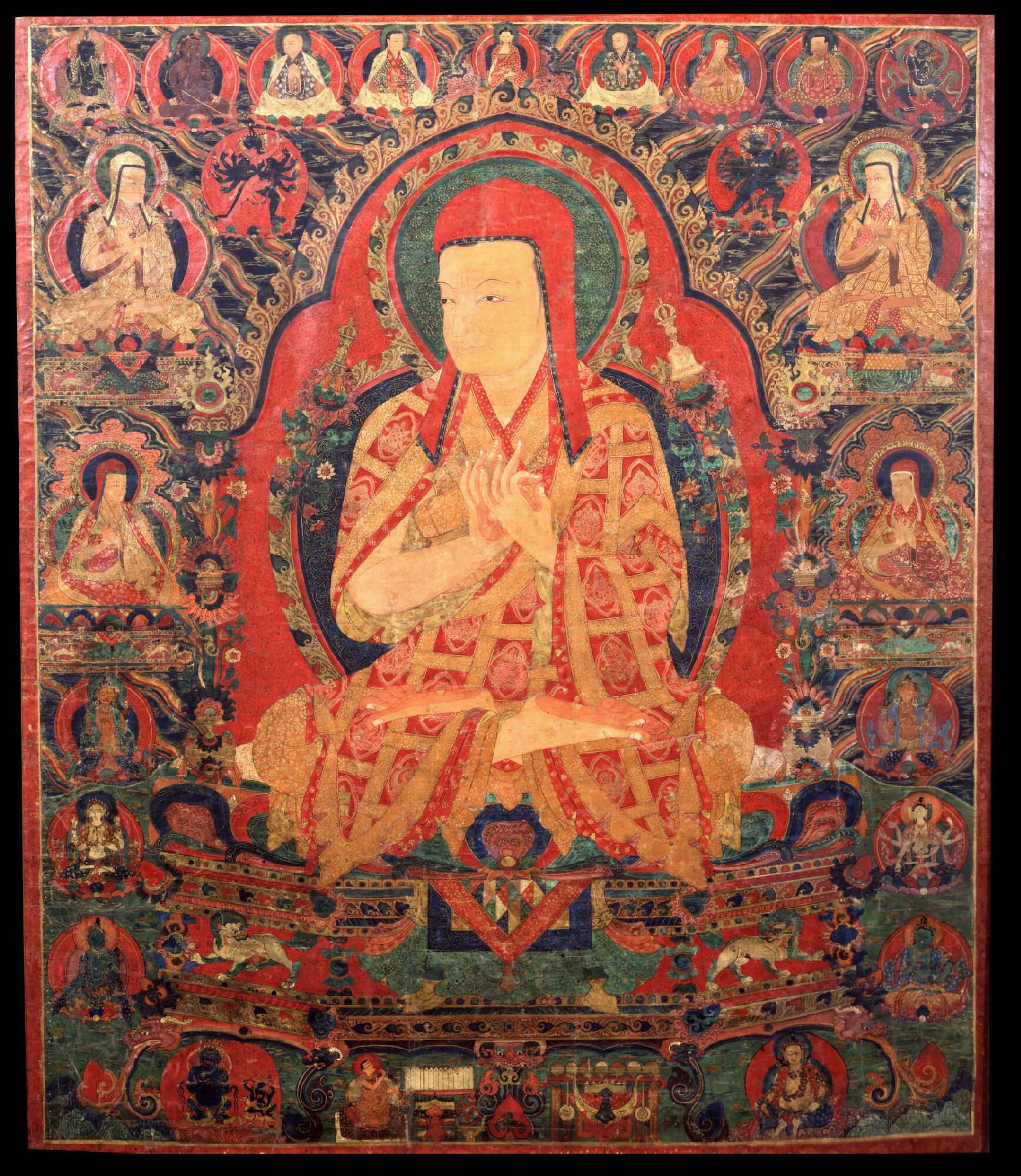
Back on day two of the ISYT conference, Elijah Ary (Ph.D., Harvard University) presented us with his study of the biographies of Tsong Kha pa blo bzang grags pa, entitled “From Disciple to Divinity: a shift in the figuration of Tsong kha pa blo bzang grags pa (1357-1419).”
Dr. Ary described two distinct tendencies in dge lugs descriptions of Tsong kha pa. First, Tsong kha pa is described as a disciple of Mañjuśri who received teachings directly via visions or through a medium (his teacher dbu ma pa). Second, a later development, presents Tsong kha pa as a sprul pa of Mañjuśri. In this case, all his actions are to be described within the rubric of enlightened activity. As Mañjuśri, all the stories of Tsong kha pa’s meetings with Mañjuśri need to be explained, since Mañjuśri doesn’t need to appear to himself. Furthermore, some stories relate how Tsong kha pa could not understand Mañjuśri’s speech and needed a medium to translate for him. Ary found that there is some evidence for discomfort with viewing Tsong kha pa as an emanation of Mañjuśri even within the dge lugs tradition itself. Outside of the tradition, it has even been suggested that Tsong kha pa met with a demon pretending to be Mañjuśri (Gorampa’s claim). Ary explored the multiplicity of meaning in Tibetan Buddhism and the various traditional hermeneutical tools used to explain (away) various inconsistencies. The three main methods he mentioned are 1) to describe Tsong kha pa’s biographical information through how he appears to the viewer, either in terms of common or exclusive (thun mongs dang thun mongs ma yin pa) view; 2) through reference to relative and ultimate reality (kun rdzob bden pa dang don dam bden pa); and 3) through reference to the inability of normal beings to understand the intention of the acts of enlightened beings.
(more…)