Tag: A New Layout

  • IATS Commences: "Let the Games Begin"

    IATS Commences: "Let the Games Begin"

    This morning (Monday August 16th) marked the commencement of the 12th IATS conference. The opening included a general welcome by Tsering Shakya; followed by a brief welcome, a few jokes about wearing ties, and an exhortation to find a way to transmit the important knowledge held by “the world’s brain trust on Tibet” to wider audiences by Paul Evans. More welcomes followed with Pitman Potter making a comment about the IATS program being the culmination of the development of the Tibetan studies program at UBC and great support was shown for Tsering Skakya’s heroic work helping to make this year’s IATS a reality. After three light speeches, Charles Ramble gave the official IATS presidential welcoming address.

    Dr. Ramble began on a somber and touching note by recognizing those colleagues who had passed on since the last IATS conference. A minute of silence was observed and then Dr. Ramble reminded us all of those colleagues who could not attend due to political issues, refusal of permissions to travel, or visa denials. Perhaps this kind of sensitivity is one of the great qualities that lead Dr. Ramble to be elected the president of IATS in the first place. Then again, he may also have got in on his wit, which was displayed in style after beginning on a serious note. Dr. Ramble extended his metaphor of relating attending IATS conferences to the ancient olympic games so far that it managed to come back around and delight everyone.

    One of the most interesting things I would like to highlight from his speech was the time he spent making note of the fact that “scholars and work groups not associated with universities constitute a vital part of Tibetan studies.” He noted clearly that some of the most significant developments in Tibetan studies occur outside of academia and this work rarely appears in academic journals. However, he noted, IATS conferences are places where “unsung heroes” can present their research. And speaking of publishing… Some of the IATS conference proceedings are being made into digital texts! Some are already finished and others may be made available online, “in the future”, at thlib.org. This most exciting news rounded out the speech, along with the words, “let the games begin.”

    Monday, August 16th, Panel 4: Contributions to Tibetan Literature: Texts, Genres and Generic Terms
    There were really too many great papers to discuss here, but I must admit to feeling that the most enjoyable was Giacomella Orofino’s “The Long Voyage of a Trickster Story from Ancient Greece to Tibet“.

    Unfortunately I missed most of Dan Martin’s lively discussion entitled, “Literary Tributes and Meaningful Attributions: A New History of the Ding-ri-ba verses of Pha Dam-pa Sangs-rgyas.” Here he discussed some of his findings related to his research on the different versions of The Tingri Hundred: The Last Will and Testament of Padampa Sanggyé. (pha rje btsun dam pa sangs rgyas kyi zhal gdams ding ri brgya rtsa ma).  In fact, Padampa’s Tingri testament is found in several versions of varying length, not just in 100 sections as the title indicates. One of the point’s I was able to catch at the tail end of Dan’s talk was that he found evidence of a kind of “moralizing” of the later versions of the texts, and the older terms were progressively updated in different versions, which seemed to get smaller over time as well.

    While other papers opened a discussion about genre much was provisional and nothing particularly concrete came out of the discussions that I heard. One interesting paper was given by Peter Verhagen of Leiden University entitled “Tools of the Trade of the Tibetan Translators.” This paper included a list of texts which Dr. Verhagen believes were used as tools by the early Tibetan translators of Sanskrit texts.

    After a long day of fascinating panels, in which one and all suffered without air-conditioning, a wonderful banquet was held out of doors at the beautiful Museum of Anthropology.
    We were lead through the museum and I was even treated to a short description of the creation story of the Haida people of the Northwest.

    Here, Raven is seen coaxing the first peoples out of their clam shell. According to this fascinating version of the creation story, human beings are here reluctantly and were perhaps even tricked into living on the Earth. Raven is like Coyote of the plains, or in Tibet, perhaps we could say the trickster ཉི་ཆོས་བཟང་པོ་ (Nyi chos bzang po) or ཨ་ཁུ་སྟོ་པ་ (a khu bstan pa).

    Inside the museum…

    ….boats in the air?

    Tomorrow I hope to have the time to blog about several of the fascinating papers given at the Madhyamaka panel which saw Kevin Vose, Yael Bentor, Jeffery Hopkins, Tom Tillemanns, Jose Cabezon, Donald Lopez and quite a few other “rock stars” of Tibetan Buddhist studies all in one room. There were no fist fights but the verbal banter, eye rolling, and smirking was something special to behold. Tune in next time for some in-depth reporting  😉
  • IATS 2010 Begins!

    IATS 2010 Begins!

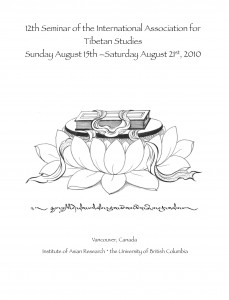
    The 2010 International Association of Tibetan Studies Conference will open tomorrow morning in Frederic Wood Theatre at UBC in Vancouver. The UBC campus has already been filled with a veritable who’s who of Tibetan Studies and I am looking forward to listening to as many of these eminent scholars as possible. Tomorrow will include a welcoming ceremony including addresses by professor Tsering Shakya and Dr. Charles Ramble. I will then spend most of the day at the Contributions to Tibetan Literature: Texts, Genres and Generic Terms panel, which will include papers titled:

    ” “Collected Writings” (gsung ‘bum) in Tibetan Literature: Towards a Systematic Study of Their Compilation, Redaction and Composition and its Use for Genre Classifications,” Tools of the Trade of the Tibetan Translators,” and  “Classifying Literature or Organizing Knowledge? Some General Remarks on Genre Classifications in Tibetan Literature.”

    A more complete list of panels can be found here.

    Do leave me a note if there is some discussion you simply must hear about, otherwise I will be attending things I am interested in, such as the Madhyamaka panel, the Tibetological Library and Archive Resources panel, and Buddhist Texts and Philosophy, and The History of the Rang-stong/Gzhan-stong, and the list goes on. It is impossible to attend all of the truly fascinating panels at this years IATS, but I hope to be able to discuss a few of the most interesting here on this blog over the course of the next week.

  • Beautiful digitzed pechas of them spang ma and Peking editions of the Kangyur now available

    Beautiful digitzed pechas of them spang ma and Peking editions of the Kangyur now available

    DPS – Digital Preservation Society

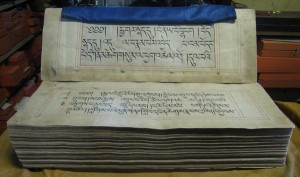
    For the stunning price of $4,700 you can order 7 DVDs of the high quality digitized them spang ma edition held in the National Library of Mongolia. The Peking edition is 5 DVDs for $3,700.

    From their website:

    Since 2007 the digitizing of the Tempangma (rgyal rtse’i them spang ma/them spang ma/them spangs ma/Thempangma/them-spangs-ma) manuscript of the Kangyur and the Peking edition of the Kangyur held by the National Library of Mongolia has been undertaken as a joint project by

    This joint project is coordinated by

    Kawachen, based in Tokyo.

  • New Journal of Buddhist Philosophy

    New Journal of Buddhist Philosophy

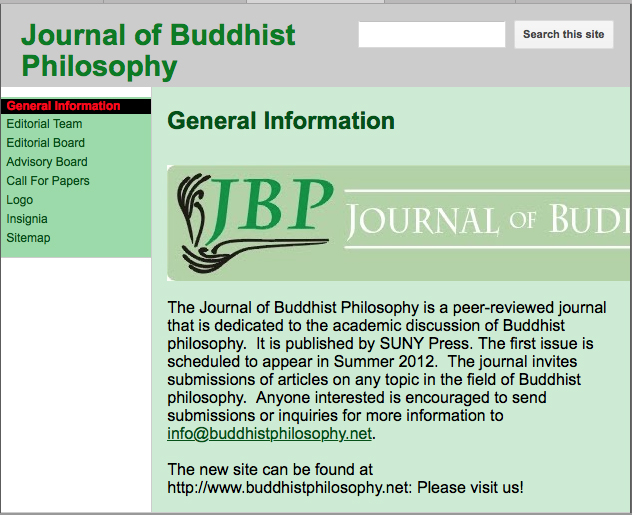
    SUNY Press is happy to announce the launching of a new, peer-reviewed,
    academic journal, the Journal of Buddhist Philosophy.

    Information about the new journal can be found here:
    http://sites.google.com/site/journalofbuddhistphilosophy

    From the website:

    The first issue is scheduled to appear in Summer 2012. The journal invites submissions of articles on any topic in the field of Buddhist philosophy. Anyone interested is encouraged to send submissions or inquiries for more information to journal.of.buddhist.philosophy@gmail.com

  • Panel Schedule for the International Association of Tibetan Studies Conference

    Panel Schedule for the International Association of Tibetan Studies Conference

    The IATS 2010 Schedule is now posted at Vancouver’s Institute of Asian Research website.

    Tsadra Foundation will be represented at the conference by Karl Brunnholzl, Sarah Harding, Stephanie Johnston and Marcus Perman. Blog posts will be made from the conference in mid August.

    Download the PDF with details for each panel session here: Panel Session Details IATS 2010

  • New Times New Roman fonts available

    In case you were unaware, the newly updated version of the Times New Roman font now includes diacritics from the Latin Extended Additional character area, which includes dots above and below letters and other key characters used for representing Sanskrit and other languages used in Buddhist studies. If you are a Tsadra Fellow and you don’t have access to the new version of the font, or are not sure where to get it, let me know and I’ll get it to you ASAP. Just email: Marcus@tsadra.org

  • TBRC Continues to Develop New Website

    TBRC Continues to Develop New Website

    There were a few glitches to work out, but Q and A sessions are planned for Tuesday’s at 2PM (New York Time?).

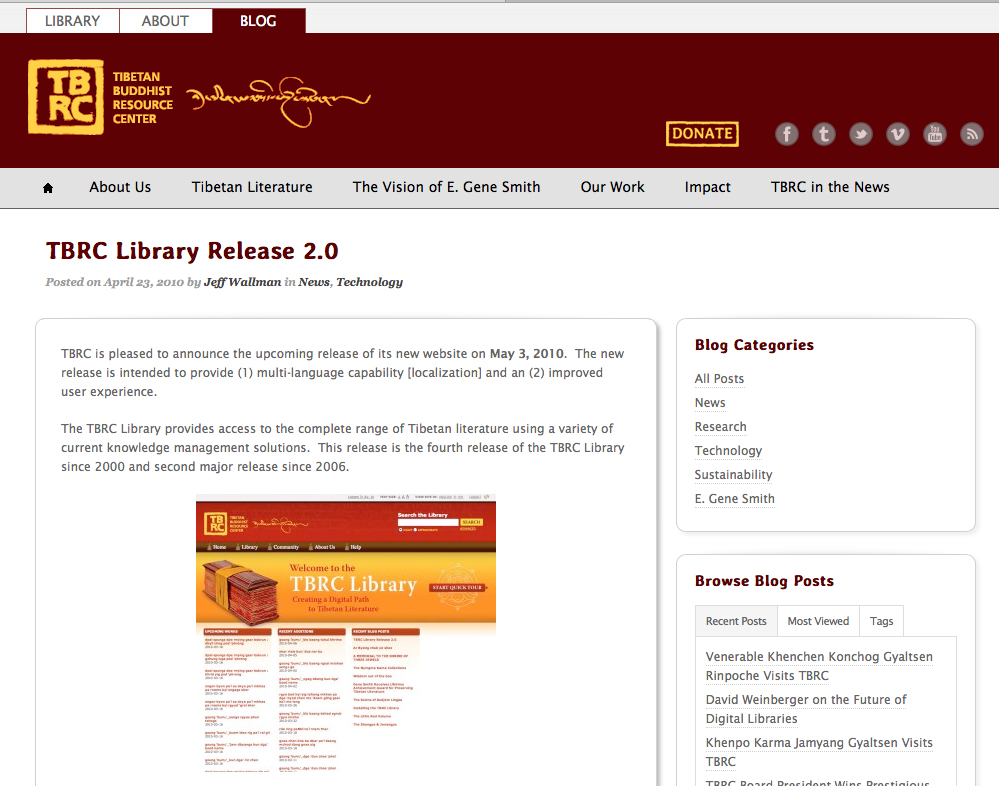
    In case you haven’t heard, TBRC has launched a new and improved website.

    You will need to re-register and formally request full access again. It is quite easy and response time is short (24hrs or so). Just click on “LOGIN REGISTER” at the top right corner of the screen. When you get to the login screen, click the tab labeled “Register (new user)” and fill out the form, remembering to check the box next to Request Full Access.

    An important note for people who have been previously accessing the texts at TBRC (from Jeff Wallman):

    “One very important change is that we completely rewrote our authentication module. The net change is that all password account holders will need to register themselves. This should be easier to manage since account holders can choose their own user name and password.

    In addition, we ask that you formally request full access to text downloads. This is necessary because we want to keep a record of account holder names, emails, and interests, but also so that we can improve the performance of the application. You might be pleasantly surprised that the new interface to the digital texts (we call it the digital pecha viewer “DPV”) is easier to use!”

    Enjoy: TBRC.org

  • UK Association for Buddhist Studies Conference 2010

    UK Association for Buddhist Studies Conference 2010

    The UK Association for Buddhist Studies will have its conference this year Tuesday and Wednesday, July 6th and 7th at the University of Leeds.

    “Historiography, adaptation and contemporary practice” – at the Michael Sadler Building, University of Leeds.

     Speakers
    • Prof. Steven Collins (Chicago): “No-self, gender, and madness”
    • Dr Joanna Cook (Cambridge): “Remaking Thai Buddhism through international pilgrimage”
    • Prof. Duncan McCargo (Leeds): “Buddhism, legitimacy and violence in southern Thailand”
    • Dr Catherine Newell (SOAS): “The new Buddhist missionaries: the global ambitions of Thailand’s Dhammakaya temples”
    • Dr James Taylor (Adelaide): “Mobility and resistance; modern monastic questers”
    • Dr James Benn (McMaster): “A Chinese apocryphal sutra in its eighth-century context”
    • Prof. Ann Heirman (Ghent): “Speech is silver, silence is golden? Speech and silence in the Buddhist sagha”
    • Dr John Kieschnick (Bristol): “The adjudication of sources in traditional Chinese Buddhist historiography”
    • Dr Francesca Tarocco (Manchester): “Buddhist images in modern China”
    Film showing
    • Dr Patrice Ladwig (Max Planck Institute): “The last friend of the corpse: funerals, morticians and crematoria in Chiang Mai”
    Postgraduate presentations
    • Jane Caple (Leeds): “Contemporary revival and development of Tibetan Buddhist monasticism in eastern Qinghai (Amdo)”
    • Berthe Jansen (Oxford): “Buddhist and non-Buddhist themes contained in Tibetan wedding recitations”
    • Lewis Doney (SOAS): “The daṇḍa-swinging Dharmarāja: early Tibetan appropriations of Indian Buddhist narratives”
    • Frederick Chen (Oxford): “A pagan god transformed into a Buddhist god or a Buddhist god transformed into a Chinese god?”
  • Sanskrit Summer Program at UC Berkeley

    Sanskrit Summer Program at UC Berkeley

    Summer Program: Words of Wisdom: Toward a Western Terminology for Buddhist Texts Berkeley, CA, USA. June 14-July 2, 2010 Presented by the Mangalam Research Center for Buddhist Languages, Berkeley, and co-sponsored by the Center for Buddhist Studies, University of California at Berkeley and the Ho Center for Buddhist Studies, Stanford University.

    Core Faculty: Luis Gomez, Michael Hahn Associate
    Faculty: Alex von Rospatt, Paul Harrison, Carmen Dragonetti, Fernando Tola

    Putting the Dharma into the words of a new culture is a task that has traditionally unfolded over several generations. In the West, where the languages of educated discourse are sophisticated and rich with layers of meaning, the challenges of being able to convey the Buddhist teachings as faithfully as possible are especially daunting.

    This intensive three-week program, intended primarily for graduate students in Buddhism, Indology, or allied fields, is a small step toward a clear and consistent terminology or (more modestly) developing skills and strategies for finding the best translation equivalents in contemporary English. The text for the program is the_Vimalakīrtinirdeśa Sūtra_. We will read the Sanskrit together with the Tibetan and Chinese translations. This close reading will address problems of interpretation, as well as the technical and stylistic challenges faced by the translator of classical Buddhist texts. Students should have facility in Sanskrit; knowledge of Tibetan or Chinese will be helpful.

    Format and Facilities

    Guided by distinguished faculty, students will meet 5 hours a day, five days a week to work with the challenges posed by the text. Sessions will be held 9:30 am – 12:30 pm and 3:30 pm – 5:30 pm. Meals are provided, and housing is an easy walk. Students will have access to the libraries of the Mangalam Research Center and the University of California (a 15-minute walk). Rapid Transit to San Francisco is half-a-block away.

    Focus

    The focus will be on key terms of the Vimalakīrtinirdeśa in the context of
    the profound Mahāyāna vision it sets forth. We will examine vocabulary
    choices in both source and target languages, sensitive to subtle shifts in
    meaning between languages with different philosophical underpinnings. Among
    the topics to be explored and skills to be honed:

    • Sanskrit roots, etymology, and the relation of Buddhist Sanskrit to other forms of Sanskrit
    • issues of context and intertexuality.
    • comparison with the Tibetan and Chinese, with reference to commentaries.
    • stylistic choices and terminology in existing translations in both canonical and modern languages
    • general issues in the theory and practice of translation as they arise in rendering a classic Buddhist text into a modern idiom.
    Costs

    Tuition: $1,200 (includes lunch daily). Food and lodging: $1,350. Total
    cost: $2,550.

    Applications

    The program is intended for advanced graduate students, but applications from all qualified candidates will be considered. Please submit an application by March 15, 2010 to summerprograms@mangalamresearch.org. Include a short statement of purpose, a description of language skills and how acquired, and a 1–2 paragraph letter of endorsement from your principal adviser. Students completing the program will receive a certificate from the University of California Buddhist Studies program indicating that this program carries the equivalent of 8 semester units. Maximum number of participants is 15. Applicants will be notified by April 10, 2010.