The University of Washington – Early Buddhist Manuscripts Project: Rediscovering the Worlds’ Oldest Buddhist Manuscripts
I. Origin of the Early Buddhist Manuscripts Project
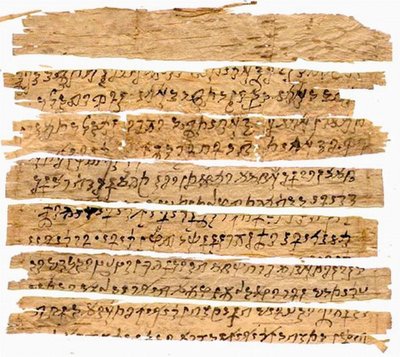
The Early Buddhist Manuscripts Project (EBMP) was constituted in 1996 to study a collection of Buddhist manuscripts dating from the first century a.d. which had recently been discovered in Afghanistan and acquired by the British Library. The British Library contacted Professor Richard Salomon of the University of Washington’s Department of Asian Languages and Literature requesting that he supervise the study and publication of these unique documents, and shortly thereafter an agreement was signed between the library and the university, establishing the EBMP with Professor Salomon as director of the project and Professor Collett Cox as assistant director. Subsequently, a contract was drawn up between the EBMP and the University of Washington Press for the publication of the results of the research in a new series entitled “Gandhāran Buddhist Manuscripts.” To date, six volumes in this series have been published by EBMP research scholars, with a seventh to be issued shortly.
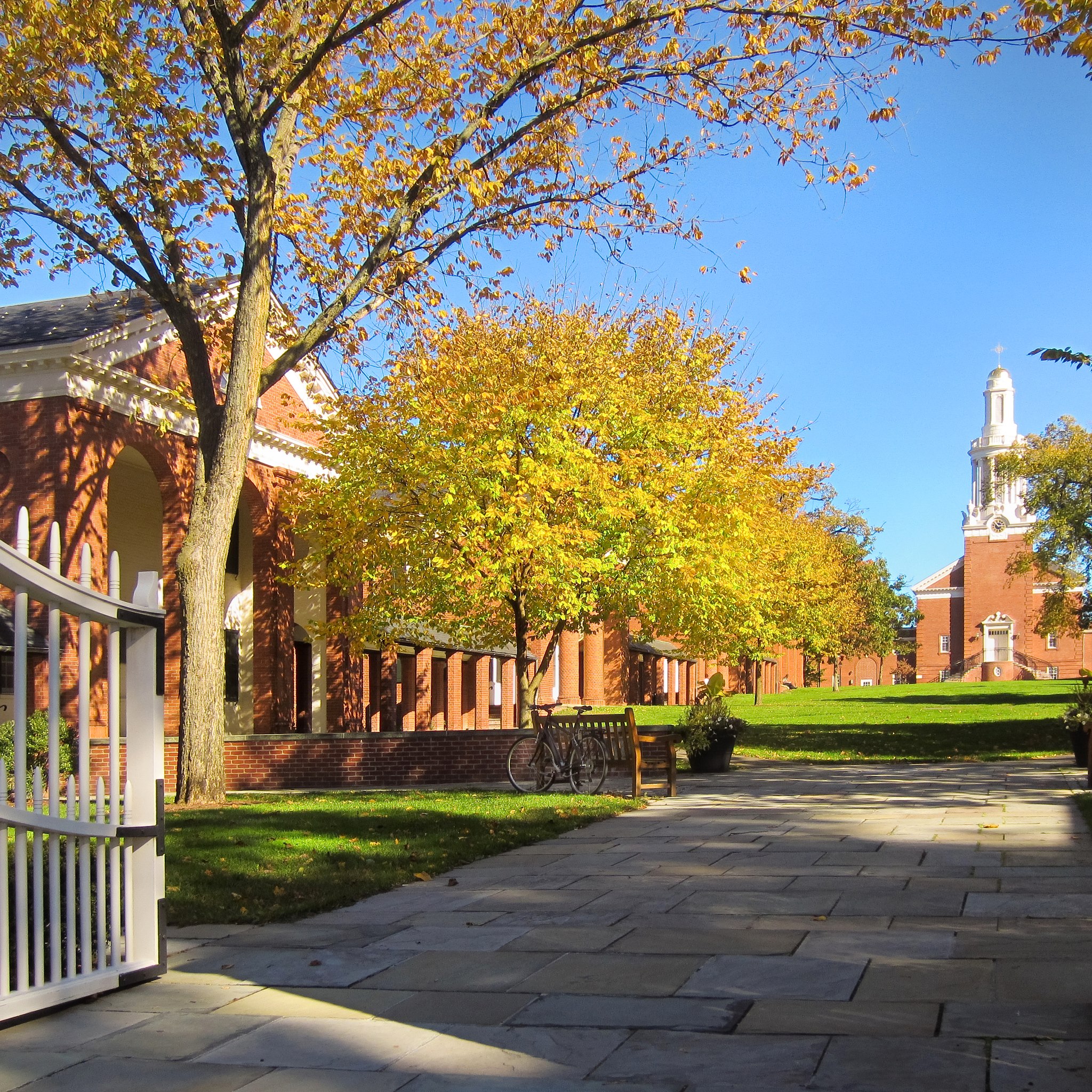
I received a notice about a new fellowship program at Yale. Perhaps some of you have a friend or student or colleague who would be interested in applying. Here is the flyer information:
The Yale Institute of Sacred Music is pleased to announce the creation of the ISM Fellows in Sacred Music, Worship, and the Arts.
Inspired by other great centers for advanced study, the ISM Fellows in Sacred Music, Worship, and the Arts will advance scholarship and creative work consistent with the Institute’s mission and create a network of leaders working across national, cultural, disciplinary, and religious boundaries. Fellows will have the opportunity to pursue their scholarly or artistic projects within a vibrant, interdisciplinary community of scholars, practitioners, and performers at Yale, and build a powerful international network.
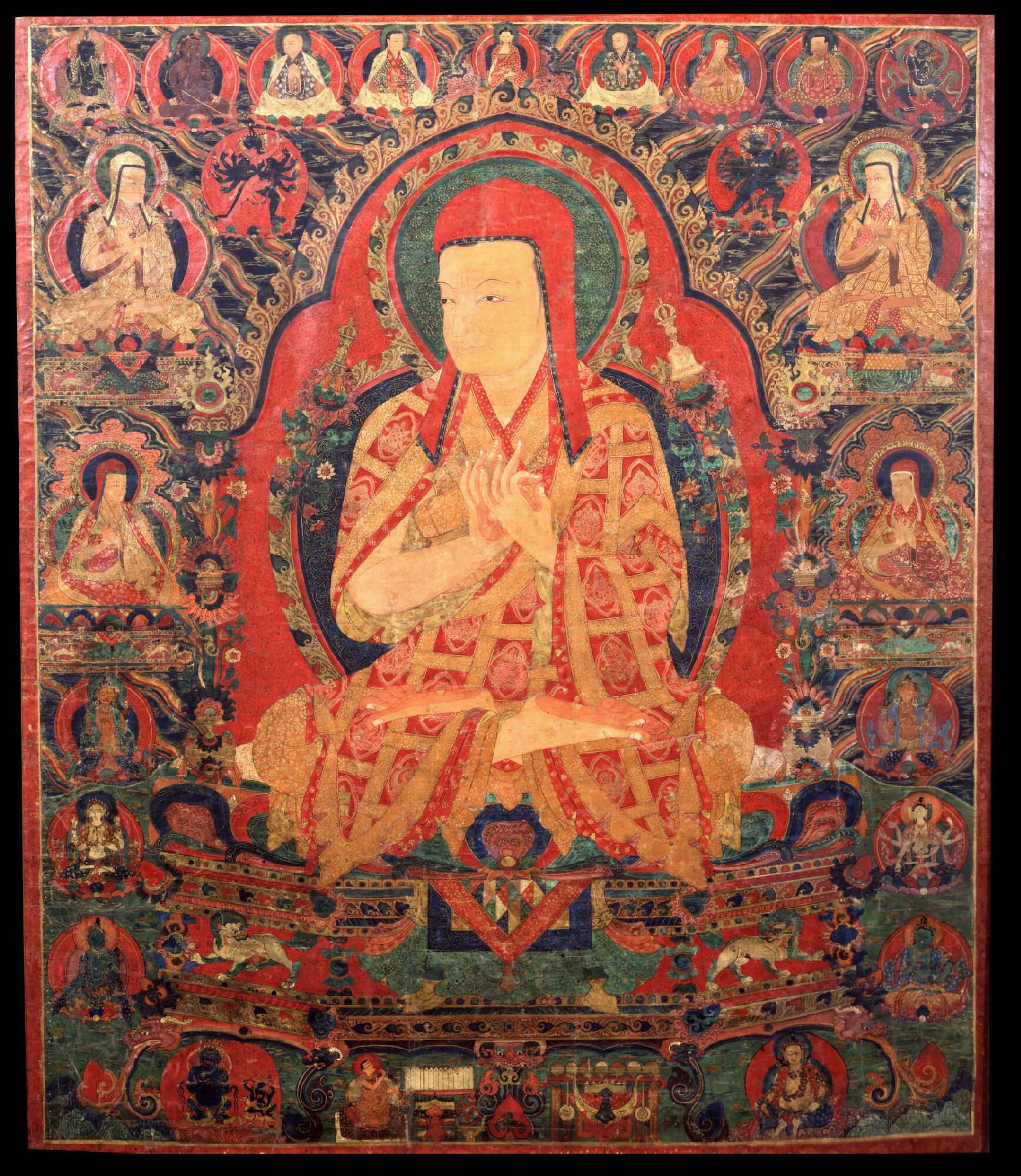
Back on day two of the ISYT conference, Elijah Ary (Ph.D., Harvard University) presented us with his study of the biographies of Tsong Kha pa blo bzang grags pa, entitled “From Disciple to Divinity: a shift in the figuration of Tsong kha pa blo bzang grags pa (1357-1419).”
Dr. Ary described two distinct tendencies in dge lugs descriptions of Tsong kha pa. First, Tsong kha pa is described as a disciple of Mañjuśri who received teachings directly via visions or through a medium (his teacher dbu ma pa). Second, a later development, presents Tsong kha pa as a sprul pa of Mañjuśri. In this case, all his actions are to be described within the rubric of enlightened activity. As Mañjuśri, all the stories of Tsong kha pa’s meetings with Mañjuśri need to be explained, since Mañjuśri doesn’t need to appear to himself. Furthermore, some stories relate how Tsong kha pa could not understand Mañjuśri’s speech and needed a medium to translate for him. Ary found that there is some evidence for discomfort with viewing Tsong kha pa as an emanation of Mañjuśri even within the dge lugs tradition itself. Outside of the tradition, it has even been suggested that Tsong kha pa met with a demon pretending to be Mañjuśri (Gorampa’s claim). Ary explored the multiplicity of meaning in Tibetan Buddhism and the various traditional hermeneutical tools used to explain (away) various inconsistencies. The three main methods he mentioned are 1) to describe Tsong kha pa’s biographical information through how he appears to the viewer, either in terms of common or exclusive (thun mongs dang thun mongs ma yin pa) view; 2) through reference to relative and ultimate reality (kun rdzob bden pa dang don dam bden pa); and 3) through reference to the inability of normal beings to understand the intention of the acts of enlightened beings.
The fourth day of presentations was an interesting mix of discussions on Tibetan history, women’s studies, and anthropology.
One of the most interesting was a presentation entitled “Sources for Researching the life of Ngor chen kun dga’ bzang po” by Jörg Heimbel of the University of Hamburg. This important branch of the Sa skya school is based at Ngor E waM chos ldan, founded in 1429 in a valley southwest of gzhi ka rtse (now only a 1-hour jeep ride). The Ngor school enjoyed the patronage of the Kings of Mustang and later the Kings of Derge. According to Jörg’s research there are only three different biographies available for Ngor chen, some of which have multiple editions available. Several biographies seem to be missing as Appey Rinpoche’s text on the Saskya literature notes 13 total biographies (whether or not this was an accurate count was questioned). The three extent editions are: 1) Mus chen sems dpa’ chen po dkon mchog rgyal mtshan’s biography (he was the 2nd Ngor abbot and much of it was written during Ngor chen’s life); 2) Gu ge paNDi ta grags pa rgyal mtshan (1415-1456/87?), also a personal disciple of Ngor chen- apparently van der Kuijp has an edition but Jörg was unable to obtain it. 3) Sangs rgyas phun tshogs (1649-1705) wrote the famous Ngor chos ‘byung and the gdan rabs (abbatial history) of Ngor monastery. Jörg focused on his fascination with Sangs rgyas phun tshogs work as an editor and compiler who cited his sources extensively and provided his readers with as many sources as possible on the subjects he discussed.
Things have been very busy here at the conference and I have not had time to blog about each of the presentations at ISYT. However, I have taken extensive notes and will be posting these as time warrants. I also have a collection of photographs, although very few of the presenters as they specifically asked that pictures not be taken. For now, I will try to update a piece of each day as it passes and will add more posts on every individual presentation I attended at a later date.
Marc-Henri Deroche (École Pratique des Hautes Études, Paris, France And Kyoto University, Japan)
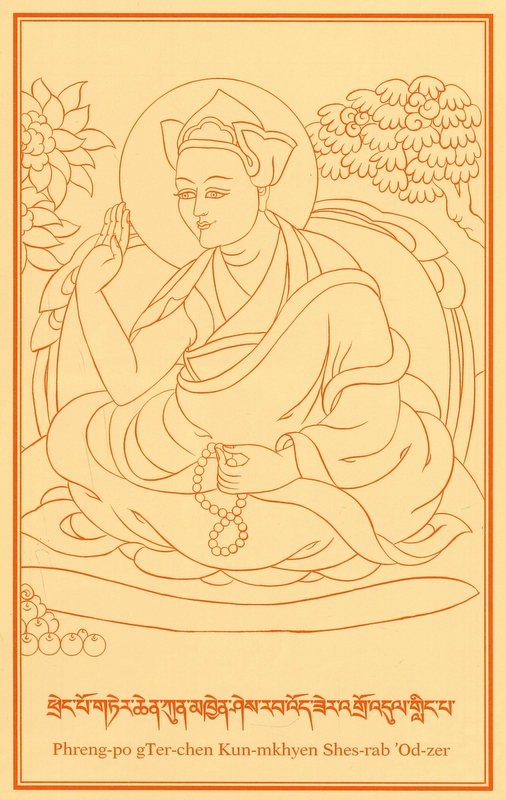
“Study of The Lamp Illuminating the Two Truths written by ’Phreng po gter ston Shes rab ’od zer (1518-1584)”
The second morning of the conference began with two friends and colleagues presenting issues related to one of the most important problems of Buddhism, the two truths. Seiji Kumagai of Kyoto circumscribed the history of the development of the two truths theory in Indian Buddhist, Bön, and Tibetan Buddhist philosophy. His handout and presentation was a wealth of information succinctly presented in outline-style. I had never learned anything about the Bön tradition’s conception of the two truths, which appears to be suspiciously (or not so) close to Buddhist presentations.
Mr. Gurung’s discussion of some finer points of Bön po history opened the conference, after a great welcome from conference convener Elijah Ary and superb speeches by the eloquent and genuinely funny Charles Ramble (President of IATS) and Brandon Dotson (President of ISYT). Dr. Ramble certainly stole the show on this first day with his well timed scholastic jokes and clear speaking voice. Notable moments of the commencement speeches include: Elijah noting the importance of the local for this second ISYT conference. The city of light has never held a IATS or ISYT conference and the venues (Ecole Normale Superieure, Bibliotheque Sainte-Barbe, INALCO and musee du quai Branly) are legendary. Charles compared his receipt of an invitation to give the opening speech to a description of the stages of shock a patient goes through when learning they have contracted an incurable disease, and Brandon noted the importance of a venue where a collegial attitude was the focus and young scholars could feel safe to “stick our neck out” with new ideas without fear of rebuke. The feeling was collegial, but perhaps a little subdued by humility as the honor of standing in the Ecole Normale Superieure began to sink in.
The first day’s presentations:
Kalsang N. Gurung (Leiden University, Holland)
Mr. Gurung’s presentation was renamed at the last moment to “Where do they come from? Expansion of ancestors and other members of gshen rab mi bo’s family.” His presentation was divided into four short discussions of 1) gshen rab’s father’s name, 2) gshen rab’s mother’s name, 3) his eight brothers and one sister, and 4) his key disciples. My jet-lag kicked in and the first two sections are a bit of a blur, but suffice to say that Gurung referred to Dunhang texts PT1134 and PT1235 and discussed the possible origin of the various versions of names given in a hagiography of gshen rab mi bo, which he argued were cobbled together by the author from texts from the mid-11th century and perhaps earlier. The names originated in a large corpus of early documents and their lack of clarity is what is most notable. The most interesting point, it seemed to me, came in the discussion of the third part. While in some accounts gshen rab is an only child, in Gurung’s study, a list of eight brothers and one sister is given. gshen rab appears to be the youngest son in this list. Further, the eight brother’s names accord with the first eight of the “9 vehicles” of Bon teachings. gshen rab then accords with the final stage, rdzogs chen, the ninth vehicle. The direct connection is not mentioned in the text, as the reference to the siblings comes early on in the text and the description of the “9 vehicles” comes in the 17th chapter of the hagiography. Gurung noted that the first five brother’s names match the first five vehicle names exactly, with the others becoming clear references when the descriptions of the brothers are given. Without any other reference for this presentation, Gurung was left with many questions and his fourth point caused more questions from the audience, as the creation of a common Tibetan theme of a trinity of teacher and two heart sons (thugs sras) was identified. It appears that, much like the Buddha (Shariputra and Maudgalyayana) gshen rab also had two heart sons. Gurung’s discussion was cut short, but his thesis should prove to be of great interest to those studying the Bön tradition as pieces of the hagiography of gshen rab mi bo appear to be unique and he makes reference to many Dunhuang texts.
I have arrived in Paris! Sans baggage, but in high spirits. I will be blogging about the presentations made at the Second International Seminar of Young Tibetologists (ISYT), which will be convening tomorrow, Monday September 7th through September 11th. A great group of dedicated young scholars has worked hard since the London meeting in 2007 to prepare what looks to be an excellent conference in Paris. Elijah Ary, Marc-Henri Deroche, Alice Travers and Nicola Schneider are the organizing committee and they have extended a wonderful welcome to me and I am very glad to be able to come and observe as a representative of Tsadra Foundation.
I am also pleased to note that Trace Foundation and the Fonds de Solidarité et de Développement des Initiatives Etudiantes supported ten young scholars of Tibetan origin who will be able to present at the conference because of their generosity. I will be sure to attend some of their presentations, although because so many are presenting each day, I will be unable to attend every session. However, I shall do my best to report as much of the comings and goings of the conference.
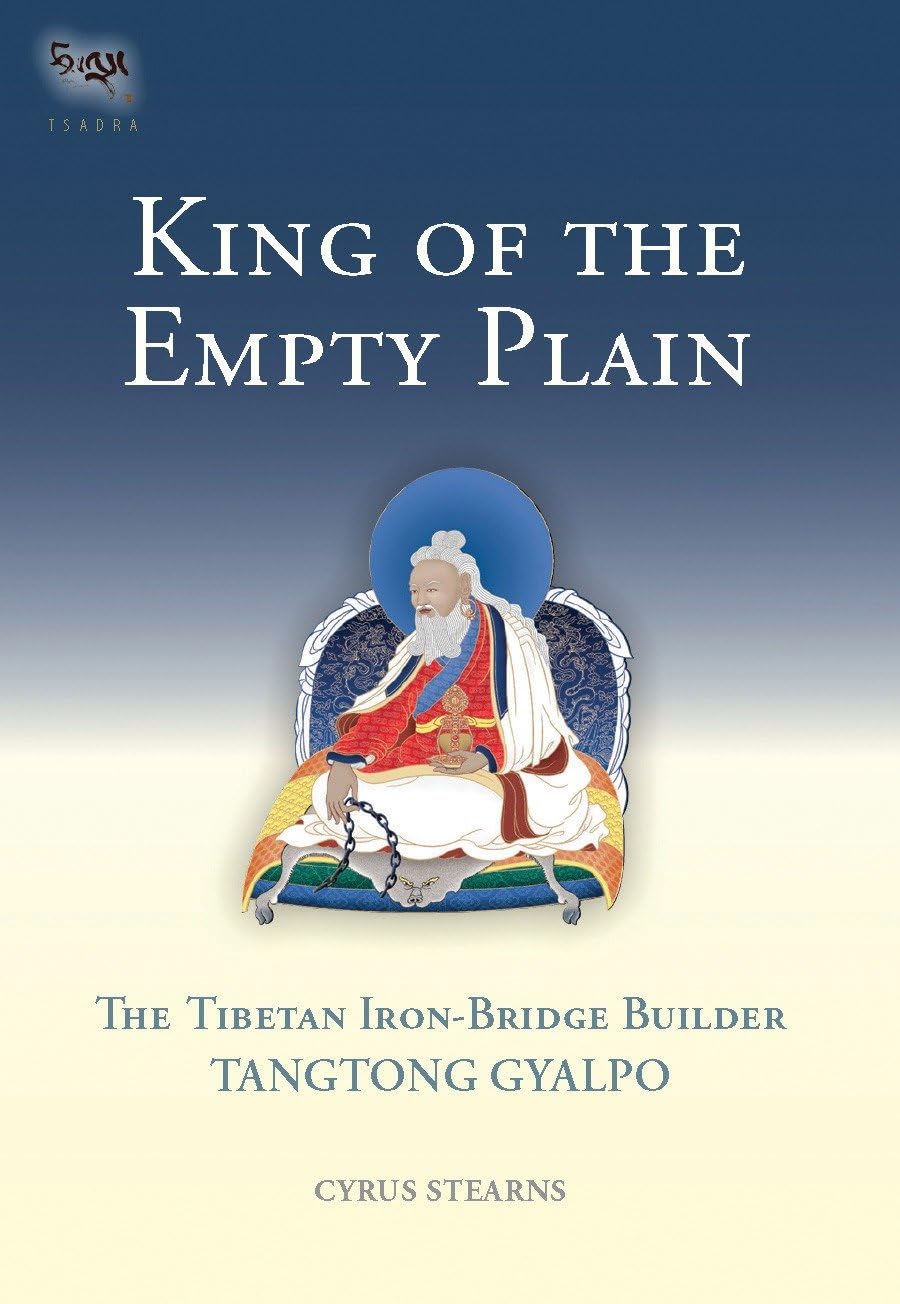
King of the Empty Plain: The Tibetan Iron-Bridge Builder Tangtong Gyalpo.
By Cyrus Stearns. Snow Lion Publications, 2007. 682 pages. $49.95.
Review by Andrew Quintman:
In King of the Empty Plain: The Tibetan Iron-Bridge Builder Tangtong Gyalpo, Cyrus Stearns pairs for the first time a detailed historical examination of the acclaimed Tibetan adept Tangtong Gyalpo (Thang stong rgyal po, 1361?–1485) with a complete and annotated translation of this best known biography. The life story serves as an important example of classical Tibetan hagiography, but is also significant for the insights it provides into Tibetan social history, patterns of religious patronage, traditions of sacred geography and pilgrimage. The result here is a model of careful scholarship, nuanced interpretation, and cogent analysis, qualities that exemplify the author’s earlier work. The book was long anticipated, concluding a project launched nearly three decades ago as part of a Masters Thesis at the University of Washington.
Its appearance underscores Stearns’s position as a foremost contemporary translator and interpreter of Tibetan religious literature. Tangtong Gyalpo—whose name translates eponymously as “King of the Empty Plain”—holds a celebrated position in Tibetan history for his contributions to Himalayan art, architecture, and engineering, as much as his transmission of esoteric and visionary Buddhist teachings. He is renowned for his longevity, credited to a mastery of tantric ritual practice, and for his unconventional life style believed to express a form of divine madness. He is perhaps best remembered, however, for his construction of iron chain-link bridges throughout the Himalayan region, an activity that earned him the epithet “Iron-Bridge Man” (lcags zam pa). Tangtong Gyalpo was, as Stearns notes in unequivocal terms, “The greatest engineer in Tibetan history, one of its most prolific architects, and an innovative artist. His many iron bridges, monasteries, and stūpas have enriched Tibetan culture for over five hundred years. The extant to which he changed his country’s spiritual topography through concrete activities based on mystical theory remains unparalleled in Tibetan history” (58). Quantitatively, King of the Empty Plain is an impressive contribution. An introductory chapter precedes some 400 pages of translation. Annotations to the biography appear in more than 1,000 footnotes. The book incorporates some 77 black and white illustrations and ten color plates, many reproduced for the first time, interspersed throughout relevant parts of the text. It concludes with the translation of a rare manuscript describing the adept’s death, reproducing the original text (typeset in Tibetan font) on the facing pages. With prefatory matter, bibliographies, and index, the book clocks in at nearly 700 pages, claiming substantial ground on the bookshelf.
Stearns introduces the biography not so much with a panoramic survey of text and context as with a series of four micro-studies, each addressing a central theme encountered in Tangtong Gyalpo’s life story: (1) the tradition’s literary sources and, through them, an analysis of the yogin’s exceptional lifespan; (2) his teachings and transmission lineages; (3) the construction of bridges and religious structures; and (4) the tantric practice of divine madness. The introduction opens with an exhaustive survey of the source materials that comprise the biographical tradition, tracing the relationship for the first time of titles that came to light decades ago. The narrative originates in the prophetic text ostensibly spoken by the Indian tantric master Padmasambhava, and the adept’s many self-written edicts. A group of direct disciples composed the first extensive biographical works in the decades following Tangtong’s death. These eventually culminated in a seventeenth-century version, the first to be widely disseminated in printed form, thus eclipsing early manuscript accounts; it is this best-known biography that forms the bulk of King of the Empty Plain. Referring to Tangtong Gyalpo as a “Tibetan Methuselah,” Stearns also addresses here the adept’s exceptional, and controversial, lifespan of 125 years. The author concludes his analysis in favor of the Tibetan sources: “The tradition of [Tangtong Gyalpo’s] longevity should not be dismissed by using the argument that such a long life was attributed to him simply to instill confidence in practitioners of his longevity techniques…. It is more probable that his teachings were treasured and passed down through the centuries precisely because of his longevity” (14).
Stearns turns next to the religious systems of Tangtong Gyalpo and his followers. The adept maintained close ties to the school known as the Ancients or Nyingma (Rnying ma)—he was recognized as an emanation of the Nyingma founding figure Padmasambhava—and specialized in several systems of esoteric tantric practice. Traditional accounts, however, describe his training under some 500 teachers in India, Nepal, and Tibet, and he is revered as having mastered all forms of Tibetan Buddhist practice. Tangtong later became famous for blending these transmissions with his own visionary revelations. Although his nonsectarian system of doctrine and praxis, referred to as the “Iron-Bridge Tradition” (lcags zam lugs), appears to have died out as a discrete lineage, many elements survive within the mainstream institutions of contemporary Tibetan Buddhism.
The next section surveys Tangtong Gyalpo’s career as a metallurgist, civil engineer, architect, and bridge builder. His projects were varied and widespread, all carried out—the life story informs us—with the bodhisattva’s motivation to benefit others. The biography enumerates an impressive résumé of achievements: 58 iron bridges, 60 wooden bridges, 118 large ferries, 120 temples, 111 stūpas, more than a dozen copies of the Tibetan Buddhist canon, and many thousands of religious statues and images. Stearns surveys the history of bridge construction in Tibet prior to Tangtong Gyalpo and underscores the logistical and economic difficulties of projects on this scale. He also highlights the apotropaic powers Tibetans invest in such structures, a theme running throughout the biography where bridges and stūpas are employed to subdue barbarian tribes and local demons, or to repel invading armies of the Mongol empire.
The preliminaries conclude with a discussion of Tangtong Gyalpo’s unconventional and frequently transgressive behavior, a style of activity variously described as crazy wisdom or divine madness. Although scholars have discussed religious madmen in Tibet from sociological, historical, and anthropological angles, here Stearns emphasizes the tradition’s own gloss on such activity, largely drawing upon Tibetan commentarial literature on tantric theory and practice. In this context, unconventional activity is referred to as “deliberate” or “secret behavior,” and described as a means for augmenting meditative concentration by eradicating fixation on dualistic appearances.
Stearns briefly reflects on Tangtong Gyalpo’s activities in light of India’s tantric siddhas and the apparent efflorescence of religious madmen in Tibet during the fifteenth-century. These four examples of scholarly pyrotechnics offer significant contributions to our understanding of Tangtong Gyalpo, his activities, and his legacy. A number of topics do seem to have slipped through the cracks, however: Tangtong’s central role in establishing Tibet’s performing arts tradition receives scant attention. The biography’s place in the development of Tibetan life writing as a genre is also largely overlooked. There are, for example, interesting parallels between Tangtong’s poisoning at the hands of a jealous king (261) and the famous poisoning of Milarepa (Mi la ras pa, ca. 1040–1123). We find even closer resemblances in the death scenes of these two acclaimed adepts. The real missing element in the sum of these introductory essays, however, is a broader and more sustained—well—introduction and guide to the biography that follows. This may point to a question underlying the book’s intended audience. As part of the Tsadra Foundation Series (founded, according to the publication data, “in order to support the activities of advanced Western students of Tibetan Buddhism”), it aspires to an Englishspeaking audience of Buddhist practitioners. The level of scholarship with which it begins may draw rather more interest from scholars and specialists of Tibetan history and religion. The text of the biography often appears fragmented, a composition of discreet vignettes lacking the tight narrative arc found in other examples of Tibetan life writing, attesting perhaps to its composite nature and complex history. The translation, conversely, is elegant and fluid. Admirably, Stearns avoids Sanskritizing technical terms wherever possible, opting instead for a nearly seamless English text (one strange exception is dharmakāya, rendered somewhat cumbersomely by the compound “dharmakāya reality body”).
Stearns’s meticulously prepared annotations, based largely on his study of earlier versions of the biography, offer a trove of historical detail for the diligent reader, as well as insight into the messy and often contradictory business of life writing in Tibet. Above all, King of the Empty Plain is a compelling story, hagiography on a grand scale replete with the fabulous and the miraculous while still reflecting the religious and social realities of medieval Tibet. In one episode, Tangtong Gyalpo kidnaps a local patron deity, forcing residents to assist with a construction project as ransom. Later, we hear villagers conscripted into compulsory labor rejoice upon witnessing the adept buried beneath a landslide as they cry, “The adept has died. Now we don’t have to work” (368). Local monks, too, verge on rebellion when they refuse to pay the road toll implemented in order to fund Tangtong’s grand stūpa at Riwoché. King of the Empty Plain is a work that bears study at length and on many levels.
Andrew Quintman, Princeton University
To be published in Journal of the American Academy of Religion