Category: Translation

[rev_slider alias=”tsadra-blog”]

Translation

  • Tsadra Foundation’s First Summer Tibetan Language Intensive

    Tsadra Foundation’s First Summer Tibetan Language Intensive

    Tsadra Foundation Hosts Tibetan Language Intensive at CU, Boulder

    UPDATE! The 2019 summer program was the last of these events.

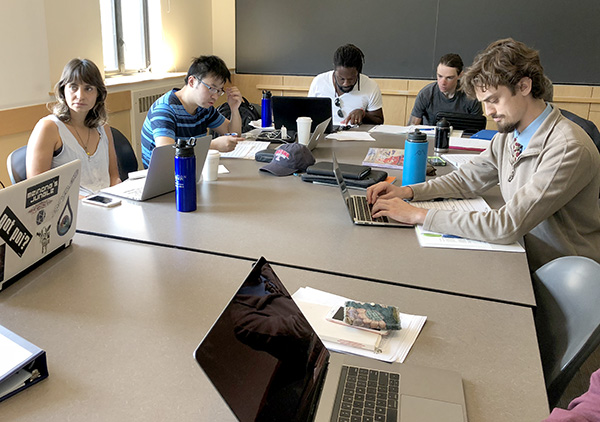
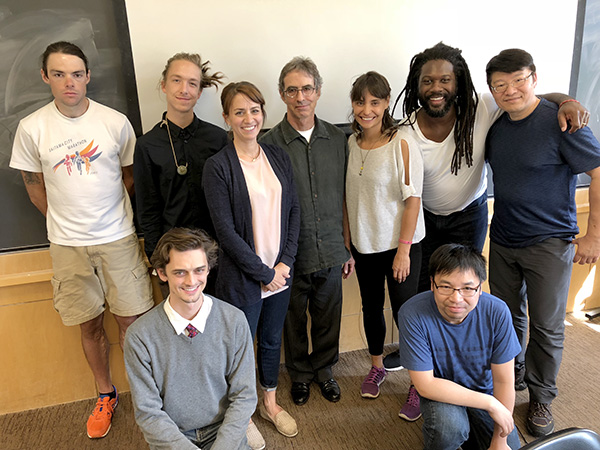
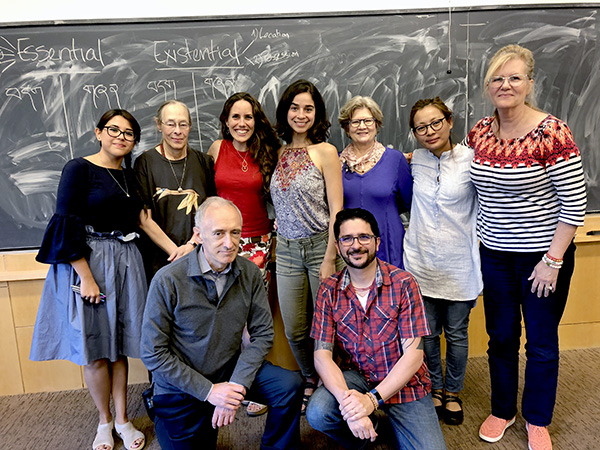
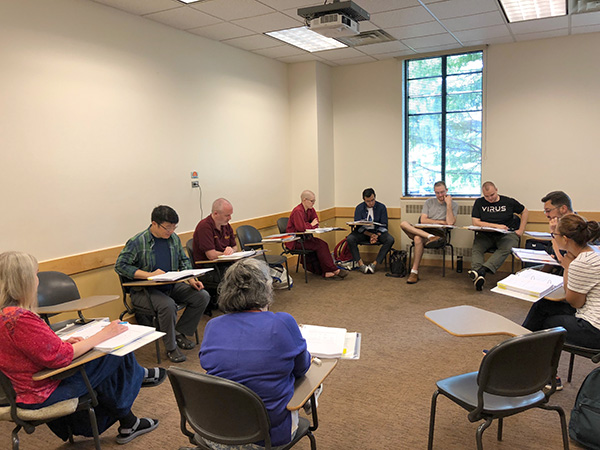
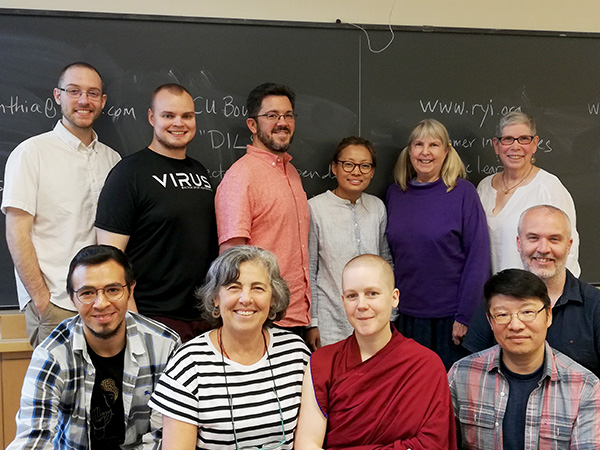
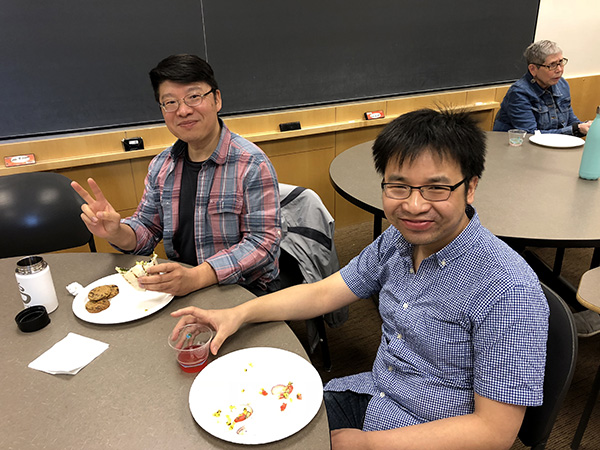
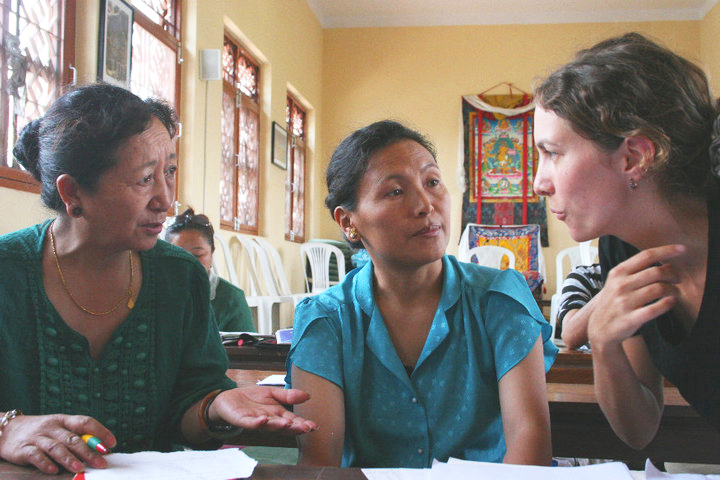
    Tsadra Foundation’s first Summer Tibetan Language Intensive concluded on August 25, 2018 at the University of Colorado, Boulder. The course created an opportunity for twenty-four students who otherwise could not have afforded long breaks from work, family, or school–or travel to Asia–to experience a condensed and rigorous training with excellent language instructors and master translators.

    Students from as close as Boulder and as far from Colorado as Australia and Brazil traveled to attend the two-week-long intensive course. Three tracks–beginning, intermediate, and advanced–were taught by Lama Sarah Harding, Dr. Jules Levinson, Cinthia Font, Miguel Sawaya, and Tashi Choezom. Students were placed according to a self-assessment of their skill level with classical and colloquial Tibetan and each track was designed specifically to support the development of skills in both classical/literary and spoken Tibetan.

    “The content was perfectly suited to me and our class. It was useful, inspiring!” -Advanced student

    Advanced students spent their mornings with Sarah Harding working their way through Mendong Tsampa Rinpoche’s commentary on the famous Aspiration Prayer of Definitive Mahamudra (Chakchen Monlam) by the third Karmapa Rangjung Dorje, while the beginning and intermediate students focused on classical and colloquial Tibetan respectively.

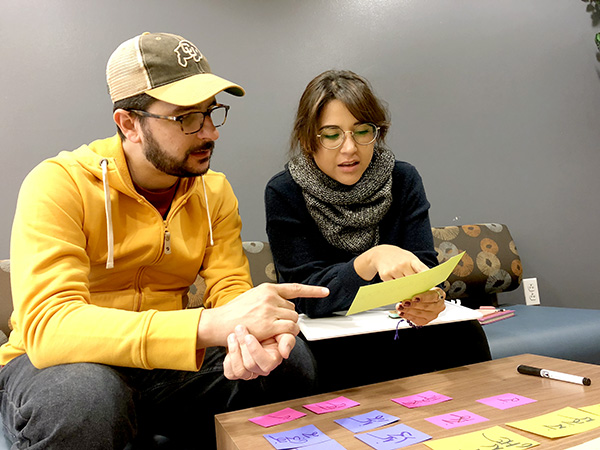
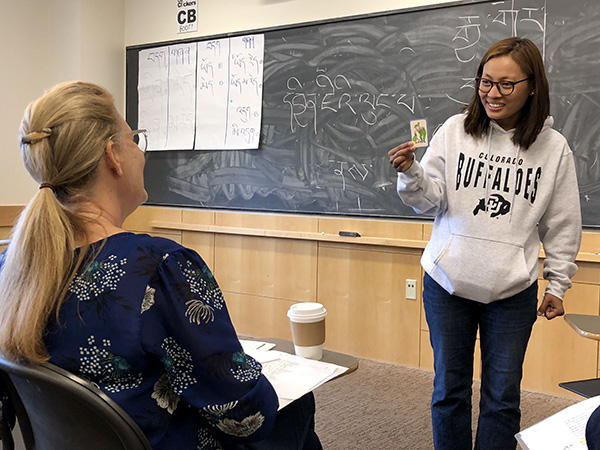
    Afternoons of the eleven-day course featured Jules Levinson working with the advanced students to develop skills in oral translation while the intermediate students worked through classical works like the Praise to Manjushri (གང་གི་བློ་གྲོས་) and Tsongkhapa’s Three Principle Aspects of the Path (ལམ་ཙོ་རྣམ་གསུམ་,). Beginning students continued their work on colloquial skills by learning songs and practicing sentence construction utilizing various interactive methods.

    Short workshops were offered during the course based on students’ interests, including lunch sessions on digital resources for Tibetan translators, Sanskrit for Tibetan translators, methodologies for oral interpretation, and a presentation on the Amdo dialect and the Ume script.

    “I loved my teachers! Simply fantastic!” – Beginning student

    Tsadra Foundation wishes to offer sincere thanks to Holly Gayley, the Center for Asian Studies, and the University of Colorado for helping us host the event!

  • Summer Intensive Tibetan Courses

    Summer Intensive Tibetan Courses

    Tsadra Foundation’s Research Center will offer for the first time a short intensive program this summer during the last two weeks of August (13 – 25). The courses, offered for three levels of students–beginning, intermediate, and advanced–will combine the study of spoken and written Tibetan with opportunities to develop skills in translation and oral interpretation for advanced students. Lama Sarah Harding will teach the advanced reading class and Doctor Jules Levinson will facilitate oral interpretation practice from Tibetan to English. Visit the website for more information.


    Colloquial Tibetan Studies

    University of Virginia’s Summer Language Institute offers an intensive course in colloquial Tibetan which runs for eight weeks (June 17 – August 10) and is hosted on campus at UVa in Charlottesville, Virginia, USA. Franziska Oertle, who has taught Tibetan at Rangjung Yeshe Institute in Nepal and the Institute for Buddhist Dialectics near Dharamsala, India, will be teaching alongside her colleague Gen Phuntsok Dorje this summer. The course is offered for the equivalent of twelve academic credits, but also for non-credit-earning study. More information can be found here. 


    University of Wisconsin’s South Asia Summer Language Institute will also offer summer intensive courses in modern South Asian languages, including colloquial Tibetan and Sanskrit, from June 18 through August 10 in Madison, Wisconsin, USA.  Apply for this program here.

    For those interested in travel to South Asia, two notable programs for colloquial Tibetan language study are Rangjung Yeshe Institute, Kathmandu University’s Centre for Buddhist Studies (RYI) and Esukhia. RYI also offers classical Tibetan courses on campus in Kathmandu.


    RYI’s summer intensive programs offer three levels–beginner, intermediate, and advanced–of colloquial and classical Tibetan, and two levels–beginner and intermediate–of Sanskrit. These programs run from June 13 through August 10. Students have the option to live with Tibetan host families, experience the bustling city of Kathmandu, and explore sacred sites in the surrounding valleys. Read more information about these courses and apply for them here.


    Esukhia, based in McLeod Ganj, Himachal Pradesh, India, runs a summer intensive program in Ladakh for either one or two months of study starting July 2 and running through August 25. This program features homestay experiences with Tibetan families living in the small town of Choglamsar just outside of Leh. Visit Esukhia’s website here.


    Classical Tibetan Studies

    Studying classical Tibetan is also a possibility in an intensive format this summer, both for-credit and not-for-credit. Maitripa College, in Portland, Oregon, offers intensive classical Tibetan language study which introduces students to vocabulary and grammatical structures and guides them through translating portions of texts by the end of the eight weeks. Read more about Maitripa’s program here.


    Rangjung Yeshe Gomde California offers an intermediate-level classical Tibetan course through the Dharmachakra School of Translation which is accredited by Kathmandu University. The course is based on Rangjung Yeshe Institute’s summer intensive courses, but available with the backdrop of the Eel River in the coastal range of Northern California. Find more information about this program here.


    Another program in California, USA, The Mangalam Research Center for Buddhist Languages, will offer second-year classical Tibetan and Sanskrit this summer. The program is best suited for advanced undergraduates and graduate students. Read more about this course here.


    Online Study

    If you are unable to travel this summer, not to worry! Possibilities for online study are plentiful.

    The University of Toronto offers two levels of classical Tibetan study based on Joe Wilson’s Translating Buddhism from Tibetan entirely online. The introductory course is twelve weeks long and will introduce you to the needed grammatical structures to learn to translate from Tibetan to English. Students can work with a moderator and study for credit through the University of Toronto. If you are not seeking credit, the entire course is freely available for self-study. You can begin studying at any time by visiting this website.

    Esukhia offers one-on-one colloquial Tibetan classes online over Skype using a curriculum they developed based on vigorous research into language learning pedagogy. Sign up and start studying immediately.

    Rangjung Yeshe Institute also offers two semesters of classical Tibetan courses online and a self-study Tibetan alphabet course. Completing the two semester-length online courses will prepare you to attend most intermediate-level classical Tibetan courses. Both semesters can be taken for academic credit and feature a course moderator in addition to the online course materials. The courses can also be taken on a self-study basis. Read about the courses and apply for them here.


    David Curtis offers courses in classical Tibetan via teleconference through the Tibetan Language Institute. A new round of David’s courses begins in April. Sign up here.

    Neljorma Tendron teaches four levels of online classes which are focused on comprehension of dharma terminology with the aim of reading and understanding one’s liturgical practice texts. Visit her website here for more information

    Sonam Chusang, an adjunct professor at the University of British Columbia, hosts beginning classes in the Tibetan alphabet, pronunciation, and spelling, and a beginning level of both colloquial and classical Tibetan. You can read more about these classes here.

  • Naropa Students Enjoy Lunch with Master Translators

    Naropa Students Enjoy Lunch with Master Translators

    Naropa Students Enjoy Lunch with Master Translators

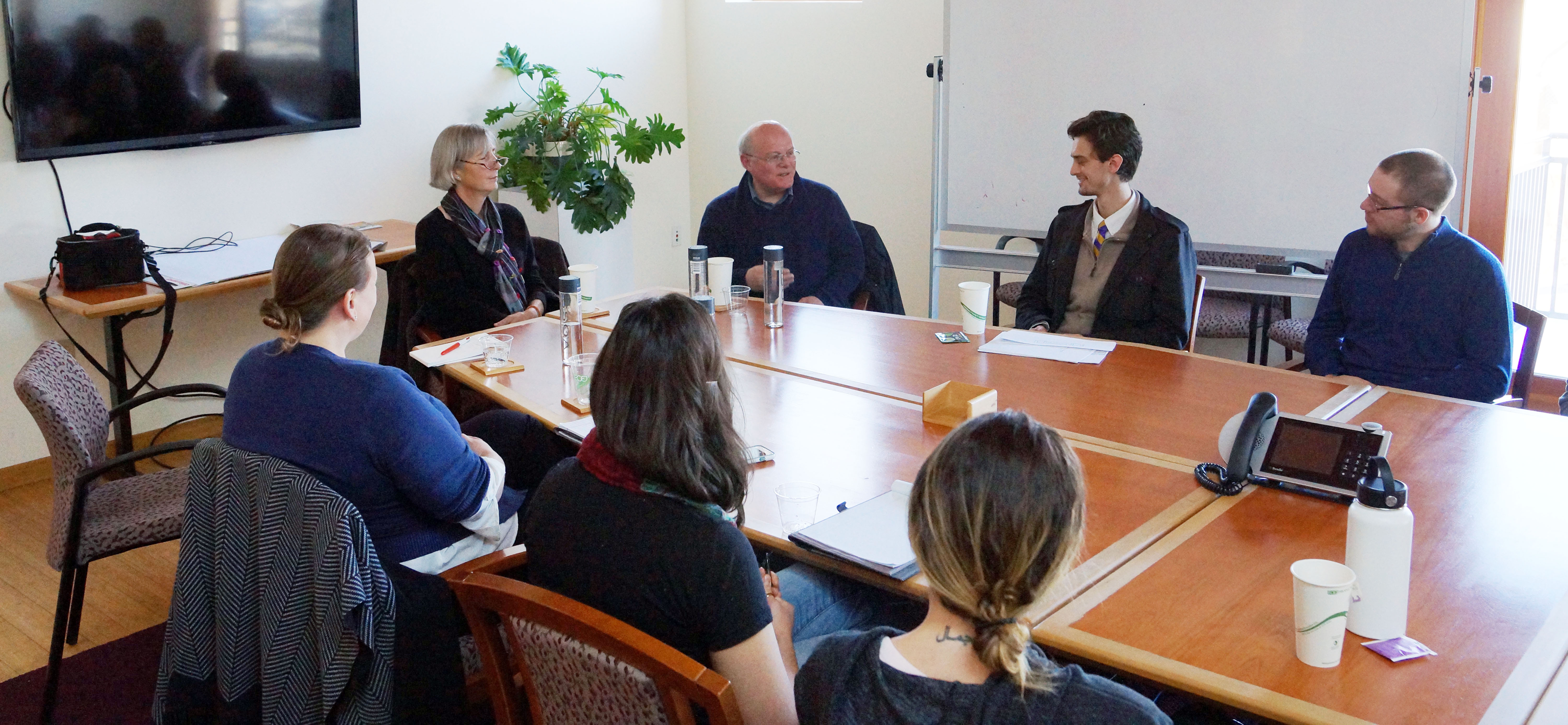
    Master translators Wulstan Fletcher and Elizabeth Callahan visited Naropa University to speak with students about the process of translation from Tibetan to English, and the motivations that led them to pursue such work.

    The conversation occurred as part of Naropa University’s Indo-Tibetan Lunch Seminar Series, organized and hosted by Dr. Amelia Hall, Assistant Professor of Religious Studies, which fosters discussion among students across disciplines—art, Indo-Tibetan studies with Tibetan and/or Sanskrit language—and encourages them to explore different ways to study language in general, and Tibetan and Sanskrit in particular.

    Elizabeth began by describing her motivation to learn Tibetan: she was interested in practicing Tibetan Buddhism and understanding what she was practicing. Over the course of her six years of retreat, she gradually learned to serve as an interpreter for Tibetan teachers and became a translator of practice texts. After completing retreat, she fell into being a translator because she wanted to develop a better understanding of emptiness, the rituals associated with Buddhist practice, and the “point” of meditation and saw a way to do that through the practice of translation.

    “Translation can be a skillful way to approach in-depth study.”
    -Elizabeth Callahan

    Following Khenpo Tsultrim Gyamtso Rinpoche’s encouragement to understand the text from the practitioner’s perspective, Elizabeth took translation as the path early on. She explained the importance of working closely with masters of the lineage and students of the same teacher to produce translations. She described a model to approach the translation of Tibetan materials to English to benefit oneself and others equally: absorb yourself in the text–practice, study, and research, then the product of the translation contributes to others being able to practice.

    Elizabeth closed her comments with an encouragement to students to, “Bring <your knowledge of Tibetan> to a point where it is useful for you if you are interested to practice. Train until, when you pick up a text, you have 90% comprehension, and that you’re fluent enough in colloquial Tibetan that you can ask questions to get to 100%.”

    Wulstan began by introducing himself to the group as “The Reluctant Translator”. Completely self-taught, Wulstan completed three-year retreat and worked on technical translations until Tsadra offered support for him to work full time. From his perspective, translation is part of one’s bodhisattva commitment to help people who will never be in a position to learn the language, giving them access to a wonderful tradition that is still alive. “Translation is breaking the shell so people can eat the kernel, or taking the stone off the well so people can get to the water.”

    Wulstan then shifted to sharing his love of language. He explained that the classical Tibetan of the texts, which is quite different from the modern spoken language, is a learned language, like Latin was in the middle ages. It has remained fairly stable and unchanged over the centuries. The written Tibetan of a modern author like Dudjom Rinpoche is in many respects the same as that of Longchenpa, who lived in the fourteenth century. As writers, they are virtual contemporaries even though they are separated by six centuries. This means that, once you have learned to read Tibetan, you have access to vast literature spanning over a thousand years.

    “If you think Buddhadharma is valuable, translate. You can’t know what the benefit will be—maybe you’re giving a tool to someone who can use it much better than you could!”
    -Wulstan Fletcher

    Exploring the Craft of Translation

    Elizabeth and Wulstan answered thoughtful questions from the students about what to do when experiencing a block or facing something you don’t understand. Wulstan urged students to read slowly and not to lose heart. He explained that while Tibetan grammar is not complicated, its syntax is strange and confusing to speakers of an Indo-European language like our own. Tibetan is not written in sentences in the way that English is—centerd on a main verb with principal and relative clauses all clearly connected. Thanks to its use of particles and its unrestricted capacity for subordination, Tibetan is often written in extended, river-like periods which can be very long indeed—alarmingly so for the beginner. Nevertheless, it is important to get used to the way Tibetan writers arrange their ideas and to read their sentences in the way Tibetans do rather than jumping around trying to piece together bits of sense, more or less guessing how they should be put together. It’s only when you have grasped the meaning of the Tibetan that you can then put it into English, dividing up the Tibetan into shorter manageable statements. This isn’t easy and takes a lot of practice, so it’s important to be patient and not get discouraged. Then, because the syntactical structure of the two languages is so different, it is important to “step away” from the original Tibetan and recast the meaning into a natural English form. When the translation process is complete, the text should read as clearly and easily as a text composed in English. This is part of being kind to the reader which, above all, Elizabeth and Wulstan reminded the students to do by thinking of their audience when translating.

    Both translators spoke of the importance of mastering of one’s own language—cultivating a knowledge of English literature to know stylistically what is good. They encouraged the students to read literature, to love English, to read the poets, and cherish the language. By translating, one is contributing to the corpus of literature in our own language.

    They offered a step-by-step approach to working with a translation:

    1. Use dictionaries and online resources like Columbia University’s Buddhist Canon Research Database with searchable unicode text, the BDRC database, and the Tibetan Himalayan Translation Tool online;
    2. Work with context and play with how to say things in different ways;
    3. Continue the research process: “Read around” the text by engaging with relevant texts and scholarly materials to help build context; and
    4. Ask questions: understanding the author’s life could inform your translation.

    The conversation ended with an encouraging comment from Elizabeth to the young translators: “If you feel drawn to learn Tibetan and become a translator, do it. You’ll find a way.”

  • Great Accomplishments: Tibetan Translations in 2013

    Great Accomplishments: Tibetan Translations in 2013

    It has been an active year for the publication of translations. Here are some highlights from the year:
    (please do add a comment if you feel something is missing)

    The Light of Wisdom series from Rangjung Yeshe Publications will be complete this year with the publication of both the Great Accomplishment: Teachings on the Drubchen Ceremony (vol. 3) and Light of Wisdom: The Conclusion (vol. 5). This series is the translation of three connected texts: 1) the root text is a Padmasambhava terma, as recorded by Yeshe Tsogyal in the 8th or 9th century, and revealed by Jamyang Khyentse Wangpo and Chogyur  Lingpa in the 19th century as the Lamrin Yeshe Nyingpo (ལམ་རིམ་ཡེ་ཤེས་སྙིང་པོ་). 2) the main commentary is Jamgön Kongtrül Lodro Thaye’s (1813-1900) the Light of Wisdom, “Yeshe Nangwa” (ལམ་རིམ་ཡེ་ཤེས་སྙིང་པོའི་འགྲེལ་པ་ཡེ་ཤེས་སྣང་བ་རབ་ཏུ་རྒྱས་པ།, TBRC Text). 3) the third text is Entering the Path of Wisdom, Yeshe Lam Juk (ཡེ་ཤེས་ལམ་འཇུག), a set of annotations and notes from Jamgön Kongtrül’s student, Jamyang Drakpa, as recorded by Jokyab Rinpoche (1903-1960). Tulku Urgyen Rinpoche in turn received these teachings directly from Jokyab Rinpoche and his explanations are also included throughout the series. The first volume of the series was translated in 1993 and the final will be released on November 12th, 2013. The translation has been completed by Erik Pema Kunsang (Erik Hein Schmidt) with help from Gyurme Avertin and editing done by Marcia Schmidt and Michael Tweed.

    Adam Pearcey and the Lotsawa House team continue to do their great work online: http://www.lotsawahouse.org

    Wisdom Publications

    Keith Dowman’s Eye of the Storm has been republished in a new edition by Wisdom Publications as Original Perfection: Vairotsana’s Five Early Transmissions. These are translations of 1) Rig pa’i khu byug: The Cuckoo’s Song of Gnosis 2) Rtsal chen sprugs pa: Radical Creativity 3) Khyung chen lding ba: Great Garuda in Flight 4) Rdo la gser zhun: Pure Golden Ore and 5) Mi nub pa’i rgyal mtshan: Nam mkha’ che: The Eternal Victory Banner: The Vast Space of Vajrasattva.

    Cyrus Stearns published a translation of Tshar chen blo gsal rgya mtsho’s (1502-1566) Celebration of the Cuckoo (རྟོགས་བརྗོད་ལམ་གླུ་དཔྱིད་ཀྱི་རྒྱལ་མོའི་དགའ་སྟོན།, rtogs brjod lam glu dpyid kyi rgyal mo’i dga’ ston) as Song of the Road: The Poetic Travel Journal of Tsarchen Losal Gyatso with Wisdom Publications and Tsadra Foundation.

    Mark Siderits and Shōryū Katsura published Nāgārjuna’s Middle Way.

    In 2013 Wisdom also published Yael Bentor’s A Classical Tibetan Reader.

    top


    UMA Institute

    Jeffrey Hopkins’ team at the UMA Institute for Tibetan Studies have been hard at work at a set of translations, many of which are available online here. Recent publications that are available now include:

    Principles for Practice: Jam-yang-shay-pa on the Four Reliances with Ngag-wang-pal-dan’s Annotations, 120 pages, translated by William Magee.

    The Hidden Teaching of the Perfection of Wisdom Sutras: Jam-yang-shay-pa’s Seventy Topics and Kon-chog-jig-may-wang-po’s Supplement, 750 pages,  translated by Jeffrey Hopkins and Jongbok Yi, and edited by Elizabeth Napper.

    Shambhala Publications

    The Epic of Gesar of Ling was translated by Robin Kornman, Lama Chonam, and Sangye Khandro and published in a beautiful edition by Shambhala Publications (680 pages, 9781590308424)

    This year, Snow Lion, now an imprint of Shambhala Publications, printed several previously published works along with new translations. Heidi Köppl’s Establishing Appearances as

    Divine and Glen Mullin’s From the Heart of Chenrezig: The Dalai Lamas on Tantra are both worth mentioning here. As you can see below, they also generously published a number of books in the Tsadra Foundation Series.

    Also in 2013, Judy Lief’s three volumes of Trungpa teachings titled The Profound Treasury of the Ocean of Dharma was published in a beautiful set by Shambhala Publications.

    Dharmachakra Translation Committee completed Distinguishing Phenomena from Their Intrinsic Nature Maitreya’s Dharmadharmatāvibhaṅga (ཆོས་དང་ཆོས་ཉིད་རྣམ་པར་འབྱེད་པ།, chos dang chos nyid rnam par ‘byed pa, TBRC Text) with Commentaries by Khenpo Shenga (TBRC Text) and Ju Mipham (TBRC Text).

    Wulstan Fletcher and Helena Blankeleder of the Padmakara Translation Group have finished the second and concluding volume of the Treasury of Precious Qualities, translated from Jigme Lingpa’s Tibetan text the Yönten Dzö (ཡོན་ཏན་རིན་པོ་ཆེའི་མཛོད།, TBRC Text) with Kangyur Rinpoche’s commentary.

    top


    Columbia University Press

    Andrew Quintman’s The Yogin & the Madman: Reading the Biographical Corpus of Tibet’s Great Saint Milarepa in the South Asia Across Disciplines series from Columbia University Press. Although not primarily a translation, this is worth mentioning here and includes translations with Tibetan transcription in the appendices.

    Special mention should be made of the Sources of Tibetan Tradition, from Columbia University Press, edited by Kurtis R. Schaeffer, Matthew T. Kapstein, and Gray Tuttle. This text will certainly become an essential resource for students of the Tibetan traditions. Mr. Schaeffer and Mr. Tuttle have been particularly busy, as they also published A Tibetan History Reader, which “reproduces essential, hard-to-find essays from the past fifty years of Tibetan studies, along with several new contributions.”

    And in other news for 2013, Christian Wedemeyer’s Making Sense of Tantric Buddhism: History, Semiology, and Transgression in the Indian Traditions received the 2013 American Academy of Religion Award for Excellence in the Study of Religion (Historical Studies).

    Speaking of Columbia, Bob Thurman and Tom Yarnall’s team at AIBS have been busy with several new publications:

    AIBS

    Tom Yarnall’s translation of chapters 11 and 12 of Tsong Khapa’s སྔགས་རིམ་ཆེན་མོ། (sngags rim chen mo) is now available as Great Treatise on the Stages of Mantra, which was published as a part of the rjey yab sras gsung ‘bum series, which is a sub-series of the Treasury of Buddhist Sciences series from the American Institute of Buddhist Studies.

    As a follow up to his 2007 publication of The Cakrasamvara Tantra, David Gray published editions of the Sanskrit and Tibetan texts in the Treasury of Buddhist Sciences series from the American Institute of Buddhist Studies. The volume “includes an introductory essay on the textual history of the Cakrasamvara Tantra, a critical edition of the Sanskrit text, based upon available manuscripts, commentaries, and intertexts in the Buddhist explanatory tantras; a critical edition of the standard Prajñākīrti-Mardo revised Tibetan translation, based upon seven print redactions; a diplomatic edition of the Sumatikīrti-Malgyo revised translation, as preserved in the Phug-brag manuscript Kangyur; and an edition of the extracanonical Sumatikīrti-Mardo translation, based upon two surviving prints.”

    Paul Hackett’s A Catalogue of the Comparative Kangyur (bka’ ‘gyur dpe bsdur ma) was published in the AIBS series as well, with the second title on the Tengyur coming soon.

    top


    Tsadra Foundation

    Having completed the ten volume Treasury of Knowledge (ཤེས་བྱ་མཛོད།) translation in 2012, an interactive digital edition was launched for the iPad this year, available at the Apple Store (an Android version is coming!)

    In 2013 Richard Barron (Chokyi Nyima) translated Jamgön Kongtrül’s dkar chag from the གདམས་ངག་རིན་པོ་ཆེའི་མཛོད། (gdams ngag rin po che’i mdzod). Mr. Barron continues to work on volumes one and two (gsang sngags rnying ma) of the eighteen volume collection, while Sarah Harding works on volumes thirteen and fourteen on ཞི་བྱེད་ and བཅོད་ (zhi byed dang gcod).

    Karl Brunnhölzl, who appears to be constantly finishing translations, had Mining for Wisdom Within Delusion come out in January from Snow Lion/Shambhala Publications. Along with the text attributed to Maitreya and Asanga, the Dharmadharmatāvibhaṅga, this publication includes Vasubandhu’s Dharmadharmatāvibhaṅgavṛtti, Ranjung Dorje’s commentary ཆོས་དང་ཆོས་ཉིད་རྣམ་པར་འབྱེད་པའི་བསྟན་བཅོས་ཀྱི་རྣམ་པར་བཤད་པའི་རྒྱན། (chos dang chos nyid rnam par ‘byed pa’i bstan bcos kyi rnam par bshad pa’i rgyan, TBRC Text), and Gö Lotsāwa’s commentary ཐེག་པ་ཆེན་པོ་རྒྱུད་བླ་མའི་བསྟན་བཅོས་ཀྱི་འགྲེལ་བཤད་དེ་ཁོ་ན་ཉིད་རབ་ཏུ་གསལ་བའི་མེ་ལོང། (theg pa chen po rgyud bla ma’i bstan bcos kyi ‘grel bshad de kho na nyid rab tu gsal ba’i me long, TBRC Text), as well as excerpts from all other available commentaries on Maitreya’s text.

    A new version of bu ston rin chen grub’s (1290-1364) བདེ་བར་གཤེགས་པའི་བསྟན་པའི་གསལ་བྱེད་ཆོས་ཀྱི་འབྱུང་གནས་གསུང་རབ་རིན་པོ་ཆེའི་མཛོད། (bde bar gshegs pa’i bstan pa’i gsal byed chos kyi ‘byung gnas gsung rab rin po che’i mdzod, TBRC Text) was translated by Lisa Stein and Ngawang Zangpo (Hugh Thompson) as Butön’s History of Buddhism in India and Its Spread to Tibet with Snow Lion/Shambhala Publications in the Tsadra Foundation Series.

    Sarah Harding updated her classic work Machik’s Complete Explanation (an expanded edition in the Tsadra Foundation Series) with added texts on chod from Ranjung Dorje, གཅོད་བཀའ་ཚོམས་ཆེན་མོའི་ས་བཅད། (gcod bka’ tshoms chen mo’i sa bcad) and གཅོད་ཀྱི་ཊཱིཀཱ་ (gcod kyi ṭīkā).

    In France, Christian Charrier finished the first volume of Au coeur du ciel, Le système de la Voie médiane dans la tradition kagyu by Karl Brunnhölzl (traduit de l’anglais The Center of the Sunlit Sky: Madhyamaka in the Kagyu Tradition).

    top


    ALSO IN 2013

    José Cabezón published a translation of Rog bande shes rab’s (1166 – 1244) detailed presentation of the “nine vehicles” from the 13th century text གྲུབ་མཐའ་སོ་སོའི་བཞེད་ཚུལ་གཞུང་གསལ་བར་སྟོན་པ་ཆོས་འབྱུང་གྲུབ་མཐའ་ཆེན་པོ་བསྟན་པའི་སྒྲོན་མེ། (grub mtha’ so so’i bzhed tshul gzhung gsal bar ston pa chos ‘byung grub mtha’ chen po bstan pa’i sgron meTBRC Text) in The Buddha’s Doctrine and the Nine Vehicles: Rog Bande Sherab’s Lamp of the Teachings with Oxford University Press (320 pages, 978-0-19-995862-7).

    More translations were also published in 2013 by the Padma Karpo Translation Committee. Recent publications from PKTC include Maitreya’s Sutras and Prayer With Commentary by Padma Karpo, translated by Tony Duff and Tamas Agocs, and A Bitwise Commentary on Entering the Conduct “A Lamp for the Path of the Middle Way by Drukchen Padma Karpo, translated by Tony Duff. And kindle versions of Five-Part Mahamudra by Padma Karpo and Five-Part Mahamudra by Situ Chokyi Jungnay are available on Amazon.

    Elio Guarisco and Nancy Simmons produced a translation of Karma gling pa’s བར་དོ་ཐོས་གྲོལ། (bar do thos grol TBRC Text) in The Tibetan Book of the Dead: Awakening Upon Dying published with North Atlantic Books and Shang Shung Publications.

    Donatella Rossi translated and edited A History of Zhang Zhung and Tibet, Volume One: The Early Period (264 pages, 978-1583946107) by Chogyal Namkhai Norbu. Published by North Atlantic Books.

    The second volume is apparently available as The Light of Kailash from the Shang Shung Institute.

    Martin J. Boord has updated, revised and expanded his The Cult of the Diety of Vajrakīla into this year’s Gathering the Elements: The Cult of the Wrathful Deity Vajrakila According to the Texts of the Northern Treasures Tradition of Tibet (410 pages, 978-3-942380-10-2). Published by Edition Khordong at Wandel Verlag.

    Also in 2013, Brill’s Tibetan Studies Library added two more to the series:

    Tibetan Inscriptions (9789004250697)
    Proceedings of a Panel Held at the Twelfth Seminar of the International Association for Tibetan Studies, Vancouver 2010
    Edited by Kurt Tropper, University of Vienna and Cristina Scherrer-Schaub, University of Lausanne/École Pratique des Hautes Études, Paris

    Monastic and Lay Traditions in North-Eastern Tibet (9789004255692)
    Edited by Yangdon Dhondup, School of Oriental and African Studies, London, Ulrich Pagel School of Oriental and African Studies, London, and Geoffrey Samuel, Cardiff University

    Brandon Dotson, Kazushi Iwao, and Tsuguhito Takeuchi produced an edited volume from the 2010 IATS in Vancouver, Scribes, Texts, and Rituals in Early Tibet and Dunhuang with Dr. Ludwig Reichert Verlag. Although not a translation per se, it gets an honorable mention for being the first (I believe) publication of collected essays from the 2010 meeting of the International Association of Tibetan Studies.

    Harvard Oriental Series Volume 75 was published in 2013: The Foundation for Yoga Practitioners: The Buddhist Yogācārabhūmi Treatise and Its Adaptation in India, East Asia, and Tibet. This collection of essays was edited by Ulrich Timme Kragh and includes essays on the background and environment of the Yogācārabhūmi, the text and key sections therein, and a section each on Indian, East Asian, and Tibetan receptions to the text. The Tibetan section includes essays by Dorji Wangchuk, Orna Almogi, Ulrich Kragh, and Leonard van der Kuijp.

    back to top


    COMING SOON
    • The Profound Inner Principles by Karmapa Rangjung Dorje, with commentary by Jamgön Kongtrul Lodrö Taye, translated by Elizabeth Callahan
    • Refining Our Perception of Reality, by Sera Kandro, translated by Ngawang Zangpo
    • The Wondrous Dance of Illusion: The Autobiography of Khenpo Ngawang Palzang, translated by Heidi Nevin and Jacob Leschly
    • When Clouds Part, Uttaratantrashastra, with commentary by Tashi Ozer, translated by Karl Brunnhölzl
    • Au coeur du ciel, Le système de la Voie médiane dans la tradition kagyu, vol 2, traduit de l’anglais par Christian Charrier
    • Naked Seeing: The Great Perfection, the Wheel of Time, and Visionary Buddhism in Renaissance Tibet by Christopher Hatchell of Coe College. 464 pages, expected in December 2013, published by Oxford University Press.
      “This superb study brings to light some of the most esoteric and innovative contemplative practices ever to emerge within Asian religions. In clear and engaging terms, Hatchell explores how the visionary techniques of the Kalacakra and Great Perfection traditions work to undo our deeply engrained psychophysical habits and open us to new ways of seeing. The result is a study that will appeal not only to scholars and practitioners of Tibetan Buddhism, but to anyone interested in the phenomenology of sensory perception.” —Jacob P. Dalton, UC Berkeley
    •  Colloquial Tibetan by Jonathan Samuels presents contemporary Lhasa Tibetan for beginners and includes CDs.
  • Publication of the Treasury of Knowledge Series Completed

    Publication of the Treasury of Knowledge Series Completed

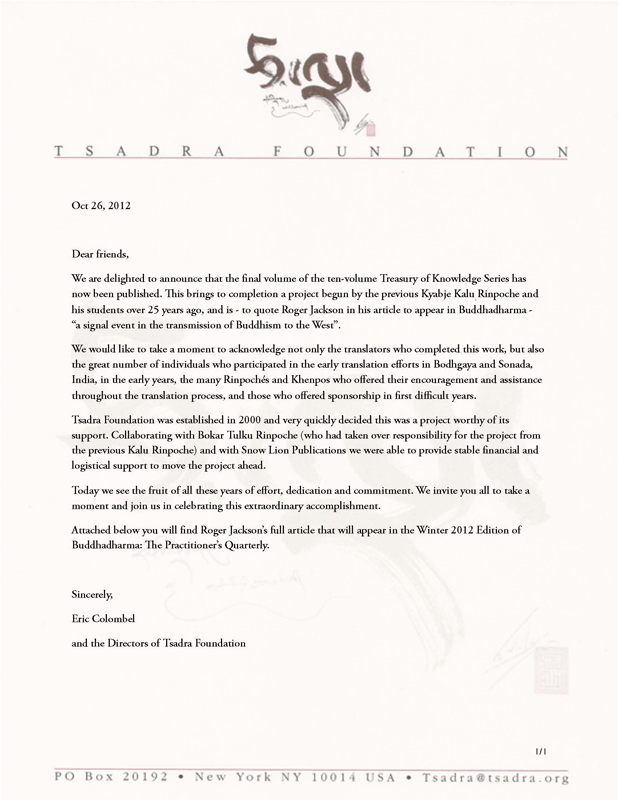
    Oct 26, 2012

    Dear friends,

    We are delighted to announce that the final volume of the ten-volume Treasury of Knowledge Series has now been published. This brings to completion a project begun by the previous Kyabje Kalu Rinpoche and his students over 25 years ago, and is – to quote Roger Jackson in his article to appear in Buddhadharma – “a signal event in the transmission of Buddhism to the West”.

    We would like to take a moment to acknowledge not only the translators who completed this work, but also the great number of individuals who participated in the early translation efforts in Bodhgaya and Sonada, India, in the early years, the many Rinpoches and Khenpos who offered their encouragement and assistance throughout the translation process, and those who offered sponsorship in first difficult years.

    Tsadra Foundation was established in 2000 and very quickly decided this was a project worthy of its support. Collaborating with Bokar Tulku Rinpoche (who had taken over responsibility for the project from the previous Kalu Rinpoche) and with Snow Lion Publications we were able to provide stable financial and logistical support to move the project ahead.

    Today we see the fruit of all these years of effort, dedication and commitment. We invite you all to take a moment and join us in celebrating this extraordinary accomplishment. Attached below you will find Roger Jackson’s full article that will appear in the Winter 2012 Edition of Buddhadharma: The Buddhist Practitioner’s Quarterly.

    Sincerely,

    Eric Colombel

    and the Directors of Tsadra Foundation

    The Review article by Roger Jackson

    from Buddhadharma: The Buddhist Practitioner’s Quarterly, Winter 2012 edition.

  • The Four Applications (T: rigs pa bzhi)

    The Four Applications (T: rigs pa bzhi)

    Dr. Art Engle gave a presentation on his work at the recent Tsadra Foundation Fellows and Grantees Conference entitled “Observations on Asanga’s Bodhisattvabhūmi.” During his talk he discussed the translation of rigs pa as “application” instead of “reason” in the context of “The Four Applications” (Wyl: rigs pa bzhi; Tib: རིགས་པ་བཞི་ ; Skt: catasro yuktayaḥ). Here he provides us with his notes, translations, and the associated text citations:

    The Four Applications

    [Note: The following passage is an excerpt from Ārya Asaṅga’s The Listener’s Stage (S: Śrāvakabhūmiḥ, T: Nyan thos kyi sa). It forms part of a larger discussion on what are referred to as thirteen “requisites” (S: sambhāraḥ, T: tshogs) for attaining freedom from attachment. The two activities of listening to and reflecting upon the true Dharma taken together represent the tenth of these qualities. Asaṅga’s description of the four applications (S: catasro yuktayaḥ, T: rigs pa bzhi) appears in his explanation of the second of two methods for engaging in the practice of reflection. It is here that we find Asaṅga stating that the term yukti is synonymous with yoga (T: sbyor ba) and upāya (T: thabs), any of which could be rendered in this context as an “application,” a “means,” or an “expedient.” It is for this reason that I have translated the term as “application,” rather than the more commonly seen rendering “reason.” The Sanskrit of the text that appears below is not well edited and contains a number of corruptions; nevertheless, it is helpful in the effort of attempting to render an accurate English translation. Another important primary source for the four applications is a passage that appears in Chapter Ten of the Saṃdhinirmocana Sūtra.]

    cintanā katamā | yathāpīhaikatyas tān eva yathā śrutān dharmān ekākī rahogataḥ | ṣaḍ acintyāni sthānāni tad yathā, (1) ātmacintāṁ, (2) sattvacintāṁ, (3) lokacintāṁ, (4) satvā(ttvā)nāṁ karmavipākacintāṁ, (5) dhyāyināṁ dhyāyiviṣayaṁ (6) buddhānāṁ buddhaviṣayaṁ varjayitvā (viśodhayitvā ?) svalakṣaṇataḥ | sāmānyalakṣaṇataś ca cintayati |

    SEMS PA GANG ZHE NA, ‘DI LTAR ‘DI NA LA LA GCIG PU DBEN PAR SONG STE, BSAM GYIS MI KHYAB PA’I GNAS DRUG PO ‘DI LTA STE, BDAG LA SEMS PA DANG, SEMS CAN LA SEMS PA DANG, ‘JIG RTEN PA LA SEMS PA DANG, SEMS CAN RNAMS KYI LAS KYI RNAM PAR SMIN PA LA SEMS PA DANG, BSAM GTAN PA RNAMS KYI BSAM GTAN GYI YUL DANG, SANGS RGYAS RNAMS KYI SANGS RGYAS KYI YUL RNAM PAR SBYANGS NAS, JI LTAR THOS PA’I CHOS DE DAG NYID RANG GI MTSAN NYID DANG, SPYI’I MTSAN NYID KYI SGO NAS SEMS PAR BYED PA YIN NO, ,

    What is reflection (S: cintanā, T: sems pa)?

    It is [described] as follows: Here a person goes alone to a solitary place and, after having cultivated the six inconceivable topics—that is, reflection upon the self, reflection upon beings, reflection upon the world, reflection upon the ripening of beings’ deeds, the objects of meditation that pertain to those who practice meditation, and the objects of a Buddha that are possessed by Buddhas—he [or she] reflects upon the individual and general characteristics of those teachings [that have been heard] in the same manner that he [or she] heard them.

    sā punaḥ cintā dvividhā gaṇanākārāsahagaṇanāyogena dharmeṇa | tulanākārama(rā), yuktyā guṇadoṣaparīkṣaṇākārā [ca][|] sa cet skandhapratisaṁyuktāṁ deśanāṁ cintayati | sa ced anyatamānyatamāṁ pūrvvaniviṣṭāṁ deśanāṁ cintayaty ābhyāṁ cintayati |

    SEMS PA DE YANG RNAM PA GNYIS TE, BGRANG BA’I RNAM PAS CHOS RNAMS LA BGRANG BA’I TSUL GYIS SEMS PAR BYED PA DANG, GZHAL BA’I RNAM PAS RIG PAS YON TAN DANG SKYON NYE BAR BRTAG PA’I TSUL GYIS SEMS PAR BYED PA YIN NO, ,GAL TE PHUNG PO DANG LDAN PA BSTAN PA LA SEMS PAR BYED DAM, GAL TE DE LAS GZHAN PA SNGAR BSTAN PA GANG YANG RUNG BA BSTAN PA LA SEMS PAR BYED NA YANG RNAM PA DE GNYIS KYIS SEMS PAR BYED PA YIN TE,

    Moreover, this reflection is of two types: (1) [reflection] upon teachings using a method that is a form of counting and (2) [reflection upon teaching] by means of a form of deliberation that consists of examining the good and bad qualities [of a particular topic]. If [someone] reflects upon a teaching that relates to the aggregates, or reflects upon any other teaching that was previously given, he [or she] reflects upon it using [either of] these two [methods].

    yathā punaḥ katham iti rūpam ucyate | daśa rūpīṇy āyatanānīti | yac ca dharmāyatanaparyāpannaṁ rūpaṁ sa ca rūpaskandhaḥ, tisro vedanā vedanāskandhaḥ | ṣaṭ saṁjñākāyāḥ saṁjñāskandhaḥ | ṣaṭ cetanākāyāḥ cetanāskandhaḥ | ṣaḍ vijñānakāyā vijñānaskandha ity evaṁ gaṇanāsaṁkhyākārāṁ skandha [gaṇanāṁ] cintayaty uttarottaraprabhedena yena vā punar asyāḥ saṁkhyāgaṇanākārāyāś cintāyā apramāṇaḥ praveśanayo veditavyaḥ |

    DE YANG JI LTAR ZHE NA, GZUGS ZHES BYA BA NI SKYE MCHED GZUGS CAN BCU DANG, CHOS KYI SKYE MCHED DU GTOGS PA’I GZUGS GANG YIN PA STE, DE NI GZUGS KYI PHUNG PO YIN NO, ,TSOR BA RNAM PA GSUM NI TSOR BA’I PHUNG PO YIN NO, ,’DU SHES KYI TSOGS DRUG NI ‘DU SHES KYI PHUNG PO YIN, ‘DU BYED KYI TSOGS DRUG NI ‘DU BYED KYI PHUNG PO YIN, RNAM PAR SHES PA’I TSOGS DRUG NI RNAM PAR SHES PA’I PHUNG PO YIN TE, DE LTAR NA BGRANG BA DANG, GRANGS KYI RNAM PAR PHUNG PO BSTAN PA LA SEMS PAR BYED PA DANG, GONG NAS GONG DU RAB TU DBYE BA’I TSUL GYIS GRANGS DANG, BGRANG BA’I RNAM PA SEMS PA DE LA TSAD MED PA’I SGO NAS ‘JUG PA’I TSUL DU RIG PAR BYA’O, ,

    How, then, [are these two methods carried out]?

    The term “form” refers to the ten bases that have the nature of form, as well as the form that is included in the entity basis. This is what makes up the form aggregate. The feeling aggregate is made up of three types of feeling. The conception aggregate is made up of six collections of conceptions. The formations aggregate is made up of six collections of formations. The consciousness aggregate is made up of six collections of [various forms of] consciousness. It should be understood that this is how one reflects upon a teaching about the aggregates in a manner that consists of a form of counting and enumeration. Moreover, [it should also be understood] that this method of reflection that is based on a form of enumeration and counting can be applied to an immeasurable degree by [further] distinguishing [the aggregates] using ever more detailed types of classification.

    kathaṁ yuktyupaparīkṣākārayā cintayā skandhadeśanāṁ cintayati | catasṛbhir yuktibhir upaparīkṣate | katamābhiś catasṛbhir yad utāpekṣāyuktyā, kāryakāraṇayuktyā, upapattisādhanayuktyā | dharmatāyuktyā ||

    JI LTAR NA RIGS PAS NYE BAR BRTAGS PA’I SEMS PAS PHUNG PO BSTAN PA LA SEMS PAR BYED PA YIN ZHE NA, RIGS PA BZHIS NYE BAR RTOG PAR BYED DE, BZHI GANG ZHE NA, ‘DI LTA STE, LTOS PA’I RIGS PA DANG, BYA BA BYED PA’I RIGS PA DANG, ‘THAD PA SGRUB PA’I RIGS PA DANG, CHOS NYID KYI RIGS PAS SO, ,

    How does one reflect upon a teaching about the aggregates using a form of investigation that applies various types of expedient means (S: yuktyupaparīkṣā, T: rigs pas nye bar brtags pa)?
    [Such a teaching] is investigated by means of the four applications.

    What are the four applications?

    They are (1) the application that relates to dependence (S: apekṣāyuktiḥ, T: ltos pa’i rigs pa), (2) the application that relates to performance of an action (S: kāryakāraṇayuktiḥ, T: bya ba byed pa’i rigs pa), (3) the application that relates to demonstration of a proof (S: upapattisādhana-yuktiḥ, T: ’thad pas grub pa’i rigs pa), and (4) the application that relates to the nature of things (S: dharmatāyuktiḥ, T: chos nyid kyi rigs pa).

    apekṣāyuktiḥ katamā | dvividhā apekṣā utpatyapekṣā prajñaptyapekṣā ca | tatrotpattyapekṣā yair hetupratyayaiḥ skandhānāṁ prādur bhāvo bhavati | tasyāṁ skandhotpattau te hetavas te pratyayā apekṣyante | yair nāmakāyapadakāyavyaṁjanakāyaiḥ skandhānāṁ prajñaptir bhavati | tasyāṁ skandhaprajñaptau te nāmapadakāyavyaṁjanakāyā apekṣyante | iyam ucyate skandheṣūtpattyapekṣā | prajñaptyapekṣatā (kṣā)ca | yā cotpattyapekṣā | yā ca prajñaptyapekṣā sā yuktir yoga upāyaḥ | skandhotpattaye | skandhaprajñaptaye tasmād apekṣāyuktir ity ucyate |

    DE LA LTOS PA’I RIGS PA GANG ZHE NA, LTOS PA NI RNAM PA GNYIS TE, SKYE BA’I LTOS PA DANG, GDAGS PA’I LTOS PA’O, ,DE LA SKYE BA’I LTOS PA NI RGYU GANG DAG DANG, RKYEN GANG DAG GIS PHUNG PO RNAMS SKYE BAR ‘GYUR BA’I PHUNG PO’I SKYE BA DE NI RGYU DE DAG DANG, RKYEN DANG DE DAG LAS LTOS PA YIN NO, ,MING GI CHOGS DANG, TSIG GI TSOGS DANG, YI GE’I TSOGS GANG DAG GI PHUNG PO RNAMS GDAGS PAR ‘GYUR BA’I PHUNG PO GDAGS PA DE NI MING GI TSOGS DANG, TSIG GI TSOGS DANG, YI GE’I CHOGS DE DAG LA LTOS PA YIN TE, DE NI PHUNG PO RNAMS KYI SKYE BA’I LTOS PA DANG, GDAGS PA’I LTOS PA ZHES BYA’O, ,SKYE BA’I LTOS PA GANG YIN PA DANG, GDAGS PA’I LTOS PA GANG YIN PA DE NI PHUNG PO SKYE BA DANG, PHUNG POR GDAGS PA’I RIGS PA DANG, SBYOR BA DANG THABS YIN PAS NA DE’I PHYIR LTOS PA’I RIGS PA ZHES BYA’O, ,

    What is the application that relates to dependence?

    There are two types of dependence: the dependence that relates to arising (S: utpattyapekṣā, T: skye ba’i ltos pa) and the dependence that relates to informative statements (S: prajñaptyapekṣā, T: gdags pa’i ltos pa). Regarding these, the dependence that relates to the arising [of the heaps] means that the causes and conditions by which the heaps are made to appear are the causes and conditions upon which the arising of the heaps depends. [The dependence that relates to informative statements about the heaps] means that the collections of names, assertions, and syllables by which the informative statements regarding the heaps are made are the collections of names, assertions, and syllables upon which the informative statements regarding the heaps depend. These [two types of dependence] that occur in relation to the heaps are called “the dependence that relates to the arising” and “the dependence that relates to informative statements.”
    Both the dependence that relates to the arising [of the heaps] and the dependence that relates to informative statements [about the heaps] are an application (S: yuktiḥ, T: rigs pa) or a means (S: yogaḥ, T: sbyor ba) or a method (S: upāyaḥ¸T: thabs) that is directed toward the arising of the heaps and [an application or a means or a method] that is directed toward the informative statements made in relation to the heaps. Therefore, it is called “the application that relates to dependence.”

    kāryakāraṇayuktir yā [ta]d utpannānāṁ skandhānāṁ svena hetunā svena pratyayena tasmiṁs tasmin svakāryakaraṇe viniyogas tad yathā | cakṣuṣā rūpāṇi draṣṭavyāni | śrotreṇa śabdā[ḥ] śrotavyāḥ | yāvan manasā dharmā vijñeyā iti | rūpeṇa cakṣuṣo gocare avasthātavyaṁ | śabdena śrotrasya, evaṁ yāddharmair manasa iti | yad vā punar anyad apy evaṁ bhāgīyaṁ | tatra tatra dharmāṇām anyo[a]nyaṁ kāryakāraṇe prati yuktir yoga upāya iyam ucyate | kāryakāraṇayuktiḥ |

    BYA BA BYED PA’I RIGS PA GANG ZHE NA, PHUNG PO RANG GI RGYU DANG, RANG GI RKYEN GYIS BSKYED PA GANG YIN PA RNAMS NI RANG GI BYA BA BYED PA DE DANG DE DAG LA SBYOR BAR BYED PA YIN TE, ‘DI LTA STE, DPER NA MIG GIS GZUGS RNAMS LA LTA BAR BYED PA DANG, RNA BAS SGRA RNAMS NYAN PAR BYED PA DANG, YID KYIS CHOS RNAMS SHES PAR BYED PA’I BAR LTA BU DANG, GZUGS KYIS MIG GI SPYOD YUL DU GNAS PAR BYED PA DANG, SGRAS RNA BA’I SPYOD YUL DU GNAS PAR BYED PA DANG, DE BZHIN DU CHOS RNAMS KYIS YID KYI SPYOD YUL DU GNAS PAR BYED PA’I BAR DAG LTA BU DANG, GZHAN YANG DE LTA BU DANG MTHUN PA’I CHOS RNAMS DE DANG DE DAG GCIG LA GCIG BYA BA BYED PA’I RIGS PA DANG, SBYOR BA DANG, THABS SU ‘GYUR BA GANG YIN PA DE NI BYA BA BYED PA’I RIGS PA ZHES BYA’O, ,

    What is the application that relates to performance of an action?

    It is the assigning (S: viniyogaḥ, T: sbyor bar byed pa) of the performance of this or that action to [the individual entities that make up] the heaps, each of which has arisen on the basis of its own causes and conditions. For example, the eye sees [visible] forms, the ear hears sounds, and so on, up to the mind knows entities. [Visible] form is established as the field of action for the eye, sound is established as the field of action for the ear, and so on in the same way, up to entities are established as the field of action for the mind. In addition, further descriptions of a similar kind can be made in relation to the performance of actions that occur mutually among different entities. Such an application or means or method is called “the application that relates to performing an action.”

    upapattisādhanayuktiḥ katamā[|] anityā[ḥ] skandhā iti, pratītyasamutpannā, duḥkhā[ḥ], śūnyā, anātmāna iti tribhiḥ pramāṇair upaparīkṣate yad utāptāgamena, pratyakṣeṇānumānena ca[|] ebhis tribhiḥ pramāṇair ūpapattiyuktaiḥ satāṁ hṛdayagrāhakair vyavasthāpanā sādhanā kriyate | yad uta skandhānityatāyā vā, pratītyasamutpannatāyā vā, duḥkhatāyā [ḥ], śūnyatāyā, iyam ucyate upapattisādhanayuktiḥ |

    ‘THAD PA SGRUB PA’I RIGS PA GANG ZHE NA, PHUNG PO RNAMS MI RTAG PA’AM, RTEN CING ‘BREL PAR ‘BYUNG BA’AM, SDUG BSNGAL BA’AM, STONG PA’AM, BDAG MED PA’O ZHES TSAD MA GSUM PO ‘DI LTA STE, YID CHES PA’I LUNG DANG, MNGON SUM DU RJES SU DPAG PA DAG GIS NYE BAR RTOG PAR BYED CING ‘THAD PA’I RIGS PA DAM PA RNAMS KYI SNYING ‘PHROG PAR BYED PA’I TSAD MA GSUM PO DE DAG GIS ‘DI LTA STE, PHUNG PO RNAMS MI RTAG PA NYID DAM, RTEN CING ‘BREL BAR ‘BYUNG BA NYID DAM, SDUG BSNGAL BA NYID DAM, STONG PA NYID DAM, BDAG MED PA NYID DU RNAM PAR ‘JOG PAR BYED CING, SGRUB PAR BYED PA YIN TE; DE’I ‘THAD PA SGRUB PA’I RIGS PA ZHES BYA BA’O, ,

    What is the application that relates to demonstration of a proof?

    The assertions that the heaps are impermanent, that they are dependently arisen, that they have a nature that consists of suffering, that they are empty [of a self that is distinct from them], and that they do not [in themselves] constitute a self are investigated using the three forms of authoritative knowledge (S: pramāṇam, T: tshad ma)—that is to say, trustworthy scripture, direct perception, and inference. These three forms of authoritative knowledge—which represent forms of application that relate to proofs (S: upapattiyuktiḥ, T: ’thad pa’i rigs pa) and which captivate the minds of the wise—establish and demonstrate the impermanence, dependently arisen nature, suffering nature, empty nature, and selflessness of the heaps. [Hence,] this [method of reflection] is called “the application that relates to demonstration of a proof.”

    dharmatāyuktiḥ katamā| kena kāraṇena tathā bhūtā ete skandhā[ḥ], tathā bhūto lokasanniveśaḥ kena kāraṇena kharalakṣaṇā pṛthivī, dravalakṣaṇā āpaḥ, uṣṇalakṣaṇaṁ tejaḥ [ḥ], samudīraṇalakṣaṇo vāyuḥ, (|) anityāḥ, skandhā [ḥ], kena kāraṇena śāntaṁ nirvvāṇam iti| tathā rūpaṇalakṣaṇaṁ rūpaṁ | anubhavalakṣaṇā vedanā, saṁjānanalakṣaṇā saṁjñā, abhisaṁskaraṇalakṣaṇāḥ saṁskārāḥ, vijānanālakṣaṇaṁ vijñānam iti| prakṛtir eṣāṁ dharmāṇām iyaṁ svabhāva eṣa īdṛśaḥ | dharmataiṣā caiva cāsau dharmatā | saivātra yuktir yoga upāyaḥ [|] evaṁ vā etat syāt | anyathā vā, naiva vā syāt, sarvvatraiva ca dharmataiva pratiprasaraṇadharmataiva yuktiḥ | cittanidhyāyanāya, cittasaṁjñāpanāya iyam ucyate dharmatāyuktiḥ |

    CHOS NYID KYI RIGS PA GANG ZHE NA, CI’I PHYIR PHUNG PO RNAMS DE LTA BUR GYUR BA YIN, ‘JIG RTEN GNAS PA DE LTA BUR GYUR PA YIN, CI’I PHYIR SA’I MTSAN NYID SRA BA YIN, CHU’I MTSAN NYID GSHER BA YIN, ME’I MTSAN NYID TSA BA YIN; RLUNG GI MTSAN NYID GA-YO BA YIN, CI’I PHYIR PHUNG PO RNAMS MI TIG PA YIN, CI’I PHYIR MYA NGAN LAS ‘DAS PA ZHI BA YIN, DE BZHIN DU CI’I PHYIR GZUGS KYIS MTSAN NYID GZUGS SU RUNG BA YIN, TSOR BA’I MTSAN NYID MYONG BA YIN, ‘DU SHES KYI MTSAN NYID KUN SHES PAR BYED PA YIN, ‘DU BYED RNAMS KYI MTSAN NYID MNGON PAR ‘DU BYED PA YIN, RNAM PAR SHES PA’I MTSAN NYID RNAM PAR SHES PAR BYED PA YIN ZHE NA, DE NI CHOS NYID YIN TE, CHOS DE DAG GI RANG BZHIN DE YIN ZHING, DE DAG GI NGO BO NYID DE LTA BU YIN PAS CHOS NYID DE GANG KHO NA YIN PA DE NYID ‘DIR RIGS PA DANG, SBYOR BA DANG, THABS YIN NO, ,DE BZHIN DU DE LTA BU’AM, GZHAN NAM, GZHAN DU MI ‘GYUR BA NI SEMS LA GZHAG PAR BYA BA DANG, SEMS LA GO BAR BYA BA’I PHYIR THAMS CAD DU YANG CHOS NYID KHO NA LA BRTEN PA DANG, CHOS NYID KHO NA’I RIGS PA YIN TE; DE NI CHOS NYID KYI RIGS PA ZHES BYA’O, ,

    What is the application that relates to the nature of things?

    In response to questions such as, “Why do the heaps have such a nature?” “[Why] does the arrangement of the world have that nature?” “Why does the earth [element] have the essential characteristic of hardness, the water [element] have the essential characteristic of wetness, the fire [element] have the essential characteristic of heat, and the air [element] have the essential characteristic of motility?” “[Why] are the heaps impermanent?” “Why is nirvana a state of peace?” and, similarly, [in answer to such questions as “Why] does form have the essential characteristic of displaying [the quality of] form?” “[Why do] feelings have the essential characteristic of experiencing?” “[Why do] conceptions have the essential characteristic of causing things to be recognized?” “[Why do] formations have the essential characteristic of shaping/forming things [in a particular way]?” and “[Why does] consciousness have the essential characteristic of awareness?” [the understanding that] this is the natural condition of those entities, that this is what their essential nature is like, that this is their very nature is here an application or a way or a means, and hence it is called “the application that relates to the nature of things.” Alternatively, the application that the relates to the nature of things and that relies upon the nature of things with the aim of fixing the mind upon and causing the mind to recognize that this is the way things are, that they are not some other way, that they do not cease to be this way, and that they are [this way] everywhere is called “the application that relates to the nature of things.”

    evaṁ catasṛbhir yuktabhiḥ skandhadeśanā upaparīkṣyata iti | yāvat punar anyā kācid deśanā iti yā evam ābhyāṁ dvābhyām ākārābhyāṁ gaṇanāsaṁkhyākārā ca yuktyupaparīkṣaṇākārā ca samyag upanidhyāyanā tasyās tasyā deśanāyā iyam ucyate | saddharmaśravaṇacinta[nā] ||

    DE LTAR NA RIGS PA BZHIS PHUNG PO B STAN PA DANG, GZHAN GANG YANG RUNG BA BSTAN PA LA NGES PAR RTOGS PAR BYED PA YIN TE, DE LTAR RNAM PA GNYIS PO BGRANG BA DANG, GRANGS KYI RNAM PA DANG, RIGS PAS NYE BAR RTOG PA’I RNAM PA DE DAG GIS BSTAN PA DE DANG, DE DAG LA YANG DAG PAR RTOG PAR BYED PA GANG YIN PA DE NI SEMS PA YIN TE, DE NI DAM PA’I CHOS NYAN PA DANG SEMS PA ZHES BYA’O, ,

    This is the way in which a teaching about the aggregates is investigated by means of the four applications. Moreover, the correct and attentive consideration of any other specific teaching using [either of] these two methods that represent [either] a form of counting and enumeration or a form of examination using the applications is what is referred to as reflection. This is what is referred to as “listening to and reflection upon the true Dharma.”


  • An Introduction to the Tengyurs: Conference Reporting Contintued…

    An Introduction to the Tengyurs: Conference Reporting Contintued…

    The International Conference on Tengyur Translation in the Tradition of the 17 Pandits of Nalanda

    The conference began on January 8th with chants offered in three languages: Pali, Sanskrit, and Tibetan. Students at the Central University of Tibetan Studies are now able to study Pali, Sanskrit, Tibetan, and Hindi, as well as other modern languages. Recently awarded university status (2009), the institution was established in 1967 and is now directed by Geshe Ngawang Samten, who played a key role in the proceedings of this conference. The previous director, Samdong Rinpoche, was also present and gave a speech as the Prime Minister of the Tibetan government-in-exile. The university was an excellent host for the conference, despite the pervasive cold, and I’m sure everyone especially appreciated all the students and staff who helped provide hot tea and crackers each day. The tech staff also had their hands full as many people chose to prepare PowerPoint presentations. Even with the power going out daily they kept things running rather smoothly.

    Shrikant Bahulkar oversaw the opening ceremonies and participants heard welcoming words from Geshe Ngawang Samten, Tenzin Bob Thurman, HH Gaden Tri Rinpoche, and others. After the opening speeches, and tea to warm us up, we heard from Tom Yarnall, Christian Wedemeyer and Paul Hackett. The topic of this opening session was to be an overview of the Tengyur, it’s history, composition, and so forth. From Dr. Wedemeyer we heard more about the history and formation of the Tengyurs and from Dr. Hackett we heard details of the composition of the various Tengyurs. From Dr. Yarnall we received an interesting argument that basically presented the particular way in which it seemed the conference conveners were conceiving of their project to “Translate the Tengyur.”  The argument relied upon an interesting way of conceiving of Tibetan Buddhism and clearly described why the translation of the Tengyur is important and relevant to today’s scholars. What we heard was an introduction to one way of talking about the Tibetan Buddhist tradition as preserving the ancient Indian academic world of Nālandā, Vikramaśīlā, and so forth. Although I cannot repeat all of Yarnall’s discussion here, similar logic was presented on the official Tengyur Translation Website and it is worth repeating because it is interesting to note the kind of rhetoric used:

    (1) That although the great Indian institutions such as Nālandā, Vikramaśīlā, and so on were ostensibly run by Buddhists, they were not only (or even primarily) Buddhist religious institutions; that they rather were multi-cultural, multi-tradition, cosmopolitan institutions, and hence true “universities” (as also argued by S. Dutt, L. Joshi, and others); (2) That as such, the many centuries of Buddhist arts/sciences developed in these institutions and recorded in the Sanskrit śāstras compiled therein took place in a vibrant, contentious, multi-tradition milieu in which each point had to be argued and defended; i.e., this was not a context such as Tibet (or other “Buddhist countries”) in which Buddhists were speaking virtually exclusively with other Buddhists, and thus could take for granted at least some common assumptions, perspectives, methodologies, and so on (rather, no premise or point could be taken for granted in the Indian context); (3) That therefore the Tengyur—as the repository of many of these śāstras (in Tibetan translation) which record the discourse that occurred in such a pluralistic environment very similar to our own contemporary, multi-cultural global environment—is uniquely important and relevant today (indeed, HH noted that in this way it may be even more relevant/accessible than many of the texts in the Kangyur); and (4) That therefore, the translation of the Tibetan Tengyur into modern languages and the publication of well-edited and annotated editions of these translations should be a prime priority for contemporary Buddhist scholars and institutions. (Taken from the official Tengyur Translation Website)

    Dr. Yarnall (University of Columbia)

    In his talk, Dr. Yarnall described the great academic institutions of ancient India in some detail, and linked their achievements with the texts preserved in the Tibetan Tengyur. He also presented a quote from the Dalai Lama in which he identifies himself as holding the tradition of Nālandā and not particularly that of the Mahāyāna or Varjayāna. Perhaps I am simply ignorant of this trend in the discourse, but I found it very interesting that the Dalai Lama and others who are scholars, students and practitioners of Tibetan Buddhism were associating themselves so strongly with their idea(l) of Nālandā University. Every participant at the conference was given a new CUTS publication, a poem by the Dalai Lama praising the Seventeen Pandits of Nālandā, published in Tibetan, Chinese, English and Hindi. The overall effect of this, along with Dr. Thurmans interjections, was the sense that the real reason for translating the Tengyur is that it is supposed to be a faithful source for understanding the “scientific” tradition of Nālandā, which in turn is representative of an “authentic” Indian culture whose “inner sciences” pacified the barbarian lands of central and east Asia and will likewise pacify the West. Note also that the AIBS publication series is titled a “Treasury of Buddhist Sciences.” I personally rather like the idea of ancient liberal arts colleges producing texts on the inner and outer sciences of India and I like pushing the ideal of a modern pluralistic environment of scholarly debate. However, even disregarding the liberal use of the term “science,” I was left with the feeling that there is probably more to the story. I have not researched the actual evidence we have for reconstructing the scholastic culture of Nālandā, but perhaps someone reading this could post some more information about it online.

    Dr. Wedemeyer (University of Chicago)

    Dr. Wedemeyer provided a nuanced look at the idea of “the Tengyur.” He began with the now famous joke about the student who angrily told a theologian, “If the King James Bible was good enough for Jesus, It’s good enough for me!” Which might now be rendered in our context as, “If the Dege edition of the Kangyur and Tengyur were good enough for the Buddha, they’re good enough for me.” I doubt many scholars or translators have the exact same thinking with regard to the Tengyur or Kangyur, but a lack of understanding about the complexity of the development of these collections, and their content, seems to be widespread.

    The many Tengyurs are collections of texts that developed over considerable amounts of time in various places in Tibet. The library at Nālandā did not have a “Tengyur” section. It is not until centuries after Nālandā’s heyday that we begin to see the creation of Kangyurs and Tengyurs in Tibet. Dr. Wedemeyer described the Tengyur more as a genre than a fixed set of scripture. In his opening remarks, Wedemeyer said, “The distinction between Kangyur and Tengyur is itself a relatively late construction, the two were probably not distinguished before the production of the circa 1310 Old Narthang Manuscript Kangyur. That is, the very existence of the Tengyur as a separate collection from that of the Kangyur is itself a human choice, one which we may chose to follow or not. Furthermore, it would seem that the idea… the concept of a collection of writings of Indian authors distinct from the revealed Sutras and Tantras appeared before anyone thought to physically prepare this collection separately from the (?) literature. The earliest records of a Tengyur found so far seems to be sometime after 1270 by o rgyan pa rin chen dpal, who notably speaks of Tengyurs in the plural. In the following century this mode of organizing Buddhist literature took off. We read of the textual transmission, the lung, of the Kangyur and Tengyur being given around Sakya in 1300. Later a Golden Tengyur was produced in Sakya in 1322-24. And most famously perhaps, Bu ston consecrated the Zhwa lu Tengyur in 1335….Very recently two Tengyur catalogs composed by the 3rd Karmapa have come to light, whose content and whose structure vary significantly from alternative redactions….Tengyurs were often both marked by local character, individualistic productions reflecting the tastes and allegiances of their authors, and open ended, works were added and subtracted at various times in their histories….As an aside, the Kalacakra was occasionally included in the Tengyur. Bu ston notes this in his Zhwa lu Tengyur catalog, but argues that its inclusion in the Tengyur is auspicious. And so one might regard as auspicious the inclusion of a translation of part of the Kalacakra by Vesna Wallace, which inaugurates the AIBS Tengyur publication series…

    The formation of the Tibetan Tengyurs is not a simple story and so the translation—or perhaps we should speak of the “creation” of a ” Western Tengyur,” for it most certainly will be a creative production—will not be a simple story. The formation of some of the texts in the Tengyur are not simply a matter of an author composing a text in “Sanskrit” and having it translated into Tibetan. Colophons have been modified, text added or removed. Some texts come from Chinese, Tibetan or other sources. It is not always obvious who composed the texts, or even who translated them. There are duplicates included in the collections in different sections and multiple different translations of texts are included as well. Medicine, poetry, logic, ethics—you might even find a text on basket weaving—all are included. The early redactors of the Tibetan canons were focused more on an attempt to be comprehensive, than an attempt to create an authoritative, exclusive bible of Buddhism. In fact, there are non-Buddhist materials included in the Tengyur. While some texts most certainly represent what we would likely judge to be the height of philosophical and religious thinking, others may be surprisingly obscure and obtuse. It seems that some people erroneously assume that the works of Candrakirti and Nagarjuna and other philosophers are proof enough that all of the Tengyur will be worth reading. I think many modern Buddhists will find this is not the case. This, in itself, is not a problem. It simply makes the translation of the entire Tengyur a complex affair.  The translation of all the texts collected in all the Tengyurs would be an amazing scholarly feat worth the effort, if only for the things translators and specialists would learn in the process. It would probably be one of the most amazing accomplishments in the history of humanities scholarship and I hope that the many great scholars at the Tengyur Translation Conference are able to guide such a project towards completion.

    Throughout the conference I think it was made clear that few people participating there had a simplistic view of the contents of the Tengyur. In his opening talk, Dr. Yarnall proposed that “multi-disciplinary and inter-disciplinary approaches” should be used when translating the texts of the Tengyur in order to insure quality translations that preserve the spirit of the multicultural scholastic approach he believes was found at the historic Nālandā University. Furthermore, he suggested, translators should be trained in multicultural approaches and their translations should be aimed not merely at Buddhist practitioners, but at the world at large. This is a fascinating approach and I look forward to seeing how this may be made possible while translators work on these texts with geshes and khenpos and lamas who are steeped in their traditions. In fact, in this globalized era, such a project will certainly become an interesting example of multiculturalism and the process itself will have a great deal to teach us. Perhaps just as much, or more, than the translations themselves.

    As I noted in a previous post, several presenters mentioned the idea of needing critical editions of texts for quality translations to be made. It seemed that most people leaned towards the idea that as many variant versions of a text from as many languages as possible were necessary in order to produce the kind of quality translations people wanted to see (or at least, that’s what people said out loud). However, as soon as someone with a practical head for budgets looks at the project of translating ALL the texts included in ALL the various Tengyurs, the thought of creating critical editions, or even referring to all the versions of a text during translation, may cause quite a bit of disquiet. Funding issues aside, the first problem is a lack of qualified translators who can work in Pali, Chinese, Sanskrit and Tibetan. Perhaps there can be new university programs designed to produce Tengyur text translators? Or perhaps, translators and scholars can take advantage of modern technology and use online programs to collaborate on translations, allowing specialists in each of the various canonical languages to contribute expertise to a particular translation. Perhaps the project can be taken slowly and the proper attention paid to detail. In the current climate, it seems more likely that many translations will be made using one Tibetan version of a text with modern Tibetan commentaries from a particular tradition used to elucidate the meaning. These translations will not be as much about translating the original Indian texts as they will be about transmitting a particular Tibetan tradition associated with said texts. Thus, these translations will produce new Tengyurs for a new age. These new Tengyurs will sprout like mushrooms wherever donors can be found and one day we will have a conference about how to collect all the “really authentic” ones into a big database and translate them. I, for one, shall continue to hope that quality shall win out over the quantity focused translation projects, but only time will tell.

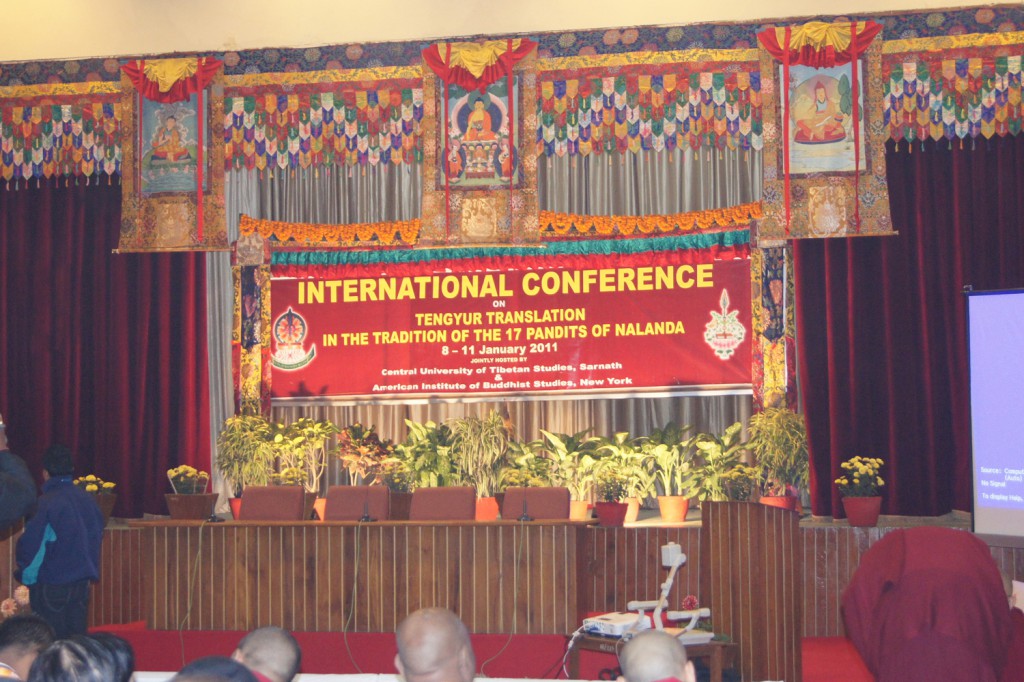
    Day One of the Tengyur Translation Conference in Atisha Hall, CUTS

    See the other post from Marcus on the Tengyur Translation Conference here.

  • Maṅgala

    Maṅgala

    Comparaison de différentes traductions du Maṅgala
    (stances dédicatoires / Dedicatory Verses) des
    Stances fondamentales de la Voie médiane
    de Nāgārjuna

    Here are some translations of the “Dedicatory Verses” of The Fundamental Stanzas of the Middle Way. I find very, very interesting to investigate into the different translations of the same Sanskrit original in order to get a feeling of what I call “the space of translation”. As we’ll meet very soon in Altlanta in order to exchange some ideas about our work in translation, I felt it could be interesting for everyone to have a clear example of what I’m trying to express: is it possible to theorize the seeming openness suggested by all these different expressions of the same ? Can we seriously condemn certain translations in favor of other ones ? What are the criteria which could definitely define a good & authorized translation ? The matter may seem trivial, but it is not at all, and I’m sure there are still many discoveries to be done on that subject.

    And please excuse my barbarian English…

    anirodham anutpādam anucchedam aśāśvataṃ |
    anekārtham anānārtham anāgamam anirgamaṃ ||

    yaḥ pratītyasamutpādaṃ prapañcopaśamaṃ śivaṃ |
    deśayām āsa saṃbuddhas taṃ vande vadatāṃ varaṃ ||

    [Literally: without cessation, without birth, without annihilation, without eternity,
    without unity, without multiplicity, without coming, without going,
    To him who has shown that what interdependently arises is the auspicious appeasement of the conceptual constructions, the perfect Buddha, the best of “speakers”, I pay homage.]

    Kumārajīva, 410

    (T 1564, vol. 30, 1b17)

    不生亦不滅  不常亦不斷
    不一亦不異  不來亦不出
    能說是因緣  善滅諸戲論
    我稽首禮佛  諸說中第一

    [Literally: not being born, not ceasing, not eternal, not annihilated,
    not one, not different, not coming, not going out,
    to him who can say this cause-and-conditions, good at extinguishing all plays-on-words,
    to the Buddha I respectfully pay homage, for he is the first amongst all who speak.]

    Cog ro klu yi rgyal mtshan (fin VIIIe siècle)

    /gang gis rten cing ‘brel bar ‘byung//’gag pa med pa skye med pa/
    /chad pa med pa rtag med pa//’ong ba med pa ‘gro med pa/

    /tha dad don min don gcig min//spros pa nyer zhi zhi bstan pa/
    /rdzogs pa’i sangs rgyas smra rnams kyi//dam pa de la phyag ‘tshal lo/

    David J. Kalupahana, 1986

    I salute him, the fully enlightened, the best of speakers, who
    preached the non-ceasing and the non-arising, the non-
    annihilation and the non-permanence, the non-identity and the
    non-difference, the non-appearance and the non-disappearence,
    the dependent arising, the appeasement of obsessions and the
    auspicious.

    Jay L. Garfield, 1995

    I prostrate to the perfect Buddha,
    The best of teachers, who taught that
    Whatever is dependently arisen is
    Unceasing, unborn,
    Unannihilated, not permanent,
    Not coming, not going,
    Without distinction, without identity,
    And free from conceptual construction.

    Stephen Batchelor, avril 2000

    I bow down to the most sublime of speakers, the completely awakened one who taught contingency (no cessation, no birth, no annihilation, no permanence, no coming, no going, no difference, no identity) to ease fixations.

    Guy Bugault (2002)

    Sans rien qui cesse ou se produise, sans rien qui soit
    anéanti ou qui soit éternel, sans unité ni diversité, sans
    arrivée ni départ, telle est la coproduction conditionnée,
    des mots et des choses apaisement béni. Celui qui nous l’a
    enseignée, l’Éveillé parfait, le meilleur des instructeurs, je
    le salue.

    [Literally : without anything that ceases or arises, without anything that is
    annihilated or eternal, without unity nor diversity, without
    arrival nor departure, such is the conditioned co-production,
    the blessed appeasement of words and things. The one who has taught
    it to us, the perfect Enlightened One, the best amongst teachers, I
    salute.]

    Padmakara (English), 2008

    To him who taught that things arise dependently,
    Not ceasing, not arising,
    Not annihilated nor yet permanent,
    Not coming, not departing,
    Not different, not the same :
    The stilling of all thought, and perfect peace :
    To him, the best of teachers, perfect Buddha,
    I bow down.

    Padmakara (français), 2008

    À celui qui, montrant que ce qui se produit en interdépendance
    N’a ni cessation ni naissance,
    Ni interruption ni pérennité,
    Ni venue ni allée,

    Et n’est ni multiple ni un,
    [Montre] l’apaisement des concepts, la paix,
    À cet Éveillé parfait, le plus saint
    Des philosophes, je rends hommage.

    [Literally: to him who, showing that what arises interdependently
    Has no cessation nor birth,
    No interruption nor permanence,
    No coming nor going,

    And is neither multiple nor one,
    (Shows) the appeasement of conceptions, peace,
    To that perfect Enlightened One, the holiest
    Amongst philosophers, I pay homage.]

  • Tengyur Translation Conference 2011

    Tengyur Translation Conference 2011

    See the follow up to this blog post here. Tengyur Translation Conference Banner

    The crowd on the opening day of the conference in Atisha Hall

    The “Tengyur Translation Conference: In the Tradition of the 17 Pandits of Nalanda,” was held at the Central University of Tibetan Studies (CUTS, formerly CIHTS) in Sarnath, India, with the support and attendance of His Holiness the Dalai Lama. Scholars, teachers, translators and Tibetan Lamas from many traditions attended the four day affair in the unusually cold January weather, which made Atisha Hall a large refrigerator throughout the proceedings. Despite the need to speak at the podium wearing North Face jackets and scarves, participants gave some excellent presentations and many lively discussions marked this important scholarly venture. Jointly held by CUTS and AIBS (American Institute of Buddhist Studies, Columbia, New York), the conference was to be a meeting of some of the best minds in Buddhist studies on the project of translating the entire Tengyur section of the Tibetan Canon. Such a project presents many organizational, theoretical, philological and economic problems, some of which were touched upon by various presenters. In fact, a key purpose for the conference was the assessment and discussion of such issues amongst a learned body of scholars.

    Dr. Robert Thurman

    The conference came together in large part due to the efforts of Robert Thurman’s “crew” at AIBS and the University of Columbia, Annie Bien and Tom Yarnall, and on the CUTS side, Shrikant Bahulkar and Ven. Ngawang Samten. Hats off to all those seen and unseen who provided for all the participants and laid the ground for the conference.

    Dr. Thurman made a point to note that this conference was really the third in a set of conferences he felt built on one another, the first being the translator conference in Boulder and the second the Khyentse Foundation conference in Bir. This and other comments may have led some participants to wonder about the relationship between the organizations involved in each of these conferences, organizations which are in fact quite distinct. Although the stated projects and goals of each conference were somewhat different, probably the most important thing that links each of these conferences is the opportunity they provide for an ongoing dialog among translators and scholars who work with Tibetan texts. This, I think, is the most important outcome of these conferences and I hope it can continue. Regardless of the various organizations, politics and attempts at institution building, the translators, scholars and scholar-practitioners who attend these conferences benefit greatly from the time they share together. Every person I asked about the conference responded as most do at the conferences I have attended over the past few years: The most important aspect of the conference is the time outside of the scheduled events where they meet with colleagues and discuss finer points or are introduced to new people and ideas. However ephemeral and unquantifiable, it appears that the unchaperoned times are the real reason to attend such a conference.

    One of the more concrete outcomes of the conference was the reports that were made on the state of translating Buddhist texts into a whole host of languages. Participants arrived from many countries to discuss translations of primarily Tibetan texts into English, Sanskrit, Hindi, Chinese, Korean, Japanese, Nepali, German, French, Spanish, Italian, Russian, Hebrew, and other European languages. It was an impressive list really and particularly interesting to hear about the efforts of Nepali and Hindi translators. There were a number of calls from the audience to place more focus on the importance of translating Buddhist texts into the modern languages of India, as this was where the Buddha’s teaching originated. Ngawang Samten noted that at the Central University of Tibetan Studies about 60 texts have been translated into Hindi so that key commentaries are available to Indian peoples. Although it was a little difficult to piece together a clear picture of the state of Tengyur text translation around the world, the picture painted seemed to indicate that quite a lot of work is currently underway. While some presenters described the long history of translation efforts into their mother tongues (German, French, English), others decried a sad state of affairs (Spanish, Hindi). Although there appears to be work happening around the world, compared to the mountain of texts that exist as a part of the several known Tengyur catalogs, the world’s Tibetan translators still have a long way to go. One important point that was made by quite a number of delegates at the conference was that the key factor in translating texts into their language was not seen to be money or support, but expertise and training. There simply are not enough well-trained translators capable of working on what are some of the most difficult texts in Buddhist literature. Translating Tengyur texts is not just a matter of gathering together a group of people who are excited about the project and who know a little Tibetan. Time and again scholars at the conference noted the importance of establishing schools or finding other ways to support the development of truly qualified translators. The lack of qualified translators is felt not only in Spanish or Hindi or Russian, but in every language. What to do about it is certainly a problem that needs to be addressed by any organizational body wanting to tackle such an ambitious project.

    Betsy Napper, who gave some of the most practical advice, suggested that a training program could be developed in which the younger generation of translators worked on draft translations of texts and then handed off their work to elder translators. Before any actual translation work should be done, however, she suggested the project be taken on in a modular way, first developing online and bibliographic tools, then creating groups to develop critical editions of texts, and so forth.

    Alexander Berzin also presented practical advice for tackling the immense project by discussing lessons learned developing his “Berzin Archives” website. Truly an amazing accomplishment, the large network of translators, transcribers, editors, proofreaders, and other specialists that Dr. Berzin has developed provides a constantly evolving archive of translations and teachings on Buddhism in many languages worldwide. Dr. Berzin was therefore able to give specific advice about the development of tools for managing work-flow, tools for managing translation in many disparate languages – such as a wiki that all translators could log into – interlinked glossaries that allow standardization of terminology, separate online glossaries for readers, and so on.

    The Dalai Lama himself also offered some interesting advice: Collect all the texts from the Asian canons (Chinese, Korean, Pali, Sanskrit, Tibetan) and make sure that the texts missing from one are included in another. Once a “complete” canon is available, then translate that into modern western languages.

    It remains to be seen what advice will be taken to heart as various projects to translate the Kangyur and Tengyur develop around the world. Robert Thurman’s American Institute of Buddhist Studies was the driving force behind this conference and they have been working on the project of translating texts from the Tengyur for some time. Their mission statement, as reported by Dr. Thurman at the opening of the conference, is “To create and support the necessary institutional framework within which to produce critical, readable, contemporary translations of the 3,600+ classical source texts of the “liberating arts and sciences” of the Indo-Tibetan civilization.” This is truly a massive undertaking and one that will need the support of many scholars and translators world-wide if it is to even begin to make headway. It will be very interesting to see what comes out of this exciting project in the coming years.

    A seat waits for His Holiness the Dalai Lama

    See the next post about the Tengyur Translation Conference here.