Category: Digital Resources

[rev_slider alias=”tsadra-blog”]

Digital Resources

  • Adarsha: the Kangyur from the Karmapa

    Adarsha: the Kangyur from the Karmapa

    Adarsha: the Kangyur from the Karmapa

    Adarsha on iTunes

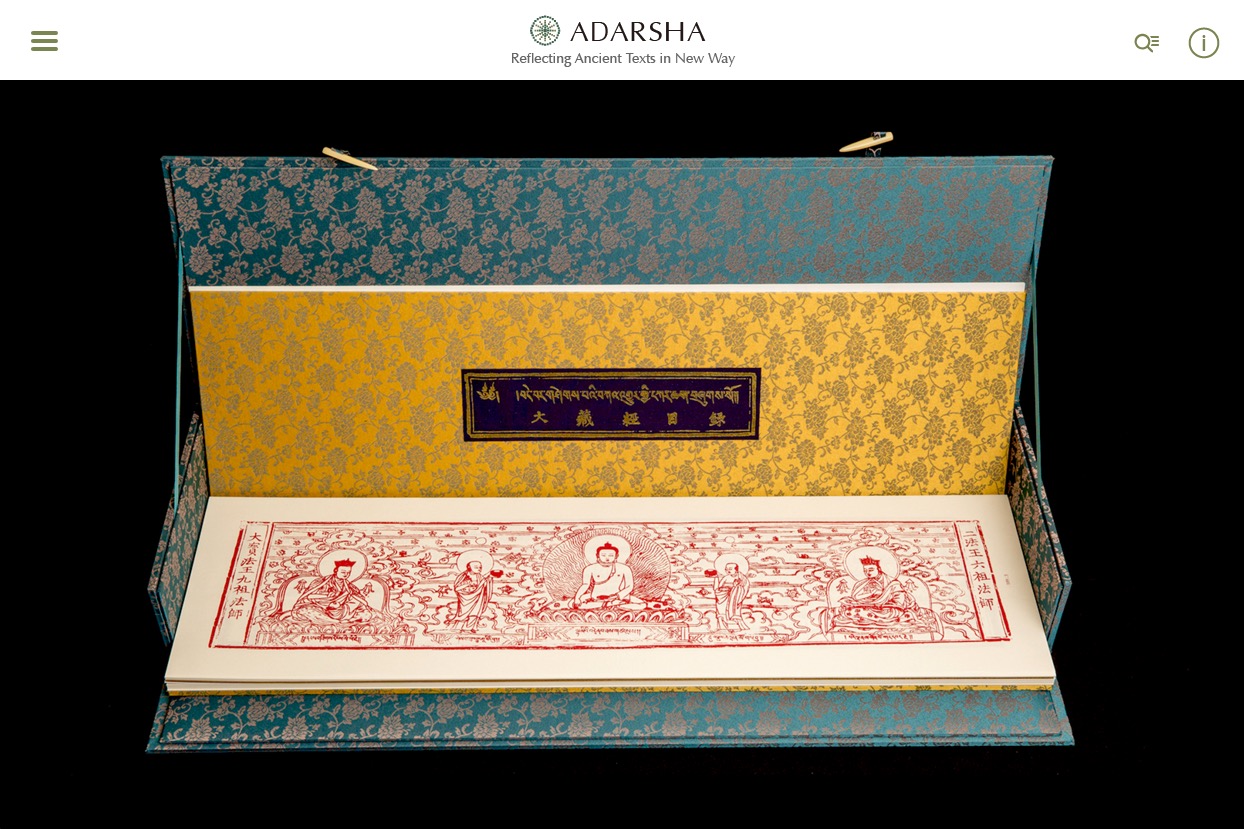
    The Karmapa announced this project in 2014 and although it is still in development, this app is already up and running well on the iPad for searching the Jiang Kangyur in Tibetan script. It looks like they will be adding the Tengyur and other sources soon. A website for easy access on any computer is also in development and can be found at adarsha.dharma-treasure.org.

    From the description on their website:
    1. ADARSHA is an app that lets you read and conduct searches of ancient documents in a digital format. There are three main categories of texts: (a) Kangyur (the words of the Buddha translated into Tibetan); (b) Tengyur (commentaries by Indian scholars translated into Tibetan); and (c) Tibetan Buddhist scriptures.
    2. The software features a fast search engine and simple user interface that meets the needs and habits of the common user in searching and reading material. Searches can be made in Unicode Tibetan or Wylie, and there are summaries of the scriptures for the convenience of the academic community.
    3. His Holiness the 17th Karmapa Orgyen Trinley Dorje named the software ADARSHA (Sanskrit), which means “clear mirror,” with the hope that users will be able to clearly see their own minds reflected in the scriptures as if they were looking at a clear reflection in a mirror.

    Congratulations to His Holiness the 17th Karmapa and all those at the Dharma Treasure Association working on this project!
  • Tsadra Website Launched

    Tsadra Website Launched

    www.tsadra.org
    The Tsadra Foundation website has been completely redesigned and updated with information about all our areas of activity.

    Contemplation:
    Publication:
    Translation:
    Higher Education:
    Scholarships:
    Home Page:
  • Tibetan Year Calculations Made Easy

    Tibetan Year Calculations Made Easy

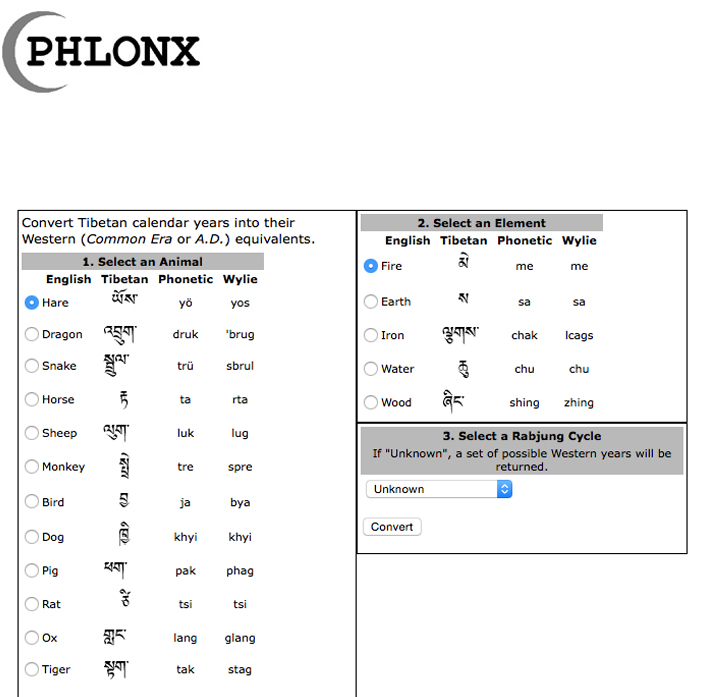
    Fred Coulson’s blog has a calculator that will convert your Tibetan year into a Western equivalent. Provide the animal, element, and rab byung and you might get something useful: http://phlonx.com/resources/tibetan calendar/

    For more on the Tibetan Calendar: http://www.nitartha.org/calendar overview.html

  • Glossaries for Buddhist Studies

    Glossaries for Buddhist Studies

    Update on Buddhist Studies resources on the web:

    There are some new additions to Marcus Bingenheimer’s excellent resource “Glossaries for Buddhist Studies.”

  • Digital Library Internship at TBRC Announced

    Digital Library Internship at TBRC Announced

    TBRC is now accepting applications for internships in several areas related to the digital library. See their blog here:

    DIGITAL LIBRARY INTERNSHIP AT TBRC

  • Beautiful digitzed pechas of them spang ma and Peking editions of the Kangyur now available

    Beautiful digitzed pechas of them spang ma and Peking editions of the Kangyur now available

    DPS – Digital Preservation Society

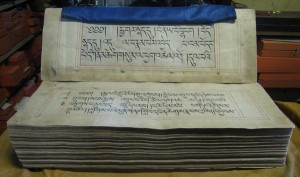
    For the stunning price of $4,700 you can order 7 DVDs of the high quality digitized them spang ma edition held in the National Library of Mongolia. The Peking edition is 5 DVDs for $3,700.

    From their website:

    Since 2007 the digitizing of the Tempangma (rgyal rtse’i them spang ma/them spang ma/them spangs ma/Thempangma/them-spangs-ma) manuscript of the Kangyur and the Peking edition of the Kangyur held by the National Library of Mongolia has been undertaken as a joint project by

    This joint project is coordinated by

    Kawachen, based in Tokyo.

  • TBRC Continues to Develop New Website

    TBRC Continues to Develop New Website

    There were a few glitches to work out, but Q and A sessions are planned for Tuesday’s at 2PM (New York Time?).

    In case you haven’t heard, TBRC has launched a new and improved website.

    You will need to re-register and formally request full access again. It is quite easy and response time is short (24hrs or so). Just click on “LOGIN REGISTER” at the top right corner of the screen. When you get to the login screen, click the tab labeled “Register (new user)” and fill out the form, remembering to check the box next to Request Full Access.

    An important note for people who have been previously accessing the texts at TBRC (from Jeff Wallman):

    “One very important change is that we completely rewrote our authentication module. The net change is that all password account holders will need to register themselves. This should be easier to manage since account holders can choose their own user name and password.

    In addition, we ask that you formally request full access to text downloads. This is necessary because we want to keep a record of account holder names, emails, and interests, but also so that we can improve the performance of the application. You might be pleasantly surprised that the new interface to the digital texts (we call it the digital pecha viewer “DPV”) is easier to use!”

    Enjoy: TBRC.org

  • The Karoṣṭhi Klub at The University of Washington

    The Karoṣṭhi Klub at The University of Washington

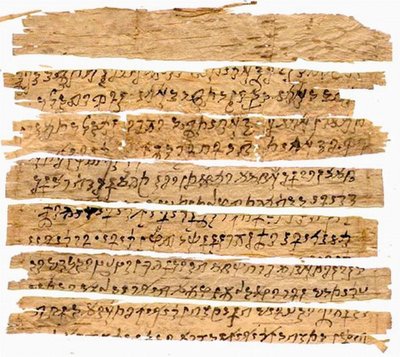
    aEvery Friday afternoon at the University of Washington a group of scholars and students gather their laptops, electronic tablets, projectors, and infrared images of ancient birch bark scrolls and hike up to a windowless room on the mezzanine floor of Gowen Hall for some not so old-fashioned detective work. The objective of their sleuthing is to coax a little meaning from the most ancient Buddhist manuscripts known to still exist. An image of one piece of one side of a birch bark scroll (the original buried in the vaults of the British Library) is projected on the wall and the group attempts to decipher the small scribblings of an ancient scribe.

    (more…)
  • The University of Washington – Early Buddhist Manuscripts Project

    The University of Washington – Early Buddhist Manuscripts Project

    The University of Washington – Early Buddhist Manuscripts Project:
    Rediscovering the Worlds’ Oldest Buddhist Manuscripts
    I. Origin of the Early Buddhist Manuscripts Project

    The Early Buddhist Manuscripts Project (EBMP) was constituted in 1996 to study a collection of Buddhist manuscripts dating from the first century a.d. which had recently been discovered in Afghanistan and acquired by the British Library. The British Library contacted Professor Richard Salomon of the University of Washington’s Department of Asian Languages and Literature requesting that he supervise the study and publication of these unique documents, and shortly thereafter an agreement was signed between the library and the university, establishing the EBMP with Professor Salomon as director of the project and Professor Collett Cox as assistant director. Subsequently, a contract was drawn up between the EBMP and the University of Washington Press for the publication of the results of the research in a new series entitled “Gandhāran Buddhist Manuscripts.” To date, six volumes in this series have been published by EBMP research scholars, with a seventh to be issued shortly.

    (more…)