Author: Marcus Perman

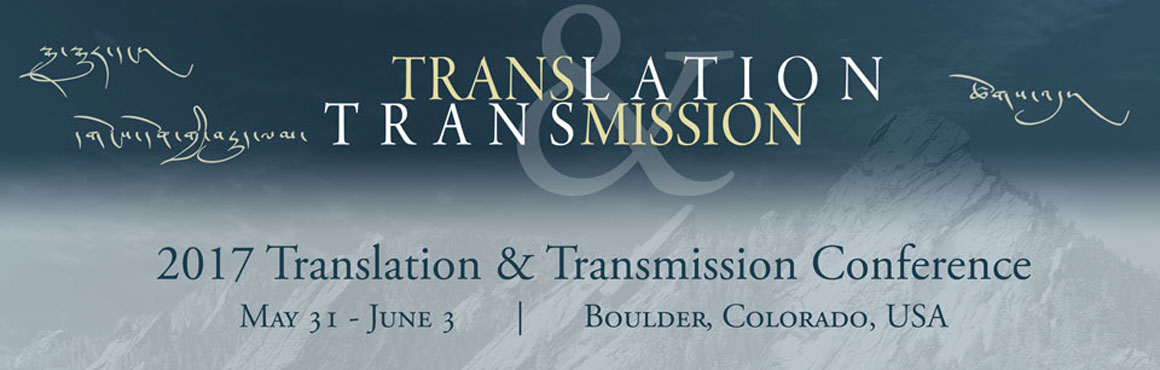
  • 2017 Translation & Transmission Conference Announced!

    2017 Translation & Transmission Conference Announced!

    Save the Date! June 1-4, 2017

    2017 Translation and Transmission Conference

    At the University of Colorado, Boulder

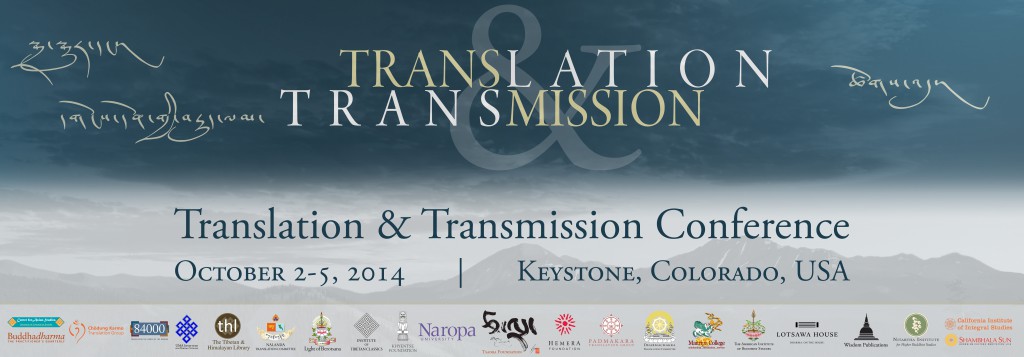
    The Foundation, in consultation with all the partners, sponsors, conference steering committee members, and speakers from the 2014 Translation & Transmission Conference is proud to announce the second conference in the Translation & Transmission Series, which will take place June 1-4, 2017 in Boulder, Colorado. In light of the universal support and positive feedback we received for the previous conference, we feel that it is important to continue the conversation and community building that the 2014 conference facilitated.

    The purpose of this conference series is to provide an international forum for sustained dialogue and the sharing of ideas and experiences, as well as for collective reflection on the larger cultural and societal dimensions of the transmission of Tibetan Buddhism to the contemporary sphere. This conference is not a showcase for any single project or institution but an opportunity for all to gather in an open and collegial spirit.

    In the spring of 2017 the conference will convene in the heart of Boulder, Colorado, at the Glenn Miller Ballroom, University Memorial Center, June 1st through 4th, 2017.

    Keynote Speakers:

    Day 1: Susan Bassnett (Warwick)

    Day 2: Jan Nattier (Washington)

    Day 3: José Cabezón (UCSB)

    Panelists:
    Translators – Day 1
    1. Janet Gyatso (Harvard)
    2. Anne Klein (Rice University, Dawn Mountain)
    3. Wulstan Fletcher (Padmakara, Tsadra)
    4. Karl Brunnholzl (Nitartha Institute, Nalandabodhi)
    Translating – Day 2
    1. Kurtis Schaeffer (University of Virginia)
    2. Thupten Jinpa (Institute of Tibetan Classics)
    3. Elizabeth Napper (Tibetan Nuns Project)
    Translations – Day 3
    1. John Canti (84000, Padmakara)
    2. Tom Yarnall (AIBS, Columbia, Tibet House US)
    3. David Kittelstrom (Wisdom Publications)
    4. Sarah Harding (Tsadra, Naropa University)

    Workshop presenters are still to be invited but will include more than 32 other translators and specialists in Tibetan language.

    The program schedule is still being planned and announcements will be made as soon as possible. Please sign up to receive the conference newsletter if you plan to attend or would like more information about the conference.

    Registration will open online in Summer 2016.

    If you or your organization wishes to donate to the conference effort or become a sponsor of the conference, please contact Marcus@tsadra.org

    The Conference Steering Committee

    John Canti (Padmakara Translation Group & 84000)

    Wulstan Fletcher (Padmakara Translation Group & Tsadra Foundation)

    Holly Gayley (University of Colorado, Boulder)

    Sarah Harding (Naropa University & Tsadra Foundation)

    Thupten Jinpa (Institute of Tibetan Classics)

    Anne Klein (Rice University & Dawn Mountain)

    Marcus Perman (Tsadra Foundation)

    Andrew Quintman (Yale University)

    Kurtis Schaeffer (University of Virginia)

    Tom Yarnall (Columbia University & AIBS)

    Hosted by Tsadra Foundation
    Co-sponsored by

    The American Institute of Buddhist Studies,

    Columbia University Center for Buddhist Studies, and Tibet House US

    Tibet Himalaya Initiative at CU Boulder and Shambhala Publications

  • Long-time Tsadra Fellows Receive Khyentse Foundation Fellowship Award

    Long-time Tsadra Fellows Receive Khyentse Foundation Fellowship Award

    Tsadra Foundation would like to congratulate two of its long-time Fellows on having been selected to receive the 2016 Khyentse Foundation Fellowship Award. Wulstan Fletcher and John Canti, who are also founding members of the Padmakara Translation Group, have been selected for this honor in recognition of their “service to the Buddhadharma.”

    Wulstan, John, and the Padmakara Translation Group are well known for their translation work in both English and French. From the essential Words of My Perfect Teacher, to the advanced philosophical Adornment of the Middle Way, they have provided thousands of seekers and students with access to key Tibetan Buddhist teachings. We congratulate them on their many accomplishments!


    One of the objectives of Tsadra Foundation has been to bring recognition and appreciation to senior translators and practitioners of Tibetan Buddhism, and to the role they are playing in making these extraordinary teachings available to a wider western audience. Wulstan, John, and other members of Padmakara have been supported by Tsadra Foundation for over 15 years in order that they be able to dedicate themselves fully to their practice and translation of the Dharma. The result of such focused dedication is evident in the outstanding quality and accuracy, recognized by all, of the Padmakara Translation Group’s publications. Currently Wulstan is continuing his translation activities supported by Tsadra Foundation while John is now dedicating most of his time to the 84,000 translation project.

    We rejoice in the recent increase of support for translators and their work as more organizations recognize the importance of their roles in the transmission of Buddhism in the West. We hope, that other organizations and groups will likewise honor and financially support the work of all of these individuals, be they independent or a part of organized translation groups, from academia or from the Buddhist practice community.

    Here is a short list of some of Padmakara’s work accomplished as Tsadra Foundation Fellows:

      1. A Garland of Views: A Guide to View, Meditation, and Result in the Nine Vehicles by Padmasambhava and Jamgon Mipham.
      2. Treasury of Precious Qualities, Book 1, Jigme Lingpa, commentary by Longchen Yeshe Dorje,   Kangyur Rinpoche
      3. Treasury of Precious Qualities, Book 2 Vajrayana and the Great Perfection, Jigme Lingpa, commentary by Longchen Yeshe Dorje, Kangyur Rinpoche 
      4. Counsels from My Heart, Dudjom Rinpoche
      5. Introduction to the Middle Way, Chandrakirti, commentary by Jamgön Mipham
      6. The Adornment of the Middle Way, Shantarakshita, commentary by Jamgön Mipham
      7. Nectar of Manjushri’s Speech: A Detailed Commentary on Shantideva’s “Way of the Bodhisattva,” Kunzang Pelden

    For more information on Tsadra Foundation and its Translation and Publication Programs, please visit our website:    https://www.tsadra.org

  • Berkeley Workshop: Religion and the Literary in Tibet

    Berkeley Workshop: Religion and the Literary in Tibet

    Religion and the Literary in Tibet
    Supported by a generous grant from the Tsadra Foundation

    Co-sponsored by the Center for Buddhist Studies and the Institute of East Asian Studies at UC Berkeley

    October 17-18, 2015 at the University of California, Berkeley

    In 2015 Tsadra Foundation supported the work of the AAR group Religion and the Literary in Tibet by funding a workshop at the University of California, Berkeley, organized by Jacob Dalton, Kurtis Schaeffer, Andy Quintman and Janet Gyatso. This workshop was the culmination of a five-year series of meetings held with leading scholar-translators in the field. A published volume of essays is expected in 2018, containing the blue prints for more nuanced literary understandings of Tibetan writings.

    Schedule

    Saturday morning

    9:00-10:30- Respondent Paula Varsano (Classical Chinese Literature)

    9:00-9:45: Janet Gyatso

    Tripping Down Stairs: On the Way to Enlightenment in the Lifestory of Milarepa

    9:45-10:30: Sarah Jacoby

    Autobiographical Ventriloquy in a Tibetan Woman’s Life Narrative

    10:30-10:45: Coffee Break

    10:45-12:15 – Respondent Andrew Jones (Modern Chinese Literature)

    10:45-11:30: Brandon Dotson

    Readings Like the Dead Horse Listens: Textualized Funeral Rituals as Literature

    11:30-12:15: Jann Ronis

    Epistolary Earrings for the Royals of Degé

    12:15-1:30: Catered lunch

    Saturday afternoon

    1:30 – 3:00 – Respondent Harsha Ram (Russian Literature)

    1:30-2:15: Jake Dalton

    The Rise of Evocative Language in Early Tantric Buddhist Ritual Manuals

    2:15-3:00: Jonathan Gold

    Clear Words and Subtle Meaning: Sakya Pandita’s Approach to Prayer (bstod pa)

    3:00-4:30 – Respondent Mack Horton (Premodern Japanese Literature)

    3:00-3:45: Nancy Lin

    Filling Vases and Stringing Garlands: Condensing Buddhist Stories in Tibet

    3:45-4:30: Holly Gayley

    Tibetan Epistolary Revelations: Performative Speech in the Correspondence of a Buddhist Visionary Couple

    4:30-4:45: Coffee Break

    4:45-6:15 – No respondent—open discussion

    4:45-5:30: Kurtis Schaeffer

    Two Different Approaches to the Life of the Buddha in Tibet 1: Nanam Tsünpa

    5:30-6:15: Andrew Quintman

    Two Different Approaches to the Life of the Buddha in Tibet 2: Tāranātha

    7:00 Dinner at Arabica
    Sunday morning

    9:00 -11:15 – Respondent Alan Tansman (Modern Japanese Literature)

    9:00-9:45: Ben Bogin

    Nyangrel’s Narrative Spontaneity: A Key to the Copper Palace

    9:45-10:30: Carl Yamamoto

    Lama Zhang: Self-Shaming Requested by Gurub Réwaki

    10:30-11:15: Nicole Willock and Gendun Rabsal

    Tibetan Literary Tradition: “The Avadāna of Silver Flowers” by Tséten Zhabdrung Jikmé Rigpai Lödro

    11:15-11:30: Coffee Break

    11:30-12:30: Roundup Session

    Participant Observers:
    • Roger Jackson, Carleton College
    • Lara Braitstein, McGill University
    • Frances Garrett, University of Toronto
    • Marcus Perman, Tsadra Foundation
  • Translation Conference Website Updated!

    Translation Conference Website Updated!

    HAPPY NEW YEAR!

    You can now view videos of each plenary session, listen to audio from workshops, and enjoy pictures from throughout the 2014 Translation & Transmission Conference on the updated conference website:

    http://translationandtransmission.org/conference-revisited.html

  • Jim Blumenthal (1967-2014)

    Jim Blumenthal (1967-2014)

    Professor Jim Blumenthal, a wonderful example of a kind human being who skillfully blended practice and scholarship of Tibetan Buddhism, passed away last week. Sadly, Jim was to be present at the recent Translation & Transmission Conference, but was unable to make it due to his declining health. There is a memorial website you can contribute to here: MuchLoved

    Maitripa College, which he helped to create, also has a page in honor of Jim: http://maitripa.org/resources-jim/

    Bodhisattva’s Breakfast Corner: Remembering Jim Blumenthal

    Maitripa College will be hosting A Celebration of Life for Jim on October 26th at 1:30 pm at the World Forestry Center in Portland. Open to all.

    H-Buddhism Obituary: 

    Dear Colleagues,

    It is with a heavy heart that I write to inform you that our friend and colleague James Blumenthal passed away in the early hours of Wednesday, October 8th, 2014, after a courageous battle with cancer over the course of the past year.

    Jim was known by his students and his colleagues as a generous, kind, and gentle person. Students at Oregon State University flocked to his courses on the history and philosophy of Buddhism, often forming relationships with him that would last well beyond their academic career at the University. He was a key figure in the development of both Asian Studies and Religious Studies at Oregon State, the latter of which has re-emerged as an academic major program in the School of History, Philosophy, and Religion. He was also a founding faculty member and prized teacher at Maitripa College, a Buddhist College in Portland, Oregon, which is dedicated to transforming higher education through following the model of Indian and Tibetan monastic Universities.

    Jim’s academic career in the study of religion began at the University of San Diego, where he received an Honors B.A. in Religious Studies. His graduate training was at the University of Wisconsin, where he studied with Geshe Lhundup Sopa, earning both an M.A. and a Ph.D. while focusing on the work of the Indian teacher Śāntarakṣita. He later published analytical and translation works on Indian Mahāyāna based upon and extending this research, including The Ornament of The Middle Way: A Study of the Madhyamaka Thought of Śāntarakṣita (2004) and Sixty Stanzas of Reasoning (2004). He had recently completed, with Geshe Lhundup Sopa, a translation of the Lamrim Chenmo, Chapter 4, and was pursuing the publication of a translation of Śāntarakṣita’s Madhyamakālaṃkāravṛtti. In addition to his work on Indian and Tibetan Madhyamaka philosophy, he also published and taught extensively on Engaged Buddhism in Theravāda and Tibetan Buddhist contexts. Jim greatly enjoyed philosophical debate and was able to subtly engage and often disarm his opponents while still finding a way to make sure everyone had a good laugh in the process.

    Jim will be especially missed for the quiet, calm, and joyful presence that he brought to our academic community.

    Stuart Ray Sarbacker
    Oregon State University

    See more from OSU here: Buddhist Scholar James Blumenthal Dies at 47

    Jim’s Madhyamākalaṃkāra (དབུ་མ་རྒྱན་), or The Ornament of the Middle Way.

  • University of Colorado Receives Tibetan Texts

    University of Colorado Receives Tibetan Texts

    Tsadra Foundation has generously gifted the CU Libraries with an impressive collection of Tibetan texts consisting of religious, historical, biographical and philosophical materials. The gifted texts include the collected works of a number of the great masters of Tibetan Buddhism, whose works are only beginning to be studied in any depth as Tibetan Studies expands as a field…

    The donation by the Tsadra Foundation significantly expands both the breadth and depth of these holdings, and the Department of Religious Studies and the CU Libraries would like to express their appreciation to the Tsadra Foundation for this impressive donation of Tibetan texts. For a flourishing Tibetan Studies program at CU Boulder, particularly as the Department of Religious Studies seeks to establish a Ph.D. program, it is essential for the CU Libraries to continue to expand and develop its Tibetan language materials. Substantial gifts like this by the Tsadra Foundation provide crucial resources for advanced language study and research for faculty and graduate students at the university and along Colorado’s Front Range…

    Read more here

  • Updates from the Boulder Research Library-Tibetan Texts

    Updates from the Boulder Research Library-Tibetan Texts

    New Tibetan Books!

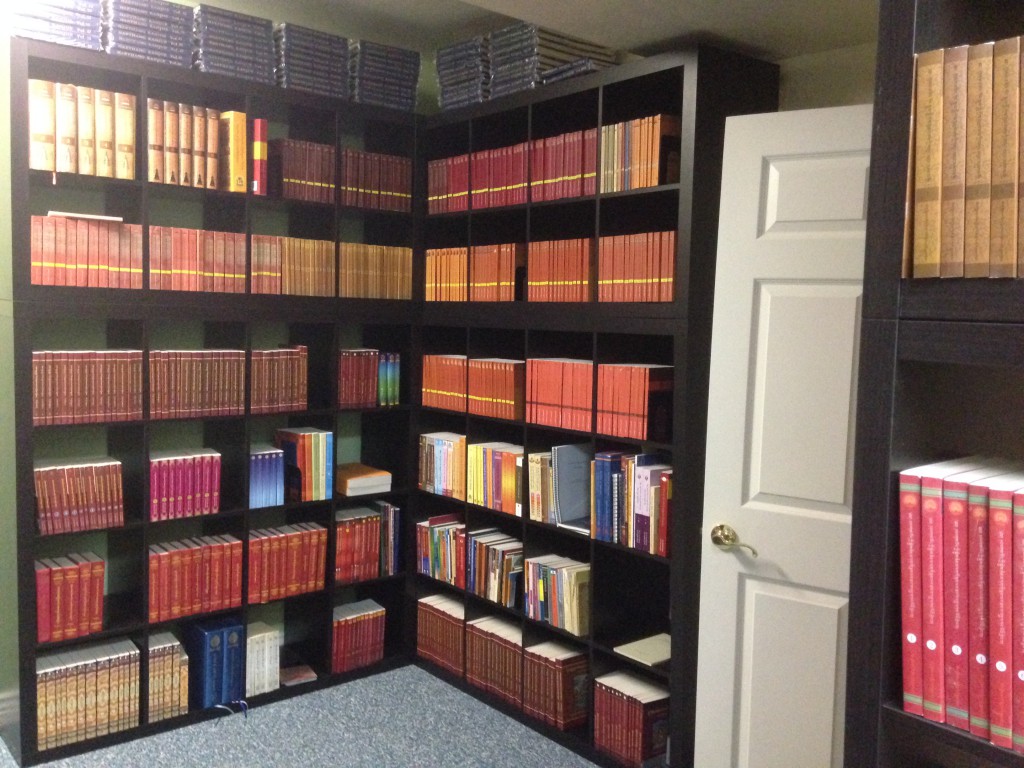
    Usually we have a steady stream of small amounts of Tibetan texts and academic works on Buddhism and Tibet coming into our library, but recently we welcomed a doubling of the Tibetan texts held in the Boulder research library. I will try to give a sense of what has arrived recently in a few posts here.

    On the top of the shelves you can see our recently rebound version of the Narthang Kangyur. Many of the other texts on the shelves are various series from Paltsek Research  དཔལ་བརྩེགས་བོད་ཡིག་དཔེ་རྙིང་ཞིབ་འཇུག་ཁང་།.


    Recent Arrivals from དཔལ་བརྩེགས་ :

    རྔོག་སློབ་བརྒྱུད་དང་བཅས་པའི་གསུང་འབུམ། rngog slob brgyud dang bcas pa’i gsung ‘bum/ 34 volumes. Krung go’i bod rig pa dpe skrun khang, 2011.

    རས་ཆུང་སྙན་བརྒྱུད་སྐོར། ras chung snyan brgyud skor/ 19 volumes. Krung go’i bod rig pa dpe skrun khang, 2011.

    ཇོ་ནང་ཀུན་མཁྱེན་དོལ་པོ་པ་ཤེས་རབ་རྒྱལ་མཚན་གྱི་གསུང་འབུམ། Jo nang kun mkhyen dol po pa shes rab rgyal mtshan gyi gsung ‘bum/ 13 volumes. Krung go’i bod rig pa dpe skrun khang, 2011.

    ལྷོ་བྲག་མར་པ་ལོ་ཙཱའི་གསུང་འབུམ། lho brag mar pa lo tsA’i gsung ‘bum/ 7 volumes. Krung go’i bod rig pa dpe skrun khang, 2011.

    རྗེ་བཙུན་མི་ལ་རས་པའི་གསུང་འབུམ། rje btsun mi la ras pa’i gsung ‘bum/ 5 volumes. Krung go’i bod rig pa dpe skrun khang, 2011.

    དུས་འཁོར་ཕྱོགས་བསྒྲིགས་ཆེན་མོ། dus ‘khor phyogs bsgrigs chen mo/ Twenty volumes. Bod ljongs bod yig dpe rnying dpe skrun khang, 2012.

    བོད་ཀྱི་ལོ་རྒྱུས་རྣམ་ཐར་ཕྱོགས་བསྒྲིགས། bod kyi lo rgyus rnam thar phyogs bsgrigs/ 61-90 – Thirty volumes. The third set of 30 volumes to come out so far since 2010.


    Other Recent Arrivals:

    རྗེ་ཙོང་ཁ་པ་ཆེན་པོའི་གསུང་འབུམ། rje tsong kha pa chen po’i gsung ‘bum/ 18 volumes. Ser gtsug nang bstan dpe rnying ‘tshol bsdu phyogs sgrig khang. Krung go’i bod rig pa dpe skrun khang, 2012.

    ཏ་པོ་ – དུས་རབས་བཅུ་པ་ནས་ཉི་ཤུ་པའི་བར་གྱི་སྔ་མོའི་རྒྱ་གར་དང་བོད་ཀྱི་ལྡེབས་རིས་དང་ཡི་གེ་ནུབ་ཧི་མཱ་ལ་ཡའི་གནའ་བོའི་དགོན་གྲོང་ཞིག ཏ་པོ་དགོན་གྱི་དཔེ་མཛོད་ཁང་ནས་དཔར་བསྐྲུན་ཞུས།
    TABO: An Ancient Western Himalayan Repository of age-old Indian and Tibetan Mural Paintings and Scripts dating from the tenth to the twentieth century. རྩོམ་པ་པོ། རཱ་ཧུ་ལ། rtsom pa po/ rA hu la/

    ཧི་མ་ལ་ཡའི་ནང་པ་སངས་རྒྱས་པའི་ཆོས་དང་རྒྱལ་རབས་རིག་གཞུང་གི་ཞིབ་འཇུག
    jo sras bkra shis tshe ring dang chab ngoms bstan pa nyi ma. 2011. Hi ma la ya’i nang pa sangs rgyas pa’i chos dang rgyal rabs rig gzhung gi zhib ‘jug: deb phreng gsum pa: pod yig nang spel pa’i dpyad rtsom khag. Proceedings of the Golden Jubilee Conference of the Namgyal Institute of Tibetology Gangtok, 2008. Gangtok: Namgyal Institute of Tibetology.

    གསེར་མདོག་པཎ་ཆེན་ཤཱཀྱ་མཆོག་ལྡན་གྱི་གསུང་འབུམ།
    24 Volumes: gser mdog paN chen shAkya mchog ldan gyi gsung ‘bum – Shakya Chogden’s Collected Works, published in 2013 in Beijing by krun go’i bod rig pa dpe skrun khang.

    ཀུན་མཁྱེན་གོ་རམས་པ་བསོད་ནམས་སེང་གེའི་གསུང་འབུམ།
    15 Volumes: kun mkhyen go rams pa bsod nams seng ge’i gsung ‘bum/ rdzong sar khams bye lnga rig tub bstan slob gling nas bsgrigs – Gorampa’s Collected Works, published in 2013 in Beijing by krung go’i bod rig pa dpe skrun khang.

    དམ་ཆོས་སྡུག་བསྔལ་ཞི་བྱེད་རྩ་བའི་ཆོས་སྡེ་དང་ཡན་ལག་བདུད་ཀྱི་གཅོད་ཡུལ་གྱི་གླེགས་བམ།
    14 Volumes: dam chos sdug bsngal zhi byed rtsa ba’i chos sde dang yan lag bdud kyi gcod yul gyi glegs bam- Pacification of Suffering tradition of Padampa Sangye and Cutting Through practices of Machig Labdron, published in 2013 by Dingri Langkor Tsuglag Khang.

  • Updates from the Boulder Research Library

    Updates from the Boulder Research Library

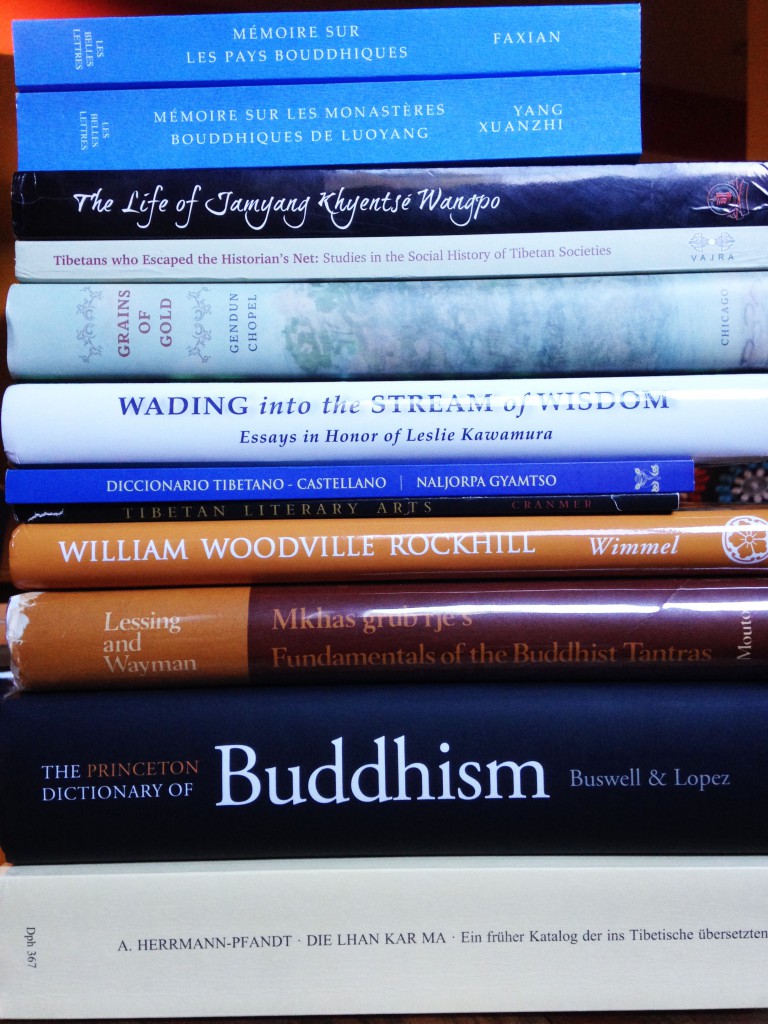
    We are steadily expanding the holdings of our library here in Boulder, Colorado. Here are some of the more recent works added to our research library:

    • Faxian. Mémoire sur les pays bouddhiques. Les Belles Lettres, 2014.
    • Yang Xuangzhi. Mémoire sur les monastères bouddhiques de Louyang. Les Belles Lettres, 2014.
    • Akester, Matthew. 2012. The Life of Jamyang Khyentsé Wangpo by Jamgön Kongtrul. New Delhi: Shechen Publications.
    • Ramble, Charles, Peter Schwieger and Alice Travers. Tibetans who Escaped the Historian’s Net: Studies in the Social History of Tibetan Societies. Kathmandu, Nepal: Vajra Publications, 2013.
    • Chopel, Gendun. 2014. Grains of Gold: Tales of a Cosmopolitan Traveler. Translated by Thupten Jinpa and Donald S. Lopez, Jr. Chicago: The University of Chicago Press.
    • Haynes, Sarah F. and Michelle J. Sorensen. Wading into the Stream of Wisdom: Essays in Honor of Leslie Kawamura. Contemporary Issues in Buddhist Studies.
    • Bengelsdorf, Hernán. Diccionario Tibetano-Castellano. Buenos Aires: Ediciones Dungkar, 2011.
    • Cranmer, Marit. Tibetan Literary Arts: Exhibition Catalog. Neilson Library, Smith College.. Shang Shung Publications, 2007.
    • Wimmel, K. William Woodville Rockhill: Scholar-Diplomat of the Tibetan Highlands. Orchid Press, 2006.
    • Lessing and Wayman. Mkhas grub rje’s Fundamentals of the Buddhist Tantras. Mouton, 1968.
    • Lopez Jr., Donald S. and Robert E. Jr. Buswell. The Princeton Dictionary of Buddhism. Princeton, NJ: Princeton University Press, 2014.
    • Adelheid Herrmann-Pfandt. 2008. Die lhan kar ma : ein früher Katalog der ins Tibetische übersetzten buddhistischen Texte. Wien : Verlag der österreichischen Akademie der Wissenschaften.
    • Arslan, Saadet and Peter Schwieger. Tibetan Studies an Anthology. Beiträge zur Zentralasienforschung Vol 23. International Institute for Tibetan and Buddhist Studies (IITBS), 2010.
    • Dotson, Brandon, Kazushi Iwao and Tsuguhito Takeuchi. Scribes, Texts, and Rituals in Early Tibet and Dunhuang. Contributions to Tibetan Studies Vol 9. WiesBaden: Dr. Ludwig Reichert Verlag, 2013.
    • Hackett, Paul G.. A Catalogue of the Comparative Kangyur (bka’ ‘gyur dpe bsdur ma). Treasury of the Buddhist Sciences. New York: American Institute of Buddhist Studies; New York: Columbia University’s Center for Buddhist Studies, 2012.
    • Gray, David B.. The Cakrasamvara Tantra (The Discourse of Śrī Heruka): A Study and Annotated Translation. Treasury of the Buddhist Sciences. New York: American Institute of Buddhist Studies, 2007.
    • Gray, David B.. The Cakrasamvara Tantra (The Discourse of Śrī Heruka): Editions of the Sanskrit and Tibetan Texts. Treasury of the Buddhist Sciences. New York: American Institute of Buddhist Studies, 2012.
    • Balikci-Denjongpa, Anna and Alex McKay. Buddhist Himalaya: Studies in Religion, History and Culture Volume I-III: Tibetan and the Himalaya;The Sikkim Papers; The Tibetan Papers. Proceedings of the Golden Jubilee Conference of the Namgyal Institute of Tibetology Gangtok, 2008. Sikkim: Namgyal Institute of Tibetology, 2011.
    • ཏ་པོ། དུས་རབས་བཅུ་པ་ནས་ཉི་ཤུ་པའི་བར་གྱི་སྔ་མོའི་རྒྱ་གར་དང་བོད་ཀྱི་ལྡེབས་རིས་དང་ཡི་གེ། ནུབ་ཧི་མཱ་ལ་ཡའི་གནའ་བོའི་དགོན་གྲོང་ཞིག
    • Les Neuf Forces de l’Homme. Samten Karmay et Philippe Sagant. Recherches sur la Haute Asie 13. Nanterre: Société d’ethnologie, 1998.
    • Les habitants du Toit du monde. Samten Karmay et Philippe Sagant. Recherches sur la Haute Asie 12. Nanterre: Société d’ethnologie, 1997.
    • Nigouma et Soukhasiddhi: Hagiographies et chants. suivi de Horizons féminins Hadewijch-Lalla-Rabi’a al-Adawiya. Traduction de Joy Vriens (Lama Tsultrim Namdak). With the support of Tsadra Foundation. La Galerie: Éditions Yogi Ling, 2014.
    • Puṣpikā: Tracing Ancient India Through Texts and Traditions. Contributions to Current Research in Indology Volume 1. Edited by Nina Mirnig, Péter-Dániel Szántó, and Michael Williams. Oxford: Oxbow Books, 2013.
    • Lambert Schmithausen. 2014. The Genesis of Yogācāra-Vijñānavāda: Responses and Reflections. Kasuga Lectures Series I. Tokyo: The International Institute for Buddhist Studies.
    • Eimer, Helmut. A Catalogue of the Kanjur fragment from Bathang Kept in the Newark Museum. Wiener Studien zur Tibetologie und Buddhismuskunde #75. Vienna: Arbeitskreis für Tibetische und Buddhistische Studien, 2012.
    • Hofer, Theresia. The Inheritance of Change: Transmission and Practice of Tibetan Medicine in Ngamring. Wiener Studien zur Tibetologie und Buddhismuskunde #76. Vienna: Arbeitskreis für Tibetische und Buddhistische Studien, 2012.
    • Weissenborn, Karen. Buchkunst Aus Nālandā: Die Aṣṭasāhasrikā Prajñāpāramitā-Handscrift in der Royal Asiatic Society/London (Ms. Hodgson 1) und ihre Stellung in der Pāla-Buchmalerei des 11./12. Jahrhunderts. Wiener Studien zur Tibetologie und Buddhismuskunde #77. Vienna: Arbeitskreis für Tibetische und Buddhistische Studien, 2012.
    • Higgins, David. The Philosophical Foundations of Classical rdzogs chen in Tibet: Investigating the Distinction Between Dualistic Mind (seems) and Primordial Knowing (ye shes). Wiener Studien zur Tibetologie und Buddhismuskunde #78. Vienna: Arbeitskreis für Tibetische und Buddhistische Studien, 2013.
    • Stuart, Daniel Malinowski. Thinking About Cessation: The Pṛṣṭhapālasūtra of the Dīrghāgama in Context. Wiener Studien zur Tibetologie und Buddhismuskunde #79. Vienna: Arbeitskreis für Tibetische und Buddhistische Studien, 2013.
    • Kuijp, Leonard W. J. van der and Arthur P. McKeown. Bcom ldan ral gri (1227-1305) On Indian Buddhist Logic and Epistemology: His Commentary on Dignāga’s Pramāṇasamuccaya. Wiener Studien zur Tibetologie und Buddhismuskunde #80. Vienna: Arbeitskreis für Tibetische und Buddhistische Studien, 2013.
    • Schneider, Johannes. Eine Buddhistische Kritik der Indischen Götter Śaṃkarasvāmins Devātiśayastotra mit Prajñāvarmans Kommentar. Nach dem tibetischen Tanjur herausgegeben und übersetzt. Wiener Studien zur Tibetologie und Buddhismuskunde #81. Vienna: Arbeitskreis für Tibetische und Buddhistische Studien, 2014.
    • Steinkellner, Ernst. The Edition of Śāntarakṣita’s Vādanyāyaṭīkā Collated With the Kundeling Manuscript. Wiener Studien zur Tibetologie und Buddhismuskunde #82. Vienna: Arbeitskreis für Tibetische und Buddhistische Studien, 2014.
    • Ernst Steinkellner. 2013. Dharmakīrtis frühe Logik – Dharmakīrti’s Early Logic: An Annotated German Translation of the Logical Parts in Pramāṇavārttika 1 andVṛtti. Volumes 1 and 2. Tokyo: The International Institute for Buddhist Studies.
    • Robert Kritzer. 2014. Garbhāvakrāntisūtra: The Sutra on Entry into the Womb. Tokyo: The International Institute for Buddhist Studies.
  • Did Machik Really Teach Chöd?

    Did Machik Really Teach Chöd?

    Did Machik Really Teach Chöd?

    Did Machik Lapdrön Really Teach Chöd? A Survey of the Early Sourcesby Sarah Harding

    This provocative title is a result of a persistent question in the back of my mind for several years while I was researching and translating the early gcod texts from Jamgön Kongtrul’s Treasury of Precious Instructions (gDams ngag rin chen gter mdzod), the next ambitious project of the Tsadra Foundation. As I patiently went through the marvelous teachings in each text, I kept wondering when I would find the actual instructions on gCod (“chöd”), or “Severance,” that I was so familiar with from translating Machik’s Complete Explanation and from my own three-year retreat practice. The following is a short survey of these texts and my findings therein, which suggest that there is no clear attribution of the body-offering practice, and certainly not in the elaborate form that we find today.

    gCod is primarily known, now quite famously, as a visualization practice in which one separates one’s consciousness from the physical body, and then turns around to cut up the remaining corpse and prepare it for distribution to gods, demons, and spirits of all kinds. The ritual offering may involve going to specific places where such spirits might be found, such as isolated, frightening, or haunted places. It is immediately obvious that several terrifying psychological experiences are invoked: fear of the unseen spirit world, of wilderness, and of the maiming and dismemberment of one’s body. It is thus widely recognized as a practice of “facing your fears” and overcoming them.

    gCod was developed, also famously, by the woman Machik Lapdrön in the late eleventh century, during the time in Tibet when many other lineages were forming. Although technically gcod is known as a subsidiary of the zhi byed or Pacification teachings of Dampa Sangye, clearly Machik is the single mother of this baby. In the records of Machik’s brief encounters with Dampa Sangye, and in the only Indian gcod source text (gzhung) by Āryadeva the Brahmin, there is little about this specific practice. It therefore seems to be solely a result of Machik’s own realizations, and so is famous as an original Buddhist teaching indigenous to Tibet that uniquely spread to India in a reverse trajectory from all other doctrines.

    The realization that gave birth to Machik’s gcod is said to have occurred during her recitation of a prājñāpāramitā text, which she regularly performed as part of her job as a household chaplain. Specifically, it was while reading “the chapter on māra.” Many suggestions have been offered as to which section that would be,

    For examples of the possible lines that inspired Machik, see Harding, Machik’s Complete Explanation, pp. 35 and 97, and Zhi byed dang gcod yul gyi chos ‘byung rin po che’i phreng ba thar pa’i rgyan in gCod kyi chos skor, f. 2.

     but in any case none of them throw light on the subject. The fact that it is mentioned at all, however, is very provocative. Māra, of course, is the antithesis of Buddha, and has been personified perhaps in the same way as enlightenment is personified as a buddha. Māra represents obstruction of the spiritual path or spiritual death (from Skt. mṛ-, “to die”) in all its forms. Besides the Buddha’s antagonist, a variety of māras were eventually classified into two sets of four, but there are many more examples in the texts I have translated here.[ref]Some examples from these texts are: the devil of belief in intrinsic existence, of merely mental emptiness, of making dharma a big project, of clinging to the reality of accomplishing enlightenment, of actual things, of depression and despair, of obstinate reification, etc.[/ref] It is tempting to imagine Machik’s inspiration as a profound encounter with the dark side, eventually resulting in the overcoming of that duality through the integration of the prājñāpāramitā teachings.

    It should be noted that the translation of māra as bdud in Tibetan has further complicated the issue, given the hoards of bdud that roam Tibet. I have everywhere used “devil” or even “evil” for bdud, as distinguished from “demon” for ‘dre, although in Tibet the two are often interchangeable.

    There is no shortage of reference to māras throughout the texts on gcod and their sources, and no question that the primary goal of these teachings is to deal with them, whether conceived of as demons or adverse circumstances or ego or as ultimate evil and ignorance. Simply put, the term used to describe that process is “chöd.” But it comes in two homonymic interchangeable spellings: gcod, which means “to cut” or “sever” and spyod, which means “behavior” or “action.” I have seen either used in alternate editions of the same text. Spyod and spyod yul instantly conjure up the bodhisattva’s conduct in the prājñāpāramitā literature, as in the recurring phrase:  “In this way one should train in performing the activity of the profound perfection of wisdom.”

    Quoted by Jamgön Kongtrul in The Treasury of Knowledge, Book Eight/Part Four: Esoteric Instructions, 276-77.

     gCod as severance also has its Buddhist antecedents. The classic definition in gcod source material comes from Āryadeva’s Grand Poem, Esoteric Instructions on the Perfection of Wisdom:

    Also called Grand Poem (Tshigs bcad chen mo) and Fifty Verse Poem (Tshigs su bcad pa lnga bcu pa), DNZ, vol. 14, p. 5. Other sources for the text are in the Narthang Tengyur, mdo, nyo, ff. 396b-399a; Golden Tengyur, nyo, ff. 517a-520a, and Kamnyön, History of Pacification and Severance, ff. 1-5.

    Since it severs the root of mind itself,
    and severs the five toxic emotions,
    extremes of view, meditational formations,
    conduct anxiety, and hopes and fears;
    since it severs all inflation,
    it is called “severance” by semantic explanation.

    It is clear that the specific practice of cutting up the body is not alluded to in this definition, as well as all others that I encountered. In fact, it may just be an unfortunate parallel of usage that the process of resolution and integration of problems uses the same term as does the ordinary function of an axe or kitchen knife, or dragon glass, for that matter. We can think of the common term thag gcod pa (“decide, put an end to, determine, handle, deal with, treat”) to get more of a sense of this term, recalling also the interchangeability with spyod pa as “conduct and behavior.” What to do when things get tough? Act with determination.

    Similarly, the term yul (“object”) in the longer name for this practice bdud kyi gcod yul (“the devil/evil that is the object to sever”) is used in the most abstract way and is attested in the Abidharma by Kongtrul and others. Consider the first verse in Machik Lapdrön’s source text, the bKa’ tshom chen mo (“Great Bundle”):

    The root devilry is one’s own mind.

    The devil lays hold through clinging and attachment

    in the cognition of whatever objects appear.

    Grasping mind as an object is corruption.

    Or again, from the same text, referring to a more refined state of practice:

    The conceit of a view free of elaboration,

    the conceit of a meditation in equipoise,

    the conceit of conduct without thoughts,

    all conceits on the path of practice,

    if engaged in as objects for even a moment,

    obstruct the path and are the devil’s work.

    The vast majority of the instructions in these early texts are on the practice and theory of prājñāpāramitā, as clearly indicated by their titles. These instructions are often reminiscent of mahāmudrā, and in fact later took on the epithet Severance Mahāmudrā (gcod yul phyag rgya chen po). For instance, from Machik’s Great Bundle:

    Everything is self-occurring mind,

    so a meditator does not meditate.

    Whatever self-arising sensations occur,

    rest serene, clear, and radiant.

    lhan ne lhang nge lham me, alliterative words with variable experience-based meanings.

    Even the earliest source text by Āryadeva the Brahmin employs such mahāmudrā signature phrases as “clear light,” (‘od gsal) and “mental non-engagement” (yid la mi byed pa),

    ‘Phags pa shes rab kyi pha rol tu phyin pa’i man ngag, in gDam ngag mdzod (DNZ), vol. 14, p. 4.

     while the commentary on those passages cites scripture such as Maitreya’s Highest Continuum

    Mahāyānottaratantraśāstra. Theg pa chen po rgyud bla ma’i bstan bcos, cited inPure Honey: A Commentary on the Source Text of Severance, “Esoteric Instructions on the Perfection of Wisdom” by Kun dga’ dpal ‘byor, DNZ, vol. 14, p. 36 and elsewhere.

     and other sources usually associated with the third turning. There is constant reiteration of this basic instruction to rest relaxed without doing anything. One of the more famous sayings attributed to Machik, often used as a reference to the gcod practice, is not particularly giving an instruction to sever and offer the body, but is more of a straightforward prājñāpāramitā or mahāmudrā instruction:

    Rest the body in the way of a corpse.

    Rest in the way of being ownerless.

    Rest the mind in the way of the sky.

    As a candle unmoved by the wind,

    rest in the way of clarity with no thought.

    As an ocean unmoved by the wind,

    rest in a way serenely limpid.

    hes rab kyi pha rol tu phyin pa’i man ngag yang tshom zhus len ma, DNZ, vol. 14, p. 107.

    So where are the references to the practice of casting out the body as food that has made this practice so sensational? A quick survey of the ten early texts (two source texts plus Machik’s eight) making up 134 folia, turns up sixteen references to the catch phrase “separating the mind from the body,” all but one of which merely give mention to the term. This in itself, however, does not constitute the body-offering practice per se. Separating out the consciousness and “blending it with space” (byings rig bsre ba or ‘dre pa) or the much later nomenclature “opening the door to the sky” (nam mkha’ sgo byed) became signature gcod practices. Jamgön Kongtrul asserts that this is the main practice and relegates the body offering to post-meditation (rjes thob) or a branch (yan lag).

    Treasury of Knowledge (Shes bya kun khyab) vol. 3, p. 426, and Garden of Delight, (Lus kyis mchod sbyin gyi zin bris mdor bsdus kun dga’i skyed tshal): “The main practice [of feeding the spirits] should be understood as an offshoot. But these days, most so-called severance practitioners don’t get the main root and only seem to desire the branches.” f. 11b.

     The number of references to the actual body dismemberment is very rare, and, as I will suggest, limited to the texts of dubious origin. I will briefly survey the texts in the order they are found in the Treasury.

    The verse text by Āryadeva the Brahmin, Esoteric Instructions on the Perfection of Wisdom, which is the only source text said to be of Indian origin, mentions the body offering only once, in the context of a classic graded path suitable for the three kinds of individuals:

    Those with superior meditative experience

    rest in the nondual meaning of it all.

    The average practitioners focus on that and meditate.

    The inferior offer their body aggregate as food.

    The Great Bundle is taken as the earliest and most basic text attributed to Machik. As the story goes, she responded to three Indian inquisitors with an explanation of this composition and proved to them that that her teachings were indeed Buddha Word (hence bka’ in the title).

    For this episode, see Harding, Machik’s Complete Explanation, p. 94.

     It contains only one reference to a body offering:

    Awareness carries the corpse of one’s body;

    cast it out in an unattached way

    in haunted grounds and other frightful places.

    The third text classified as a source text by Jamgön Kongtrul is called Heart Essence of Profound Meaning.” That name came to indicate a whole cycle of teachings, but this source text is signed (not here, but in another edition) by Jamyang Gönpo (b. 1208?).

    In gCod tshogs kyi lag len sogs, p. 101. The actual signature is “the Shakya monk, holder of the vajra, Prājñasambhava,” a translation of his ordination name Shes rab ‘byung gnas. His other works are signed “the Shakya monk, holder of the vajra, Mañjughoṣanatha, translating ‘Jam dbyangs dgon po.

     In most records of the lineage, his name appears right after that of Machik’s son Gyalwa Döndrup, making him the earliest commentator on Machik’s teachings that I have yet encountered, nearly a century earlier than the third Karmapa (1284-1339), who is often given that credit. In this text, again, there is only one passage indicating the body-offering practice:

    Free the mind of self-fixation by relinquishing the body aggregate as food.

    Scatter the master of self-fixation by separating body and mind.

    Liberate fear on its own ground by inspecting the fearful one.

    Tossing away fixation on the body as self, obstacles will arise as glory.

    We then come to an interesting text in the Treasury attributed to Machik called Precious Treasure Trove to Enhance the Original Source, A Hair’s Tip of Wisdom: A Source Text of Severance, Esoteric Instructions on the Perfection of Wisdom.

    Shes rab kyi pha rol tu phyin pa’i man ngag gcod kyi gzhung shes rab skra rtse’i sa gzhung spel ba rin po che’i gter mdzod. DNZ, vol. 14, pp. 81-99.

    It is evident that this is not a text by Machik, but a commentary on what may have been her teachings, which can be reconstructed by extracting the quoted segments. Using a methodology of searching citations in other gcod histories, specifically a huge auto commentary on the aforementioned Heart Essence by Jamyang Gönpo

    sPyi ‘khrid chen mo, in gCod tshogs kyi lag len sogs, pp. 105-197. [/ref] and Jamgön Kongtrul’s Treasury of Knowledge,[ref]Shes bya kun khyab, vol. 3, pp. 420-28.

     and Jamgön Kongtrul’s Treasury of Knowledge,

    Shes bya kun khyab, vol. 3, pp. 420-28.

     I have determined that when something called kha thor (“scattered”) is referenced, it is in fact the quoted segments of this text (with one exception that I could not find there). This was an exciting discovery and solved a long standing mystery, and also corroborated my analysis of this text as a commentary, although it doesn’t solve its authorship. That being said, however, there is not a single mention of casting out the body as food. The entire commentary, including the words apparently spoken by Machik, concern the perfection of wisdom.

    Then there are two or three or more “bundles” attributed to Machik. Another Bundle (Yang tshom) is in verse form of a dialogue with her son Gyalwa Döndrup. The longer title is Another Bundle of Twenty-Five Instructions as Answers to Questions,

    Shes rab kyi pha rol tu phyin pa’i man ngag yang tshom zhus len ma, DNZ vol. 14, pp. 101-115.

     although not surprisingly there are actually twenty-eight questions in this version. Tacked on to that and unmentioned in any source or catalogue is a set of eighteen more questions with very cryptic verse answers, called Vajra Play (rDo rje rol pa). Then from an altogether different collection of ancient gcod texts

    gCod tshogs kyi lag len sogs. TBRC W23390.

     found at Limi monastery in Nepal, there is a text called, again, “Bundle of Precepts” (bKa’ tshom). The colophon titles it “Thirty-five Questions and Answers on the Bundle of Precepts, the Quintessence of the Mother’s Super Secret Heart-Mind.”

    Ibid. p. 31: bKa’ tshoms kyi zhus lan sum bcu rtsa lnga pa/ a ma’i yang gsang thugs kyi nying khu.

     While this text bears no resemblance to Machik’s Great Bundle of Precepts (bKa’ tshom chen mo), it is strikingly similar to Another Bundle. Of the thirty-five questions (and this time the number is correct!), twenty-six of them appear in Another Bundle. There is some suggestion in the colophon that this bundle may have been gathered by, again, Jamyang Gönpo. What all of this indicates to me is that there were more than one set of notes circulating as records of Machik’s dialogues, and that Jamgön Kongtrul ended up with this particular set for his Treasury, while his contemporary, Kamnyön Dharma Senge, apparently had access to another one, judging from the citations found in his Religious History of Pacification and Severance.

    Khams smyon Dharma seng ge, also known as ‘Jig ‘bral chos kyi seng ge). The Religious History of Pacification and Severance: A Precious Garland Ornament of Liberation. Zhi byed dang gcod yul gyi chos ‘byung rin po che’i phreng ba thar pa’i rgyan. In Gcod kyi chos skor, pp. 411-597. Delhi: Tibet House, 1974.

    To return to my point, there are but two brief mentions in Another Bundle concerning body offerings. The first is in a list of things to explain the term “unbearable” in response to the question “What is the meaning of “trampling upon the unbearable?” (mi phod brdzi ba), a phrase describing Severance. It says, “casting out the body to demons is unbearable (‘dre la lus skyur mi phod). The second instance is in response to the question “What should one do when sick?” and the answer is: “Chop up your body and offer it as feast.” (lus po gtubs la tshogs su ‘bul.[ref]DNZ vol. 14, p. 109.[/ref] Note the use of gtubs rather than gcod).

    One last bundle is called The Essential Bundle (Nying tshom). Although it is attributed to Machik, it appears to be a summary of the other bundles, with a structural outline, scriptural citations, and even quotes from Machik, respectfully referred to as “Lady Mother” (ma jo mo). This assessment is further supported by the fact that it seems never to be cited in texts such as The Treasury of Knowledge, and is not mentioned in Kongtrul’s Record of Teachings Received,

    Tashi Chöpel (bKra shis chos ‘phel), editor. Kong sprul gsan yig, or ‘Jam mgon kong sprul yon tan rgya mtshos dam pa’i chos rin po che mdo sngags rig gnas dang bcas pa ji ltar thos shing de dag gang las brgyud pa’i yi ge dgos ‘dod kun ‘byung nor bu’i bang mdzod. China: dPal spungs thub bstan chos ‘khor gling gi spar khang dam chos bang mdzod khang nas, Mi rigs dpe skrun khang, 2008.

     nor in Kunga Namgyal’s short list of ten Indian dharmas.

    In gCod kyi bshad pa gsal ba’i sgron me, p. 18 (f. 9b) It does include, however, bKa’ tshom and Yang tshom.

     In any case, again there are only two references here: (1) if afraid: “Immediately hand over the body to those gods and demons without concern” and (2) “Those of inferior scope give over the body to the dangerous obstructers and rest in non-action within the state of mental non-recollection.”

    hes rab kyi pha rol tu phyin pa’i man ngag bdud kyi gcod yul las nying tshom. DNZ, vol. 14, pp. 121 and 129.

    Finally we have another set of three texts that I’ve called “Appendices” (Le lag), attributed to Machik. Here they are neatly divided into The Eight Common AppendicesThe Eight Uncommon Appendices, and The Eight Special Appendices. However, in other supporting material when quotations are extracted from the “Appendices,” it is inevitably from the first set only, The Common Appendices. Moreover, in the aforementioned set of gcod texts from Limi monastery, there are just two sets of appendices, called “The Thirteen Appendices” and “The Eight Appendices.”

    Le lag bcu gsum pa and Le lag brgyad pa in gCod tshogs kyi lag len sogs, pp. 45-66.

     The latter corresponds loosely to the Eight Common Appendices in the Treasury. The Thirteen correspond neither to the Uncommon nor Special Appendices. I therefore only feel comfortable confirming the Common Appendices (of the three sets) as part of original teachings by Machik.

    The Eight Common Appendices mention the body offering practice twice: once simply stating, “The body is a corpse, cast it out as food” (lus ni ro yin gzan du bskyur), and then again reiterating the threefold gradation of practice:

    [Recite] “unspeakable, unthinkable, inexpressible,”

    or else rest in the separation of body and awareness,

    or else cast out the body as food

    and rest within the state of evenness.

    Thun mong gi le lag brgyad pa, DNZ, vol. 14, p. 139 (Appendix 7).

    The Eight Uncommon Appendices is a very interesting text, albeit of doubtful origin. The eight sections are less arbitrary and present a progressive analysis of important elements in the practice. They are: (1) the meaning of the name, (2) the vital points, (3) practices applied to faculties, (4) clearing away obstructions, (5) deviations, (6) containing inattention (7) how to practice when sick, and (8) enhancement. The biggest surprise in this text is in the seventh appendix, which concerns various healing ceremonies, the nature of which is not found in any of the other texts, and involves such items as leper brains and widow’s underwear. However there is a basic principle here, that of dealing with the most difficult circumstances by facing them directly and employing a kind of “like heals like” practice. Thus substances normally considered unclean may be used to cure disease resulting from contamination. Or, as in modern homeopathy theory, the text offers a prescription to “pacify the heat of feverish illness in fire and resolve cold illness in water.”

    nad thog tu nad dbab pa la/ nad tshad par ‘dug na/ tshad pa me nang du zhi bar bya ba dang/ nad grang bar ‘dug na skom thag chu nang du bcad pa’oThun mong ma yin pa’i le lag brgyad pa, DNZ, vol. 14, p. 148.

     In some ways this could be taken as the essence of gcod practice, though it might be more difficult to identify Buddhist elements here. Of the five references to giving away the body, whether one’s own or the patient’s, two of them are in this section. For example: “To treat sriu,

    Explained by Ringu Tulku, this refers to a kind of bad luck that occurs when a child dies and the propensity to die carries over to the next born. To remove this jinx (sriu), one has to do a ritual or ceremony using either the actual child or its clothing, and so forth.

    take [the affected] to a haunted place and completely give over the flesh and blood to the harm doers. The mind will be blessed in emptiness.”

    Ibid., pp. 149-50.

    The last text of all those attributed to Machik Lapdrön is The Eight Special Appendices, and if the attribution is true, then this is where my theory falls apart. But of course I am somewhat skeptical. Stylistically it is very different from the ancient source texts, being comprised of eight sections outlining a progressive practice from beginning to end, much like a practice manual (khrid yig). The eight main headings are (1) the entry: going for refuge and arousing the aspiration, (2) the blessing: separating body and mind, (3) the meditation: without recollecting, mentally doing nothing, (4) the practice: casting out the body as food, (5) the view: not straying into the devils’ sphere of influence, (6) pacifying incidental obstacles of body and mind, (7) the sacred oaths of severance, and (8) the results of practice. The first four of these have further subcategories that contain not only descriptions, but also actual liturgy to be recited in the practice. And as the contents make clear, there is a whole section devoted to casting out the body as food, though not in the specific detail found in later works, such as Kongtrul’s Garden of Delight. In any case, this is the only text in the group where one can recognize the implementation of the practice of gcod as we have come to know it. And after the seemingly shamanic-type healing described in The Uncommon Appendices, it brings it all back into the Buddhist context with statements such as:

    Casting out the body as food is the perfection of generosity, giving it away for the sake of sentient beings is morality, giving it away without hatred is patience, giving it away again and again is diligence, giving it away without distraction is meditative stability, and resting afterwards in the abiding nature of emptiness is the perfection of wisdom.

    Khyad par gyi le lag brgyad, DNZ vol. 14, pp. 162-63.

    The refuge visualization includes not only Machik herself but also her son Gyalwa Döndrup and grandson or grandnephew Tönyön Samdrup, which would seem to indicate that it is at least second if not third generation after Machik herself. More research needs to be done and hopefully more will come to light as I continue with the translations in the volumes on Severance and Pacification in The Treasury of Precious Instructions.

    The question I proposed: “Is there enough material here to warrant attributing the body offering practice to Machik?” has led to much speculation. I would have to say that so far I have not seen much evidence linking Machik with the culinary detail of the spectacular charnel ground practices we call “Chöd.” Yet this is not much different than any investigation of the sources of a full-blown tradition. Did Virupa teach lam ‘bras? Did Niguma teach Six Yogas? The ḍākinī’s warm breath cools down and the trail is lost, leaving us chilling in a nice cool spot. Buddhist and non-Buddhist elements mix and mingle and we drink, hoping for a good brew to warm us.

    Did Machik Lapdrön Really Teach Chöd? A Survey of the Early Sources

    Presented by Sarah Harding at AAR 2013, Baltimore, MD

    Attached here is a listing of early gcod texts from the gdams ngag mdzod – Sarah Harding

    By Marcus Perman|April 28th, 2014|Categories: Fellows’ WritingsPresentations